
By Klim Artemov, founder of Globaltic
Short answer: Lumpwood gives you fast heat and flavour, but in a long service it burns down quickly and needs topping up. Dense hexagonal briquettes hold steady heat for hours. Kitchens that light the two together get the best of both: the briquettes carry the service and the lumpwood adds heat and flavour on top. On our own fuels, a 10kg bag of HazelHex cooks around 60 restaurant steaks against around 40 for a bag of lumpwood.
This isn't an argument for dropping lumpwood. It's about what sits underneath it.

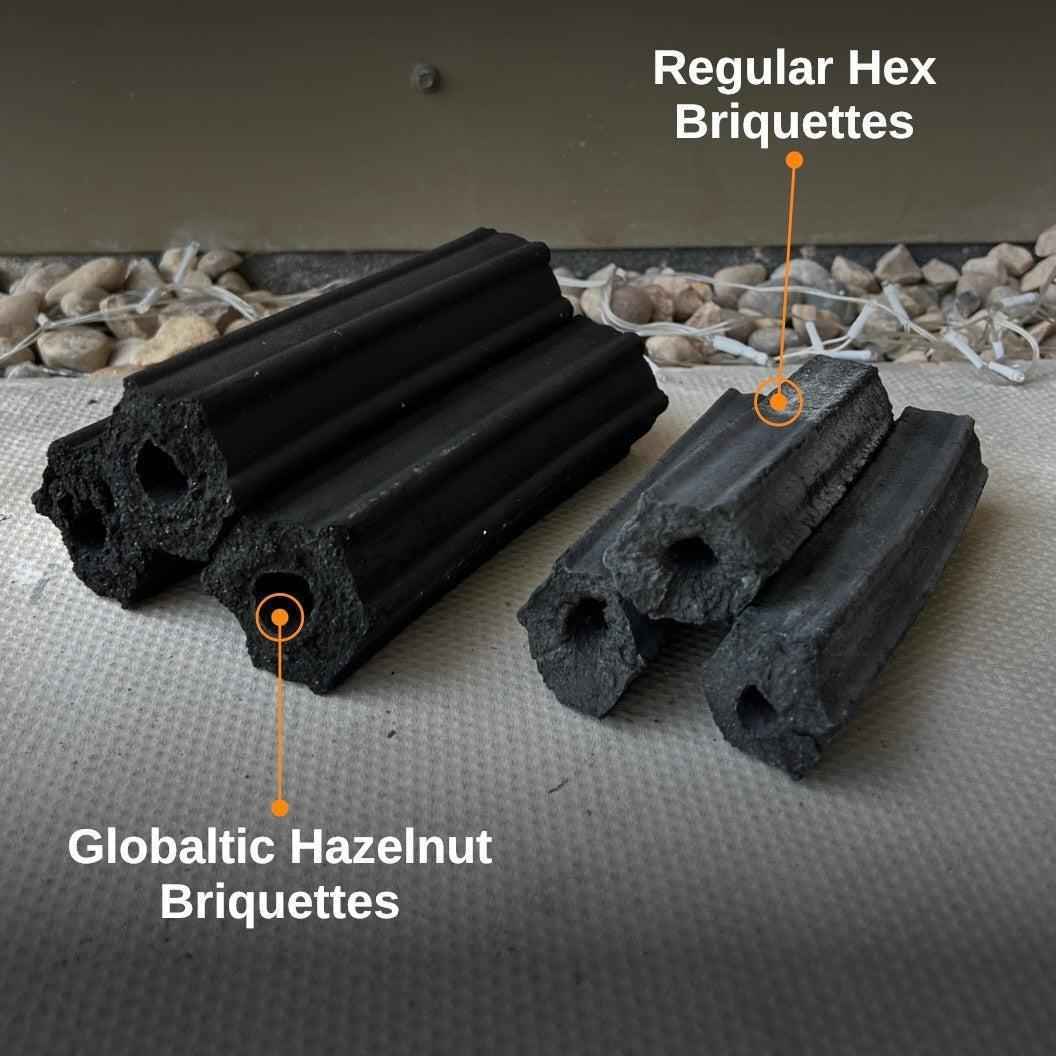
What a hexagonal briquette is
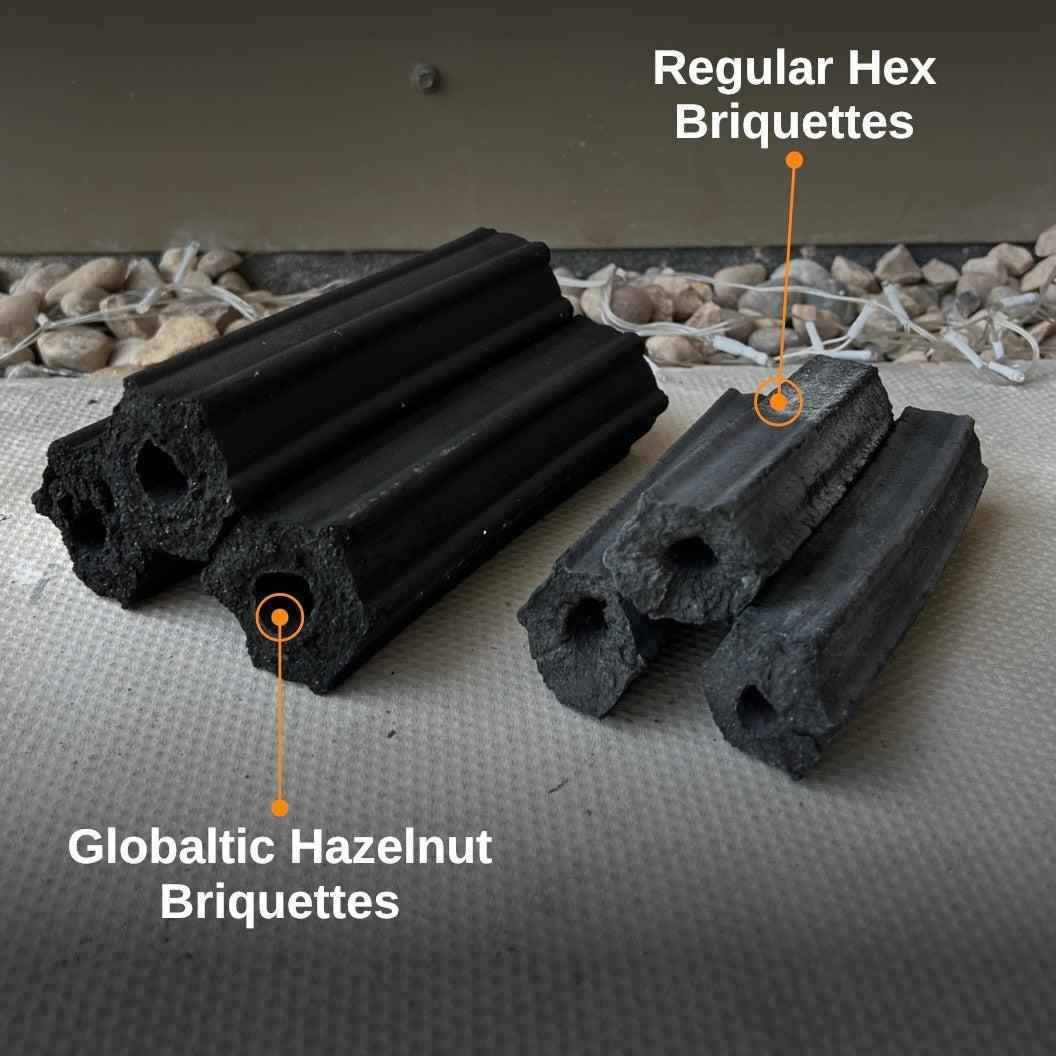
A hexagonal briquette is carbonised material pressed into a uniform six-sided log with a hole through the middle. Two things matter to a kitchen:
- Uniform size. Every piece is the same shape and density, so a load behaves the same way from one service to the next. Lumpwood varies from bag to bag and piece to piece. That's part of its character, but it also makes it less predictable.
- The hollow centre. Air is drawn up through the middle of each piece, so a stacked bed burns evenly instead of choking in the middle.
We make two, and they do different jobs:
| HazelHex | Hex | |
|---|---|---|
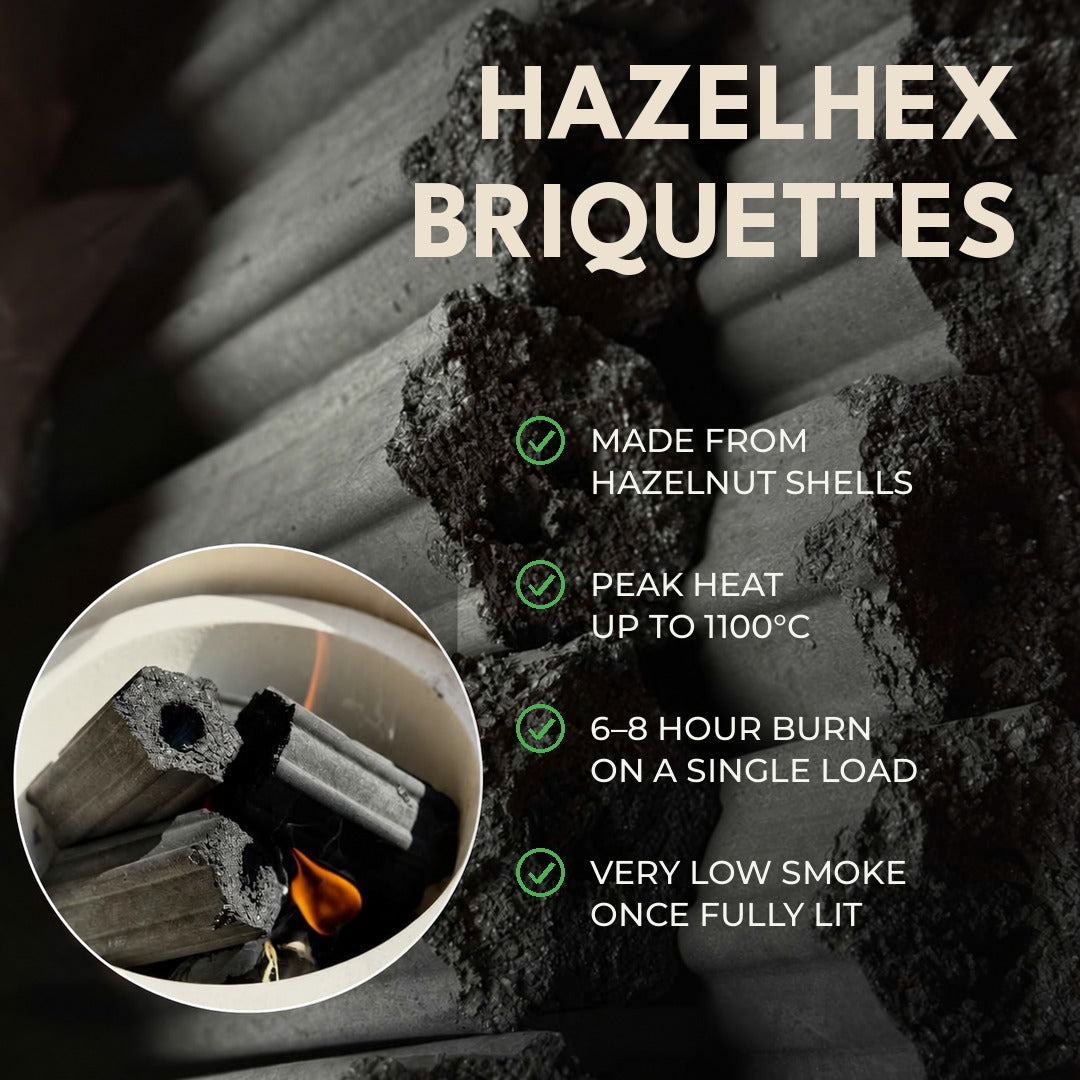
| Made from | Carbonised hazelnut shells | Recycled hardwood sawdust, Sumi Binchotan-style |
| Single load | 6–8 hours | 5–6 hours |
| Peak heat | Up to 1100°C (forced draught) | Up to 1000°C (forced draught) |
| Approx. restaurant steaks per 10kg | ~60 | ~50 |
| Best for | The base of a long service | Binchotan-style high heat at a lower price |
The operational case
1. Longer loads, fewer refuels
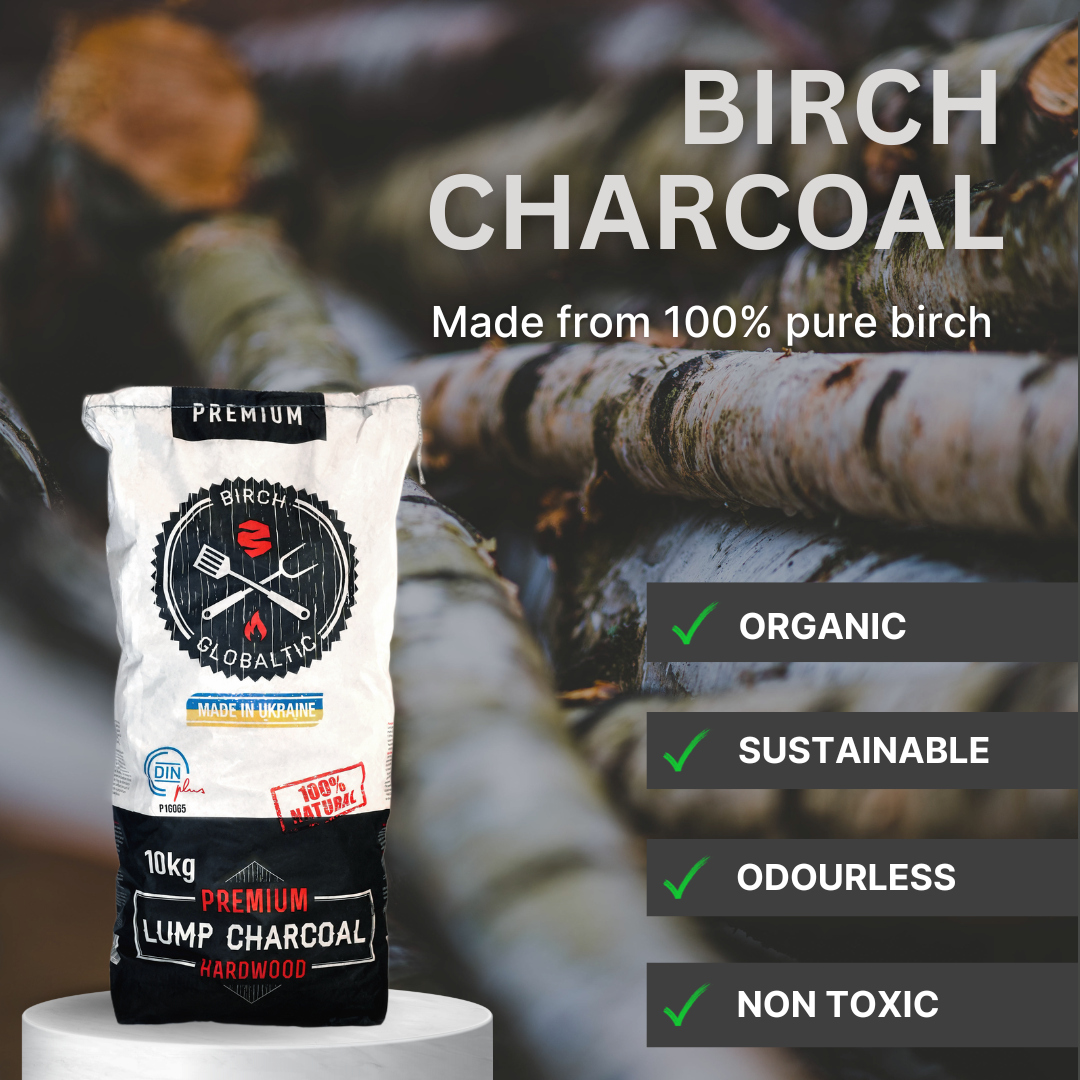
Silver birch lumpwood gives you 3–4 hours on an open grill. HazelHex holds for 6–8 hours on a single load. In practice that means fewer mid-service refuels. Each one means opening up the grill, waiting for fresh fuel to catch, and working around a cooler patch while tickets keep coming.
2. More steaks per bag
At around 60 restaurant steaks per 10kg bag, HazelHex goes about 50% further than lumpwood at around 40. That changes three things at once:
- Fewer bags to store for the same number of covers.
- Fewer deliveries and less handling. Someone has to carry those bags in and keep them dry.
- Lower fuel cost per steak, even though each bag costs more. Our charcoal per cover calculator works this through at current trade prices.
3. Steadier heat across the service
Because every piece is the same size and density, the bed holds a more even temperature. The section of the grill you use for resting at 7pm behaves much the same at 10pm.
4. Very low smoke
Once fully lit, HazelHex burns with very low smoke and no chemical odour. That's useful in open kitchens and anywhere the extraction is already working hard.
The trade-offs to plan for
Briquettes aren't a straight swap, and it's better to know this before the first service.
- They take longer to come up. Allow 40–60 minutes for a combined load to reach cooking temperature, against 10–15 minutes for birch on its own. Light earlier, or bring the lumpwood up first in the same bed.
- They give less flavour on their own. The wood character on the plate comes from the lumpwood. That's why we don't recommend running briquettes alone for most menus.
- They need dry storage. So does all charcoal, but a pallet of briquettes is a bigger stock commitment. Keep bags off the floor and under cover.

How kitchens run it: lit together, not staged
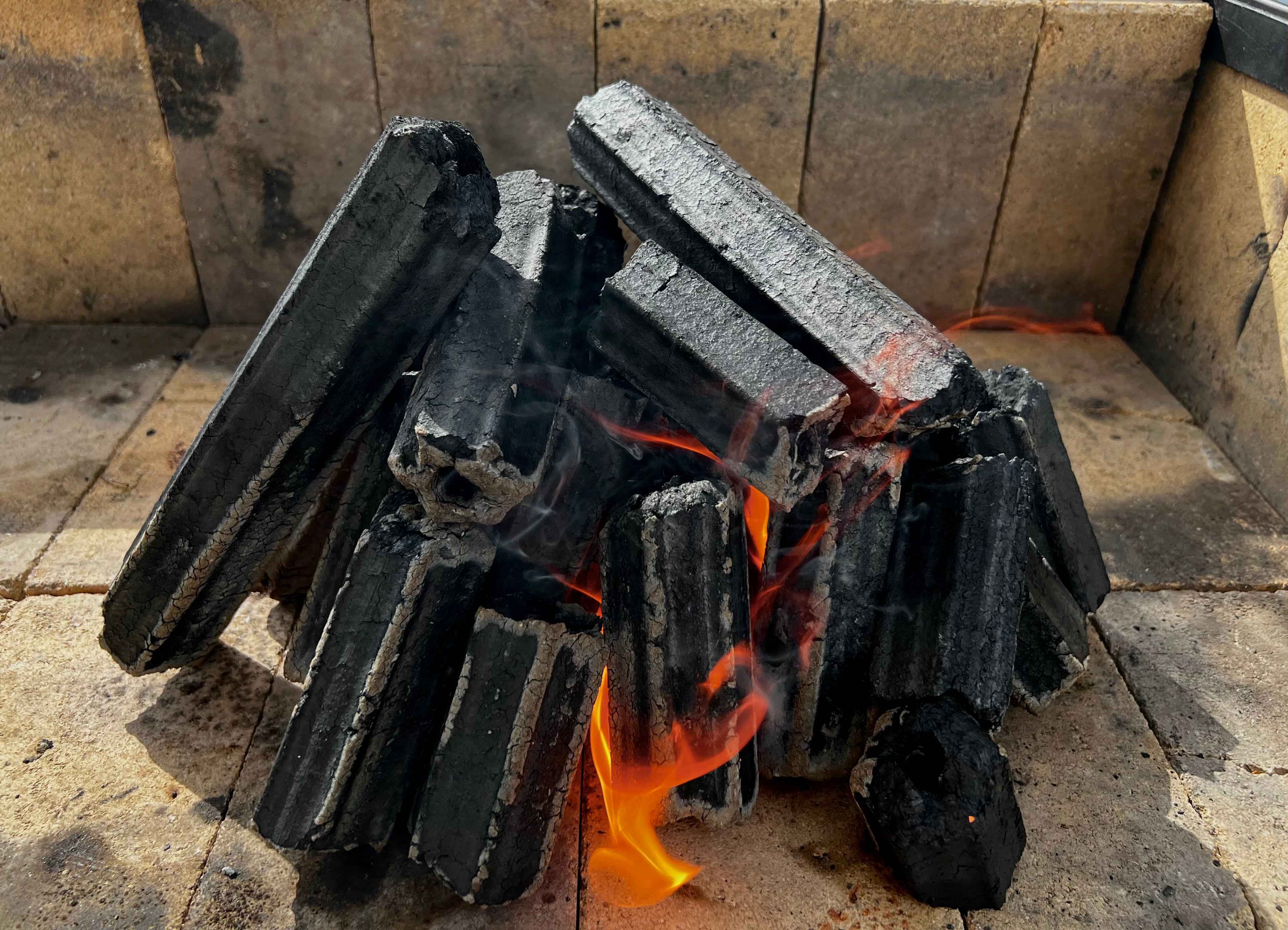
The setup we see working best is HazelHex and lumpwood lit together in the grill. HazelHex acts as the powerbase: the long, stable heat at the foundation of the fire. The lumpwood is there for extra heat and to add flavour.
- Build a bed of HazelHex across the grill with lumpwood mixed in and on top. Use more lumpwood where you'll sear.
- Light it all at once with natural firelighters. No lighter fluid.
- The lumpwood gives you usable heat early, while the HazelHex comes up to full heat over 40–60 minutes.
- Through service, top up with lumpwood for flavour and searing. The base looks after itself for hours.
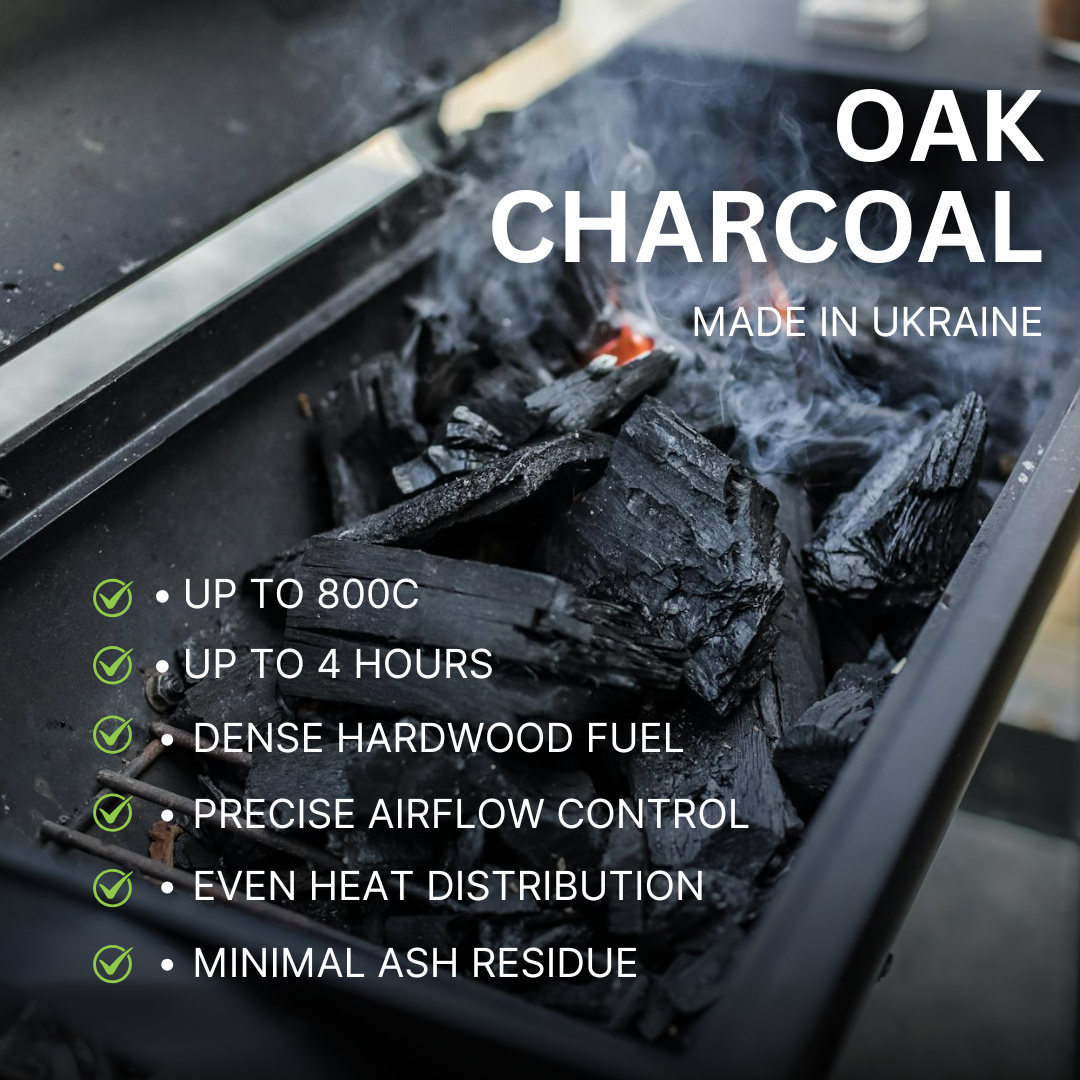
Spanish holm oak suits Jospers and asado rigs as the lumpwood. Birch and oak suit open grills and fast service.
When briquettes aren't the answer
- Short services or flash cooking. If the grill is lit for two hours for a few courses, lumpwood alone is quicker and simpler.
- Menus built around a specific wood. If the dish depends on a pronounced wood character, keep the lumpwood share high and use briquettes only as a thin base.
Frequently asked questions
Are briquettes good for restaurant grills?
Dense hexagonal briquettes work well as the base of a restaurant fire, because they hold steady heat for hours. Most kitchens light them together with lumpwood, which adds heat and flavour.
How long do hexagonal briquettes burn?
HazelHex burns for 6–8 hours on a single load in a closed grill. Hex burns for 5–6 hours.
Do briquettes take longer to light than lumpwood?
Yes. Allow 40–60 minutes for HazelHex lit together with charcoal to reach full cooking temperature. Birch lumpwood alone is ready in 10–15 minutes.
Are briquettes cheaper than lumpwood for a restaurant?
Per bag, no. Per steak, usually yes, because each 10kg bag of HazelHex cooks around 60 restaurant steaks against around 40 for lumpwood. Our charcoal per cover calculator works through the numbers at trade prices.
What is the difference between HazelHex and Hex?
HazelHex is made from carbonised hazelnut shells and burns longer (6–8 hours, up to 1100°C). Hex is a Sumi Binchotan-style briquette made from recycled hardwood sawdust (5–6 hours, up to 1000°C) at a lower price.
Related: what restaurant-grade charcoal means and what charcoal UK restaurants use.
Try it on your own grill
The quickest way to know is to run a service on it. Tell us your grill, your covers and your current fuel through our hospitality page, and we'll suggest a starting mix. A trade account opens from a two-bag order, so you can test HazelHex alongside your lumpwood before committing to a pallet. Already know what you need? See wholesale.
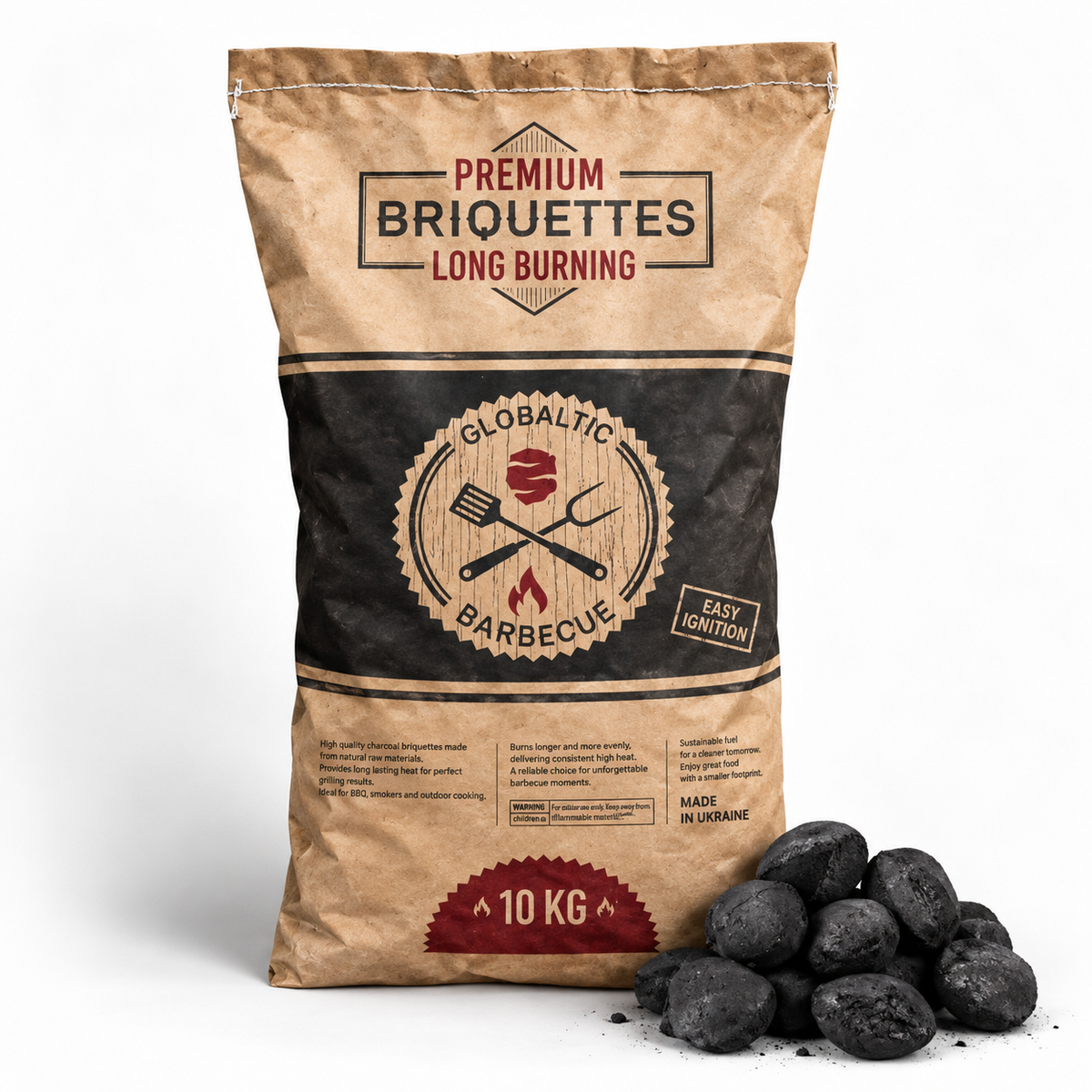
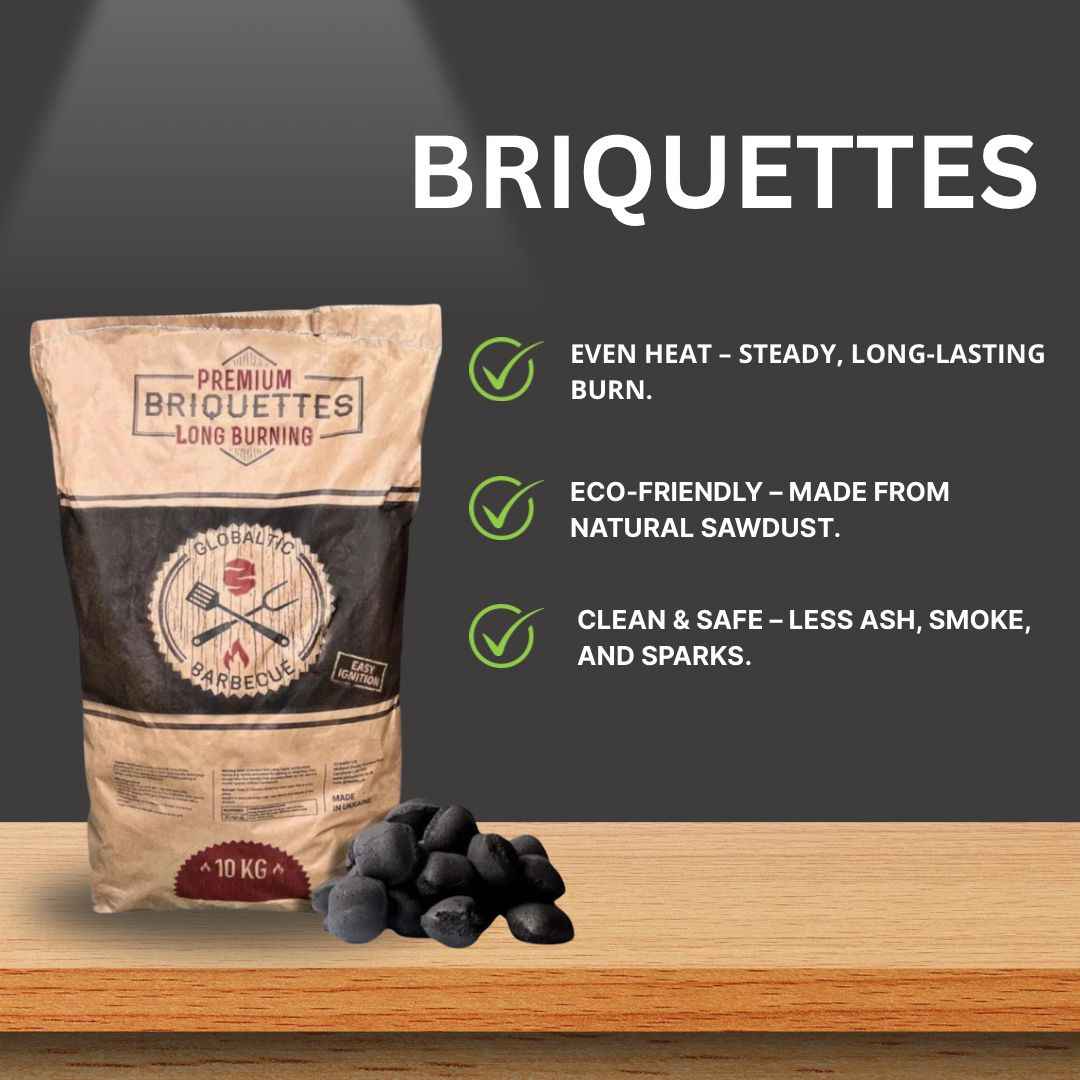
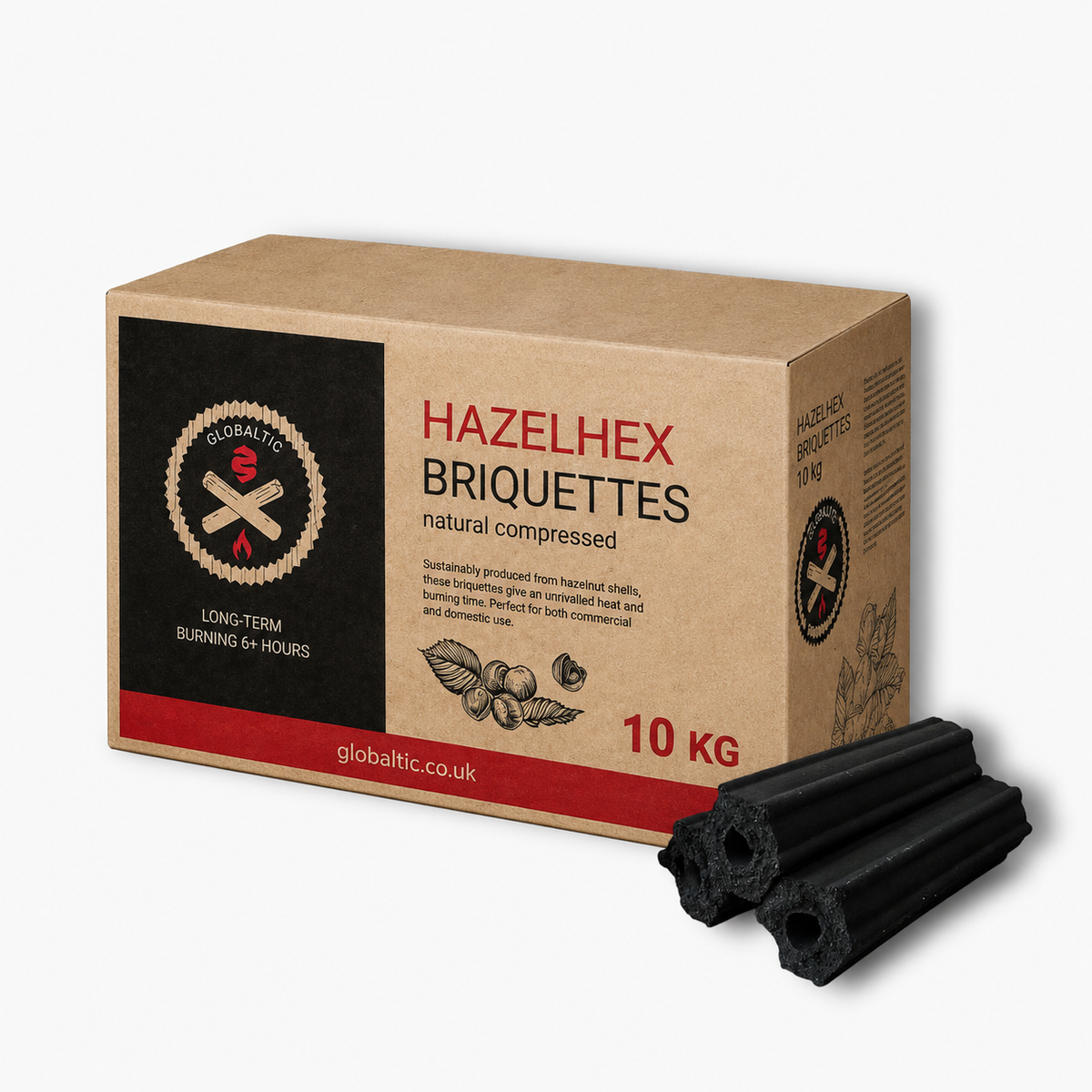
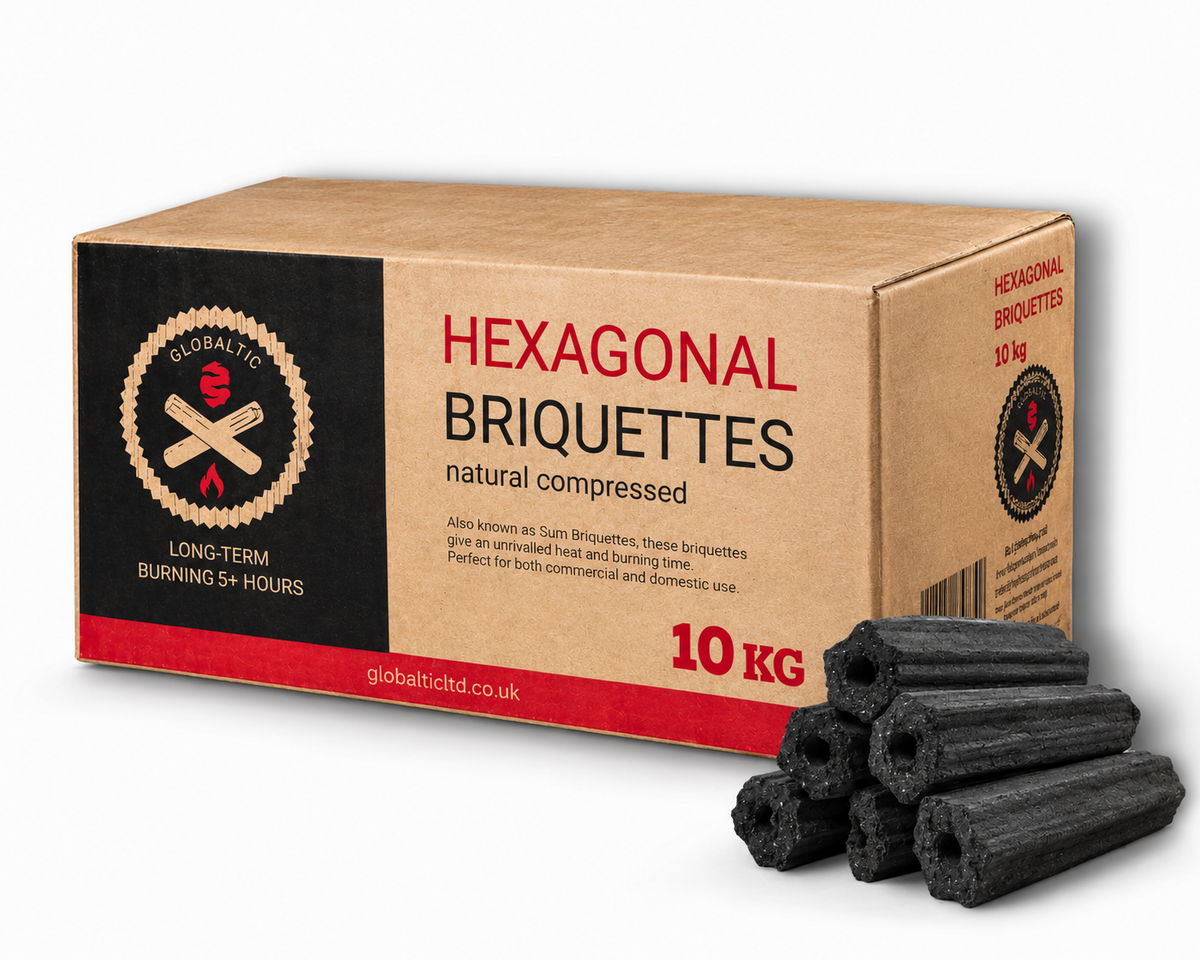
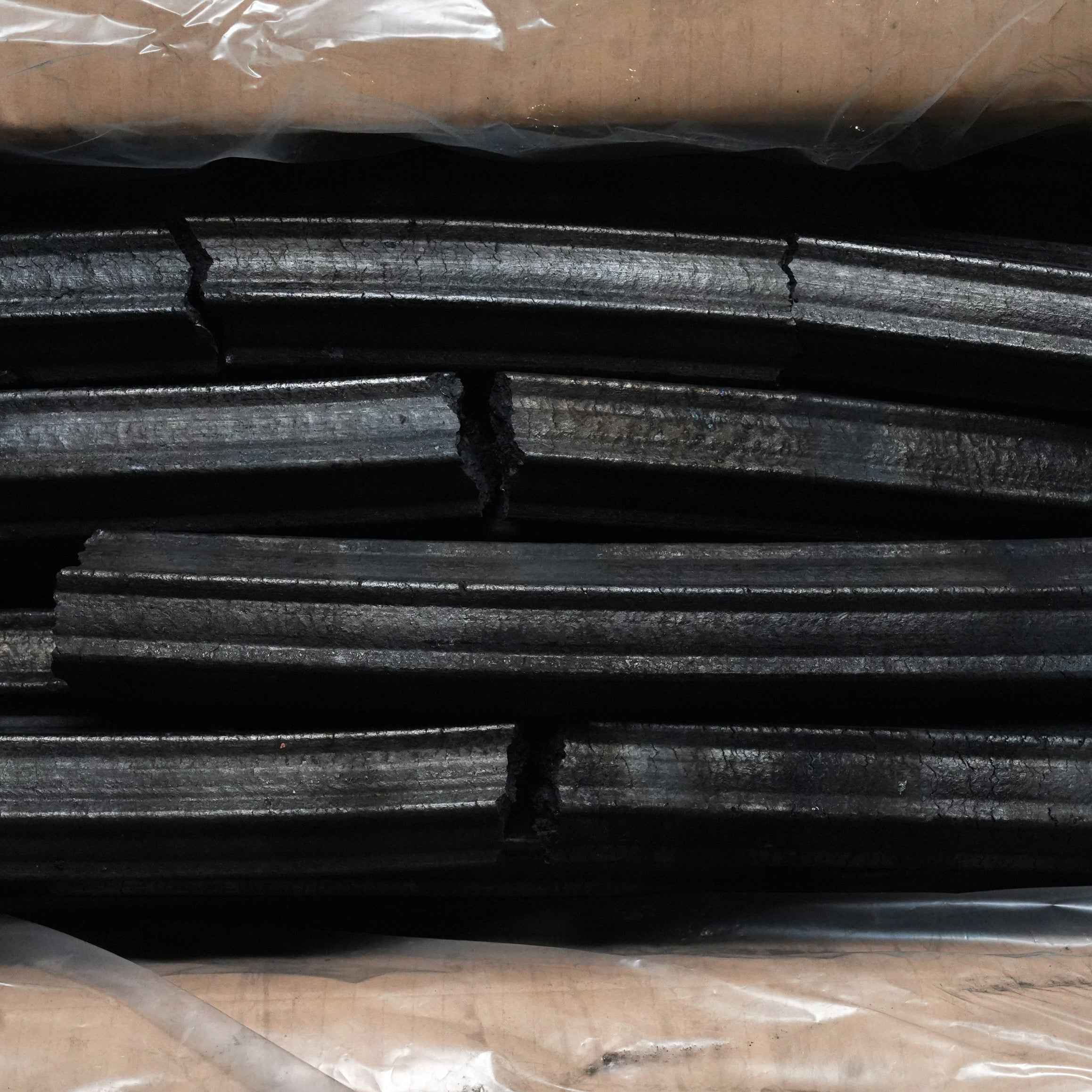
HazelHex Briquettes 10kg · Hex Briquettes 10kg · Spanish Holm Oak · Silver birch lumpwood
Share:
How to become a Globaltic charcoal stockist: pallet tiers, prices, margins and lead times
How much charcoal does a Josper use? The weekly maths for a UK kitchen