

By Klim Artemov, founder of Globaltic
Short answer: There's no single secret brand. The UK's serious live-fire kitchens, from Michelin-starred dining rooms to steak groups and event caterers, tend to run the same system: graded single-species lumpwood for sear heat and flavour, dense briquettes for a long, steady base, and a supplier that delivers the same spec every time. Consistency matters more than any single burn-time figure.
We supply charcoal to kitchens including Michelin-starred Mana in Manchester, two-Michelin-star Opheem in Birmingham, and Da Terra in Bethnal Green. Ross Anderson, founder of Roam Catering, puts it simply: "I'm picky about fuel because my whole cook depends on it. Globaltic passed the test, and they've kept passing it, every delivery, for years."
What professional kitchens look for in charcoal
Home cooks judge charcoal on one cook. A restaurant judges it on hundreds of services. That changes what matters.
- The same bag, every time. A chef dials in a grill around how a load behaves: how fast it lights, how hot it peaks, when it needs feeding. A bag that behaves differently from last week's breaks that setup mid-service.
- Heat that lasts the service. Fewer refuels means fewer cold spots, less ash lifting and less time a chef spends on the fire instead of the food.
- Low ash and few fines. Ash chokes airflow as a fire matures. Fines, the dust at the bottom of the bag, burn off fast and are wasted money.
- Delivery that lands when it's booked. Running out on a Friday is the most expensive charcoal problem there is.
If you want the measurable version of this (carbon, moisture, ash, fines and burn data), we've set it out in what "restaurant grade" charcoal actually means.
The fuel system most live-fire kitchens run
Lumpwood for sear heat and flavour
Single-species lumpwood lights quickly, reaches high temperatures and gives the food wood character. The choice of species is about the heat profile you want:
| Lumpwood | Peak heat | Burn time | Where it fits |
|---|---|---|---|
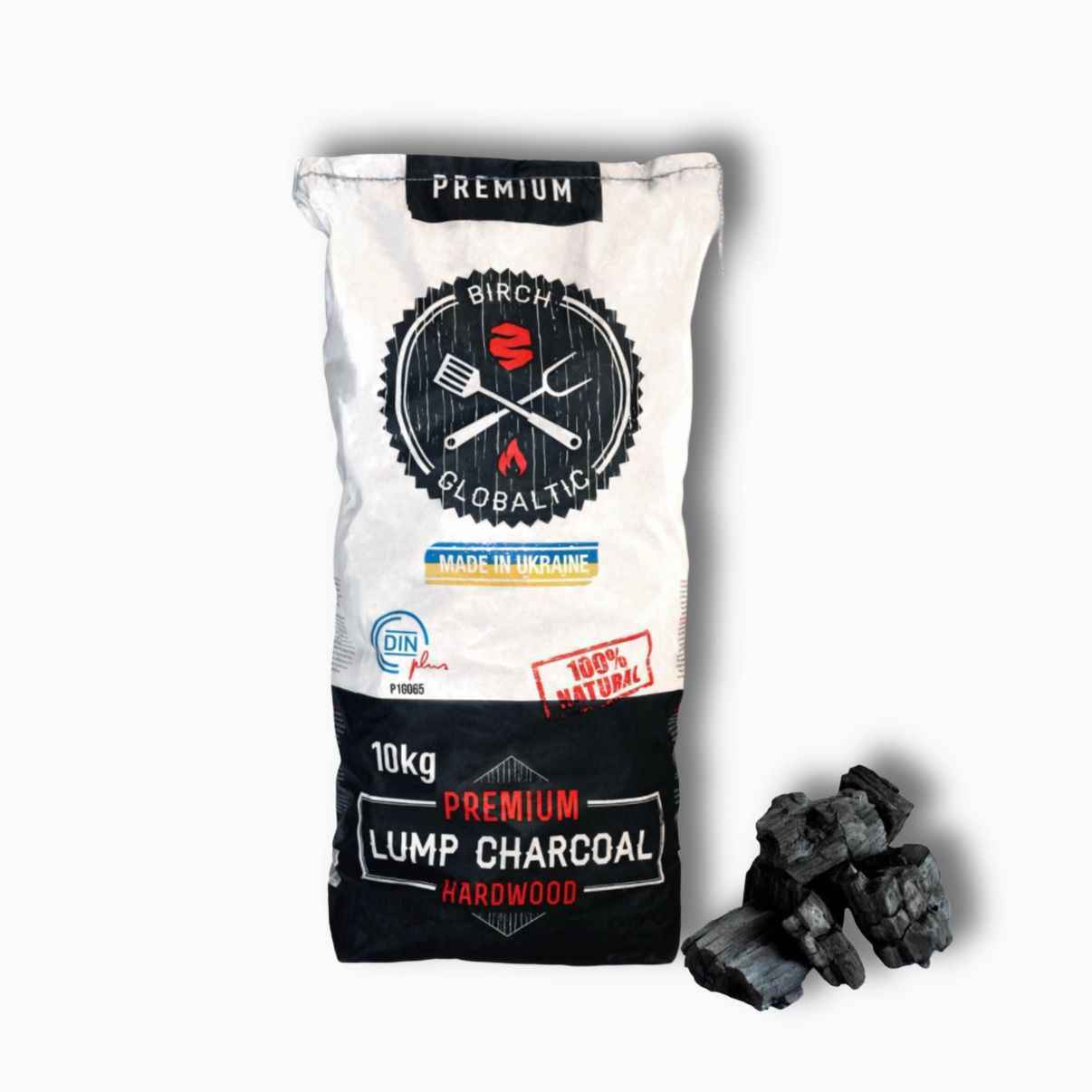
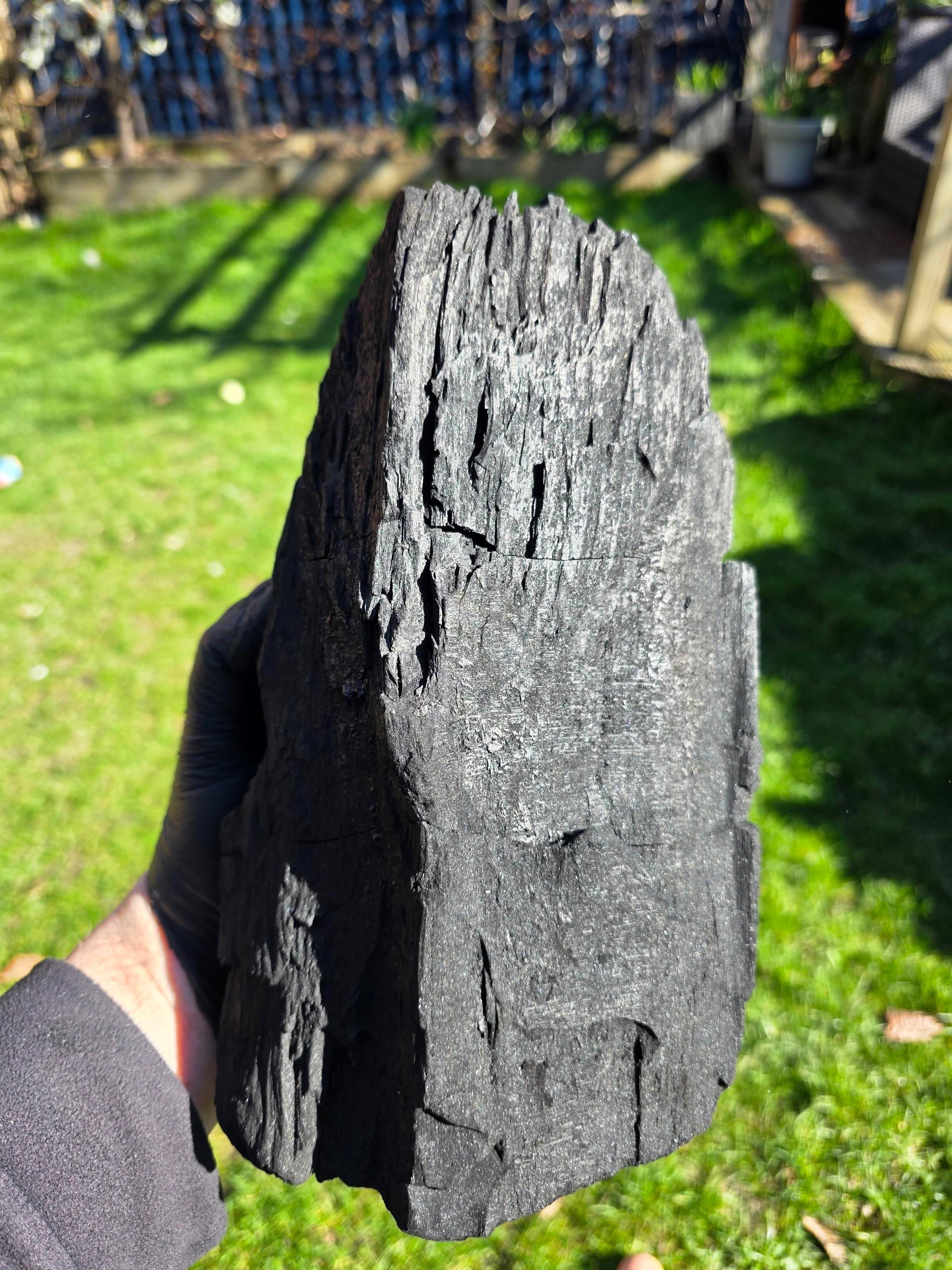
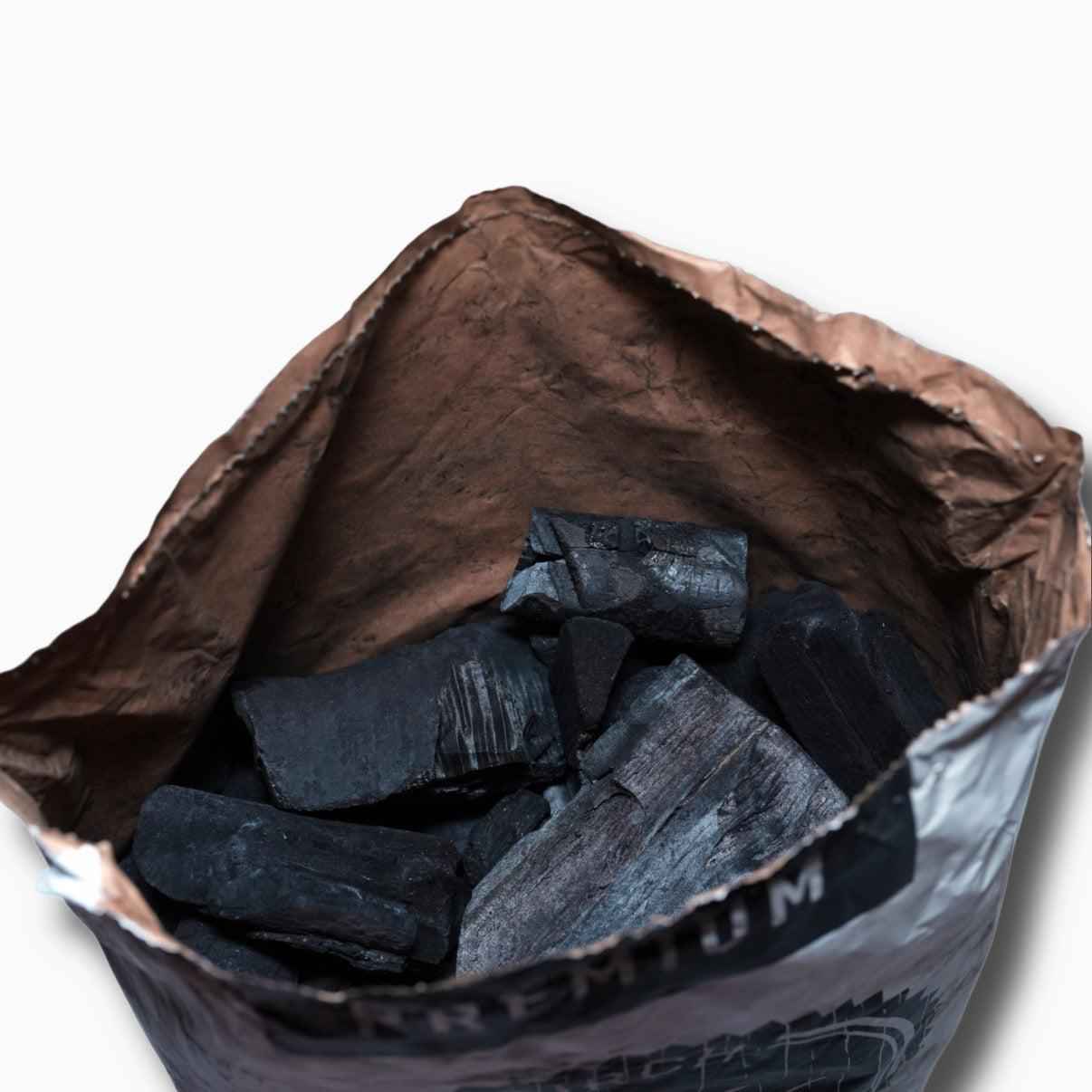
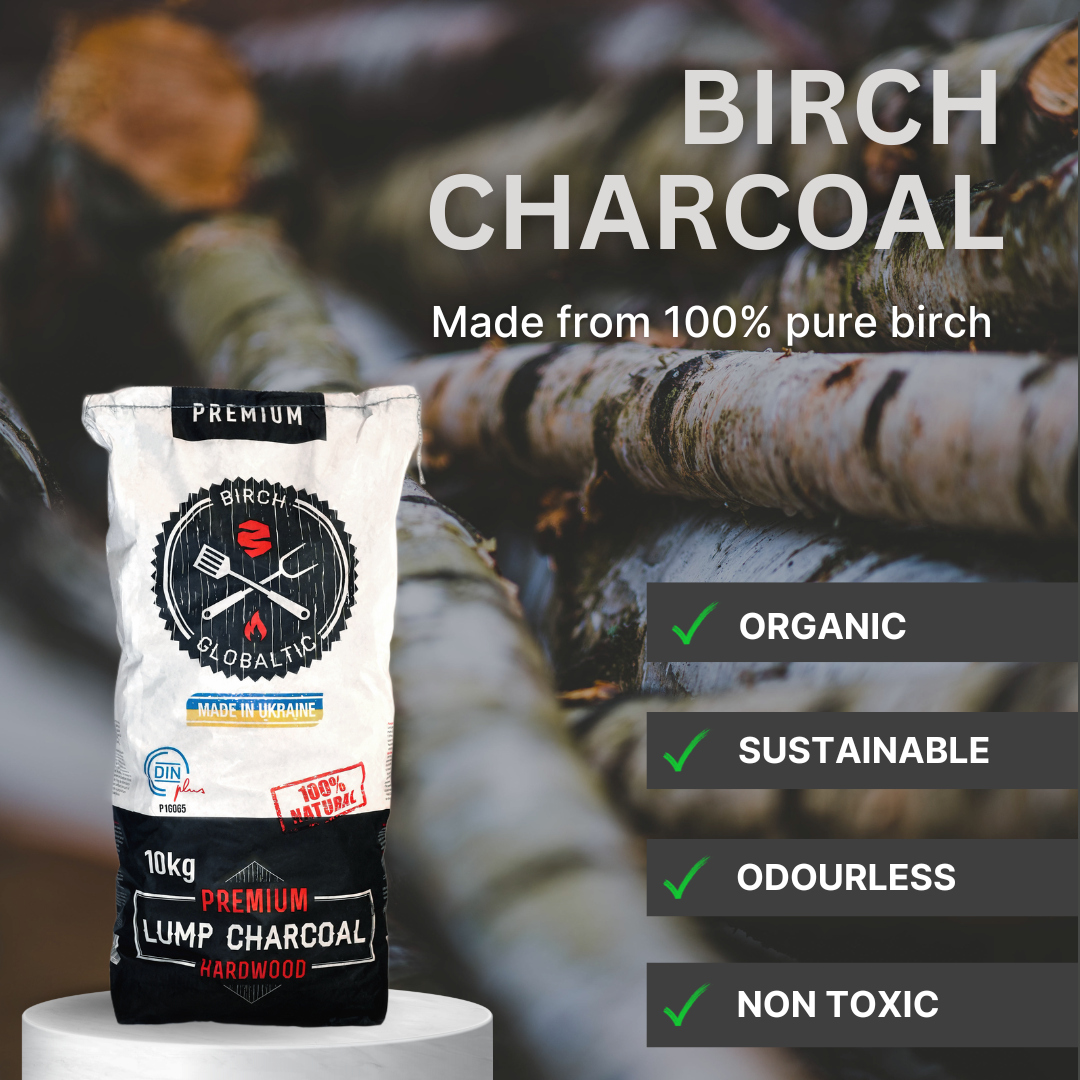
| Silver birch | Up to 700°C | 3–4 hours open grill | Everyday grilling; clean, neutral flavour; 80–90% carbon, under 3% ash |
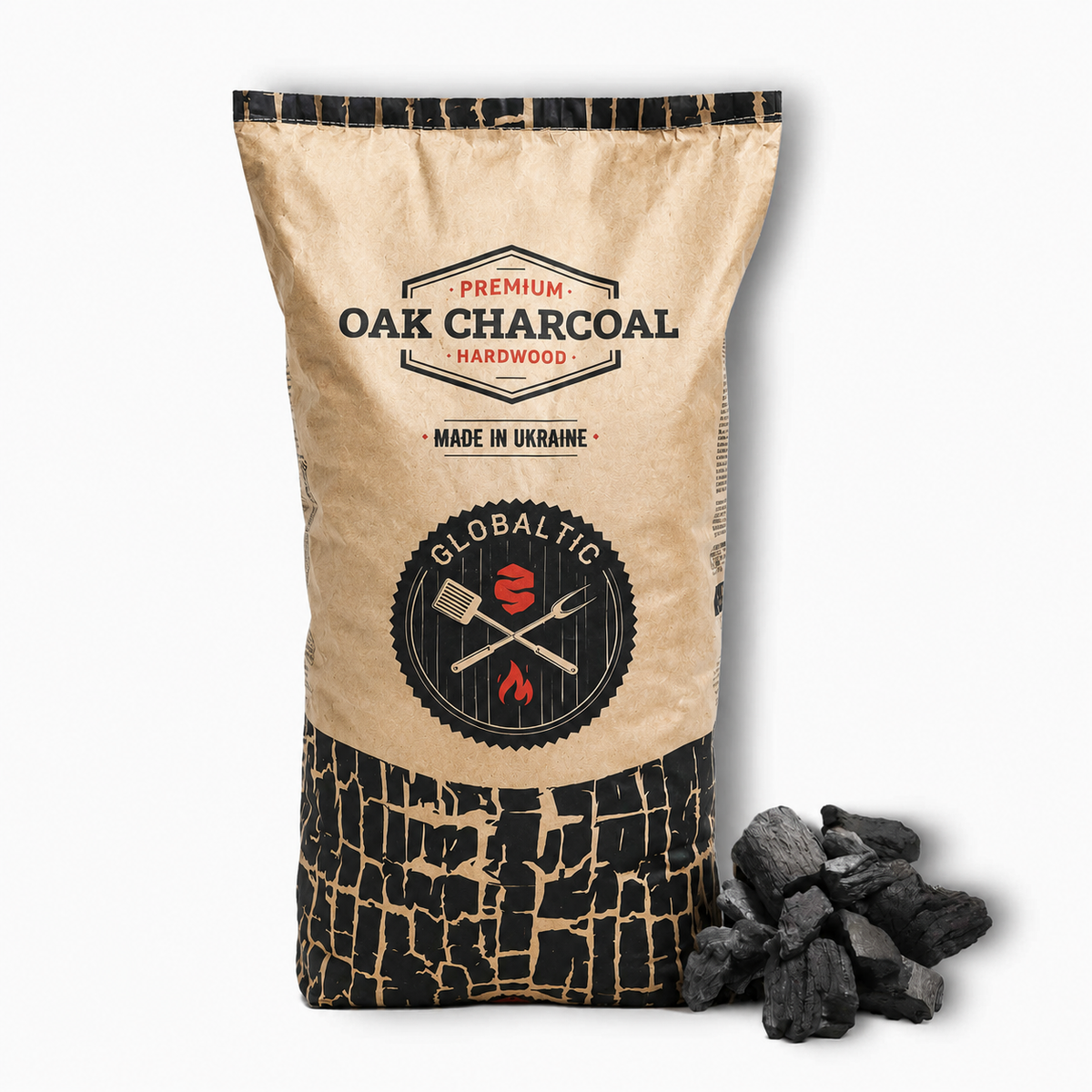
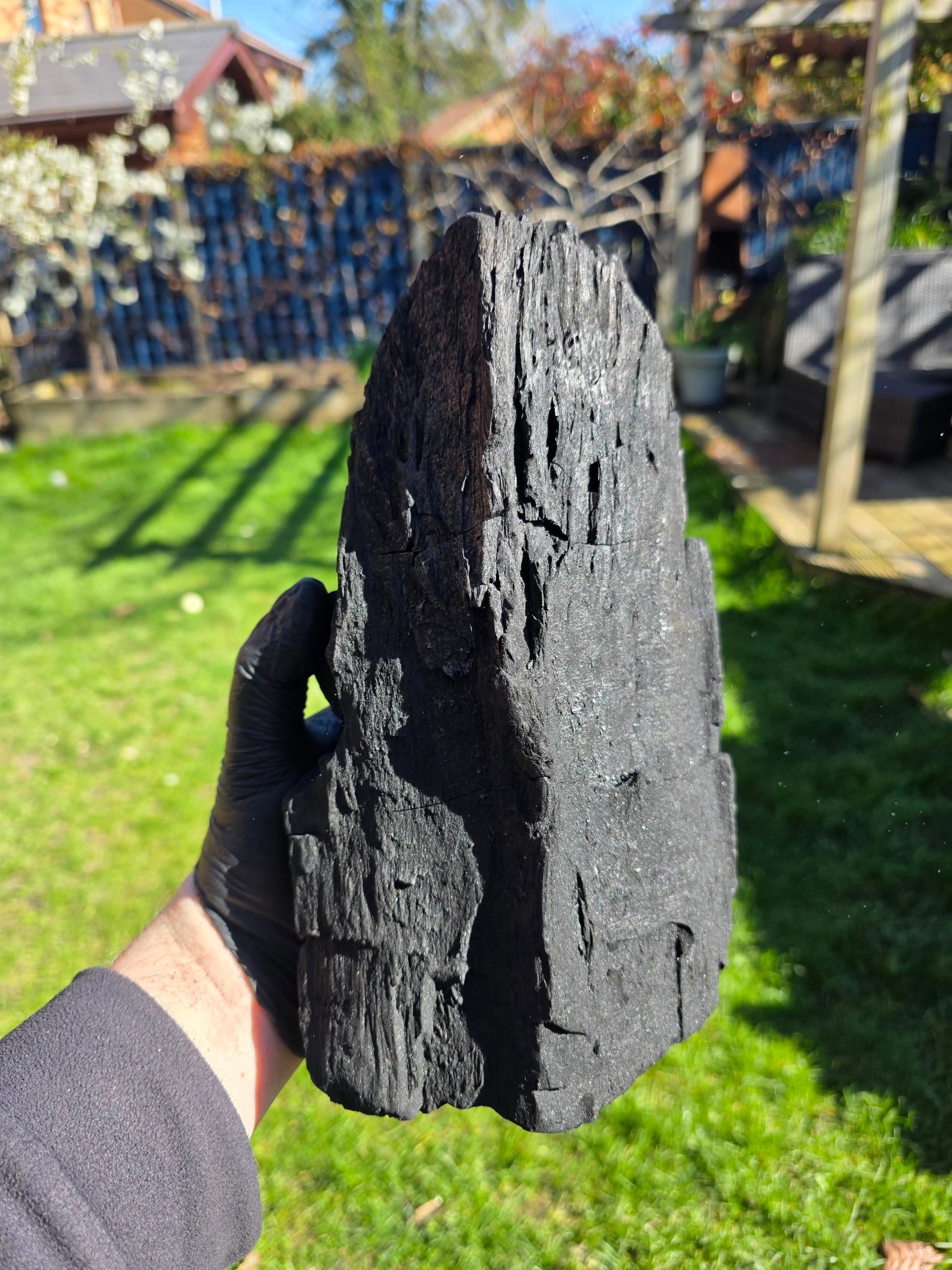
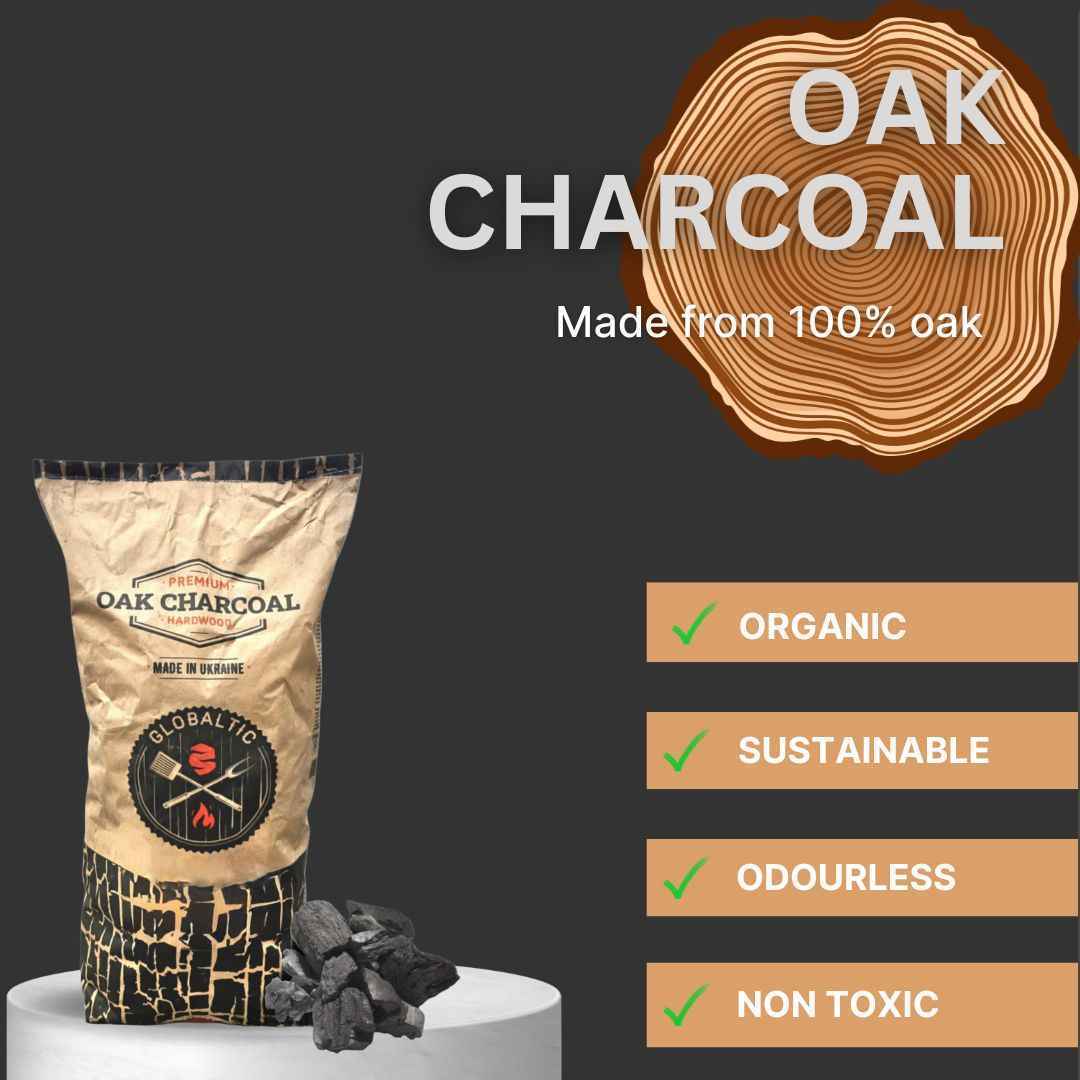
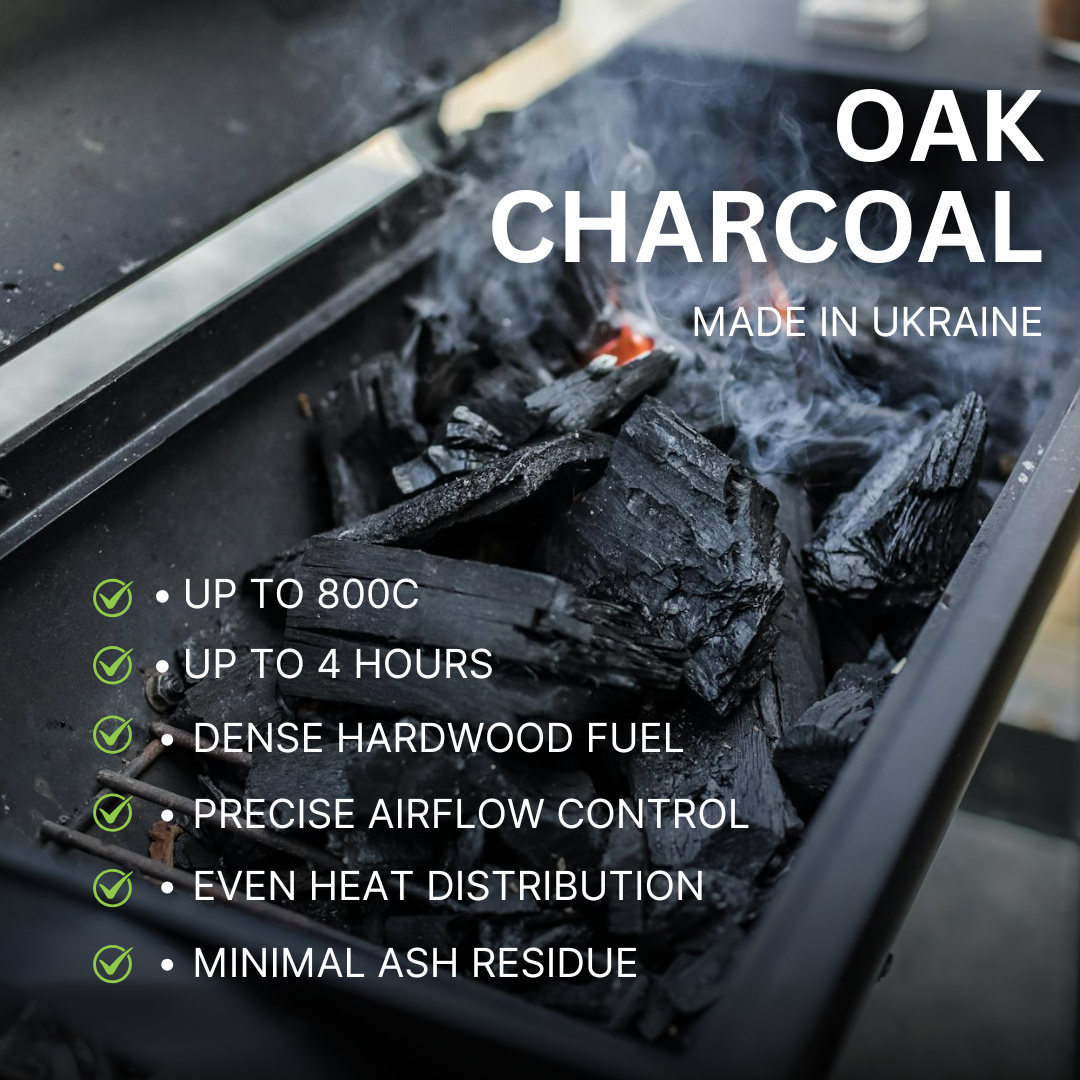
| Oak | Up to 800°C | Up to 4 hours open grill | Steak and heavier proteins; deeper heat |
| Spanish Holm Oak | Up to 950°C | 4–6 hours, closed oven | Josper-style ovens and asado; around one refuel per 8-hour service |
Briquettes for the base
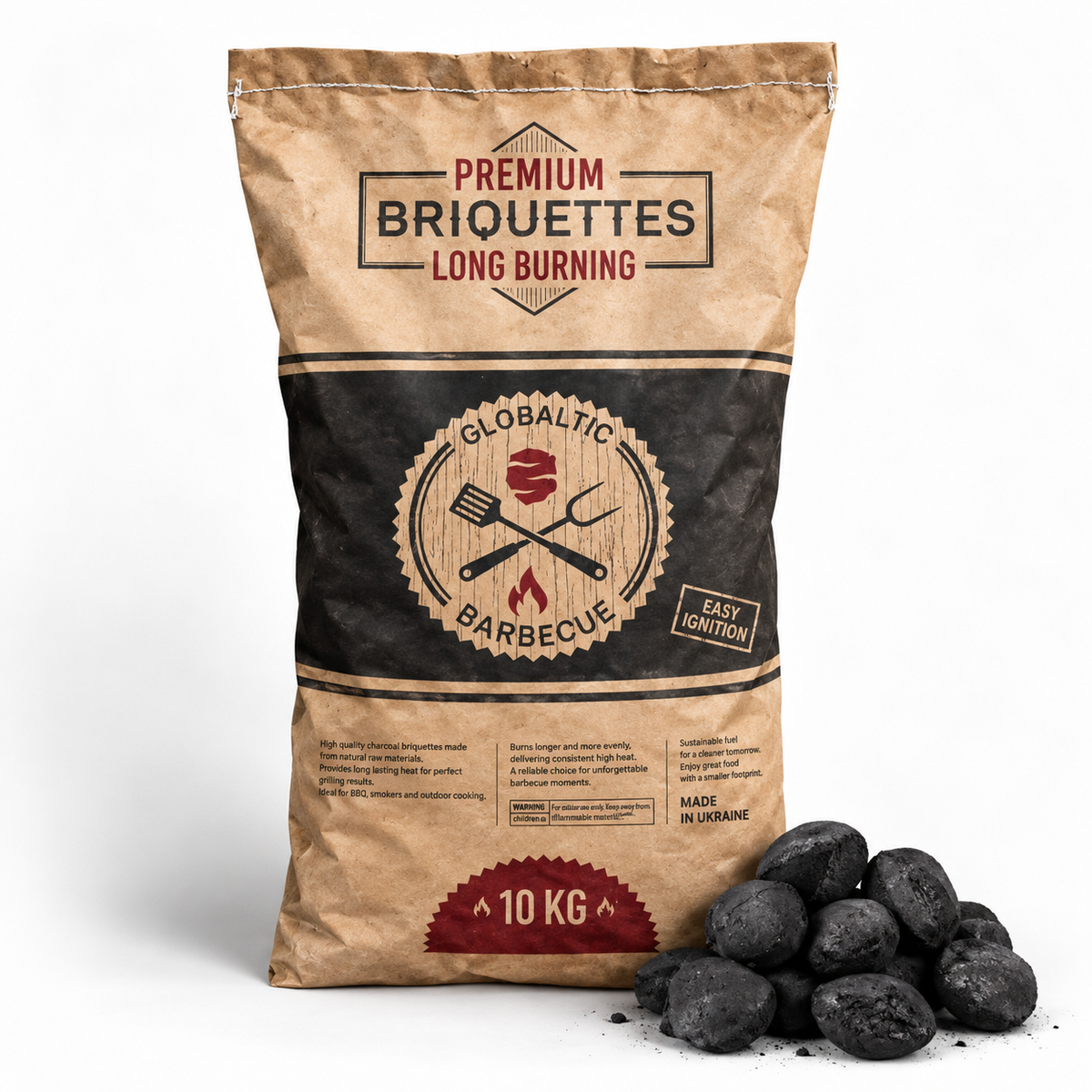
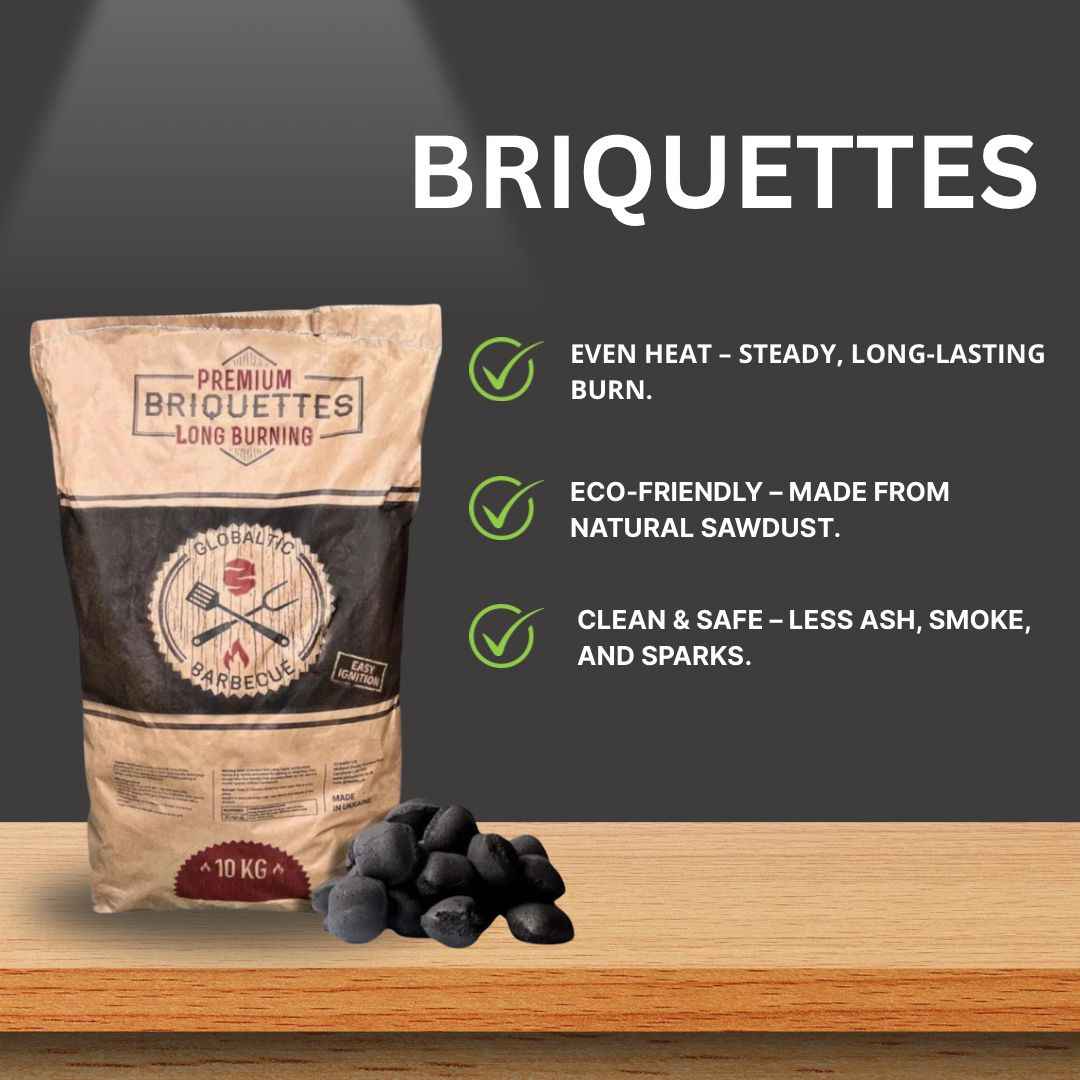
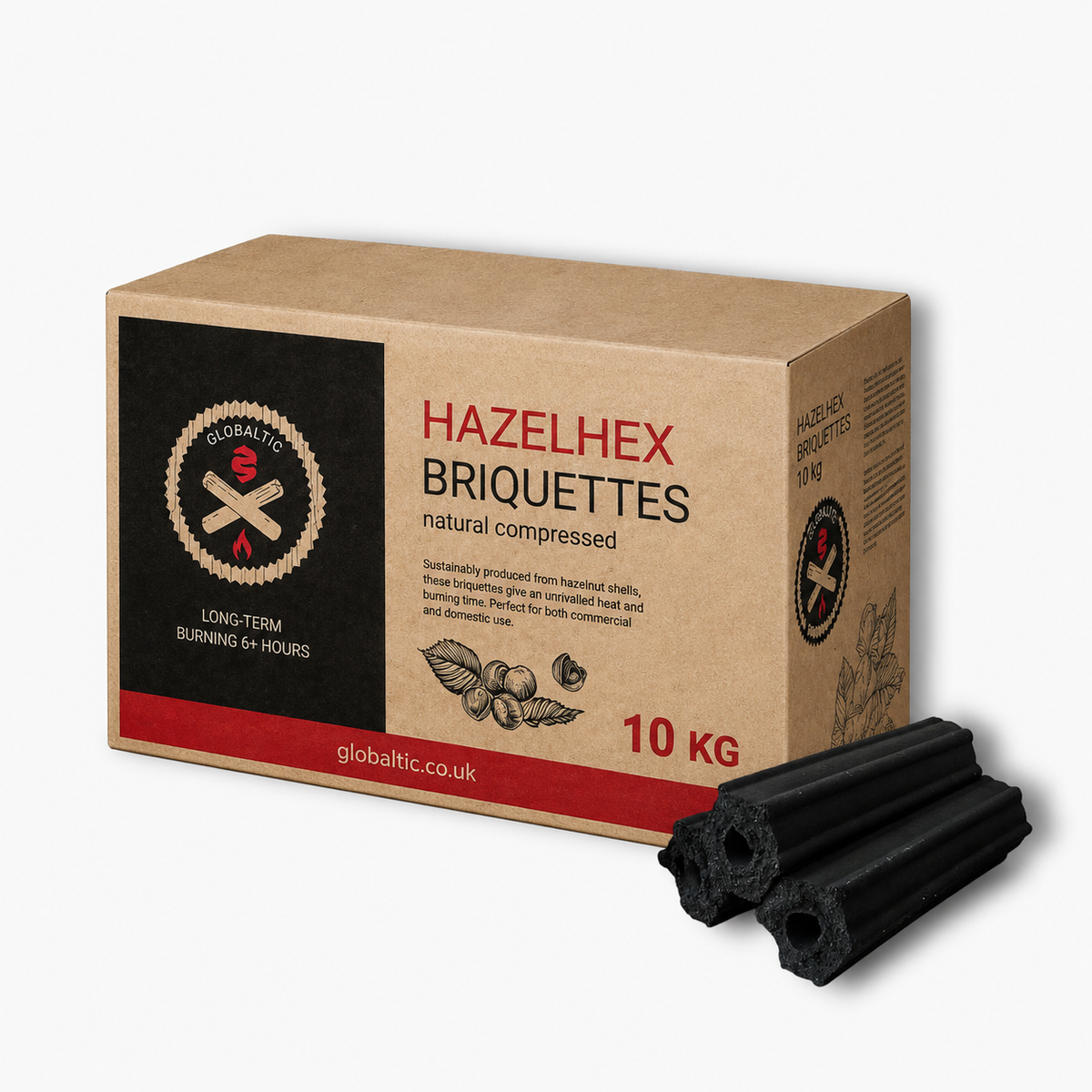
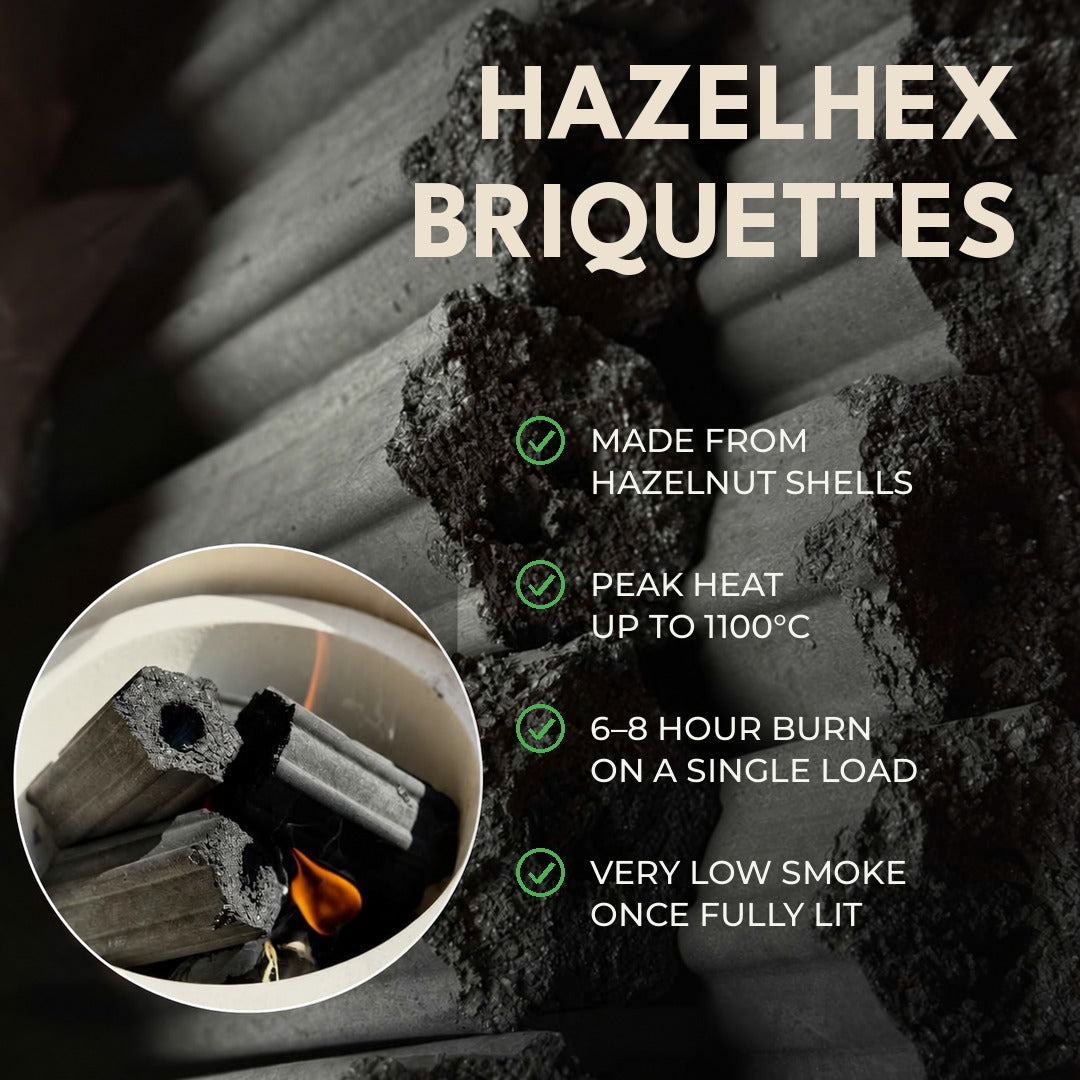
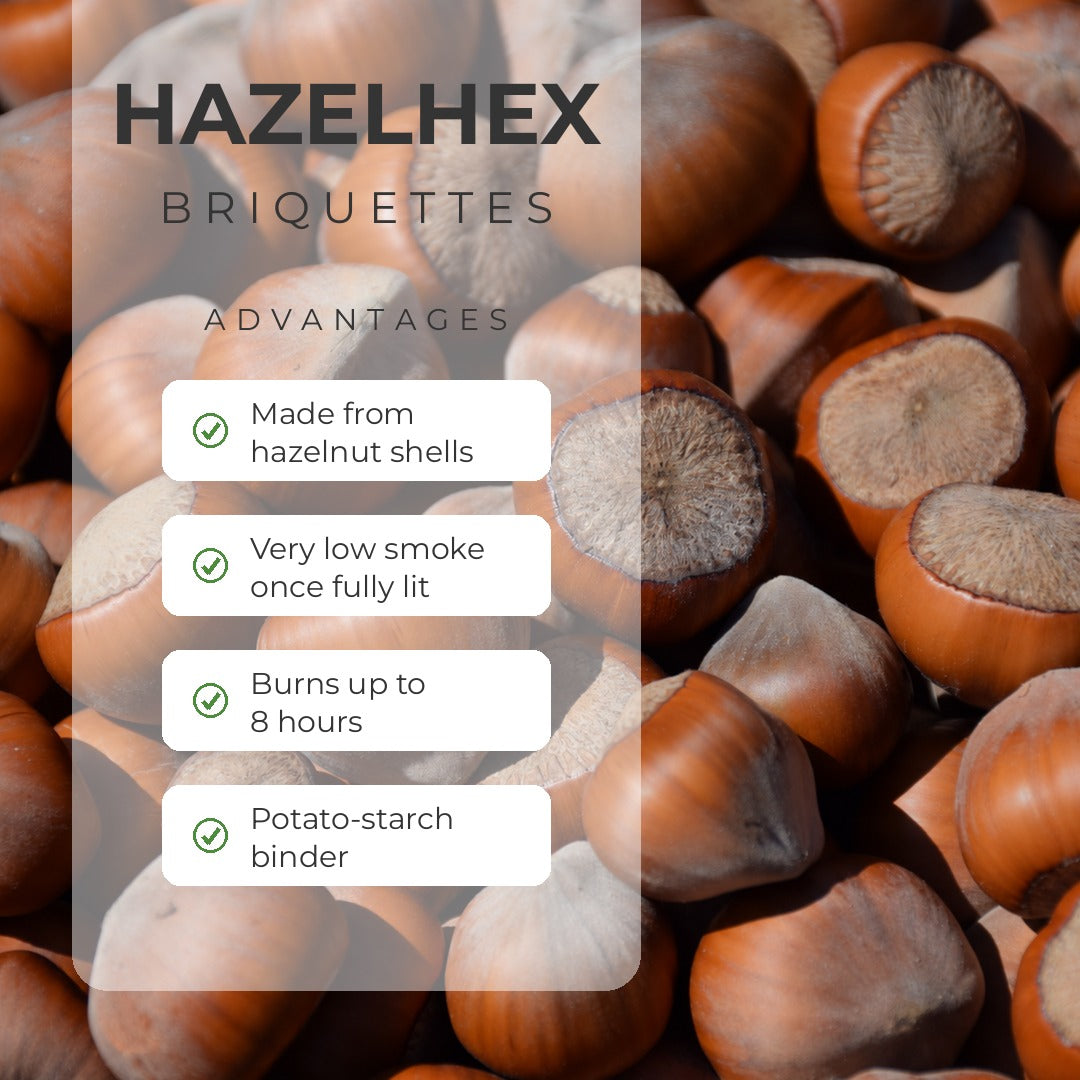
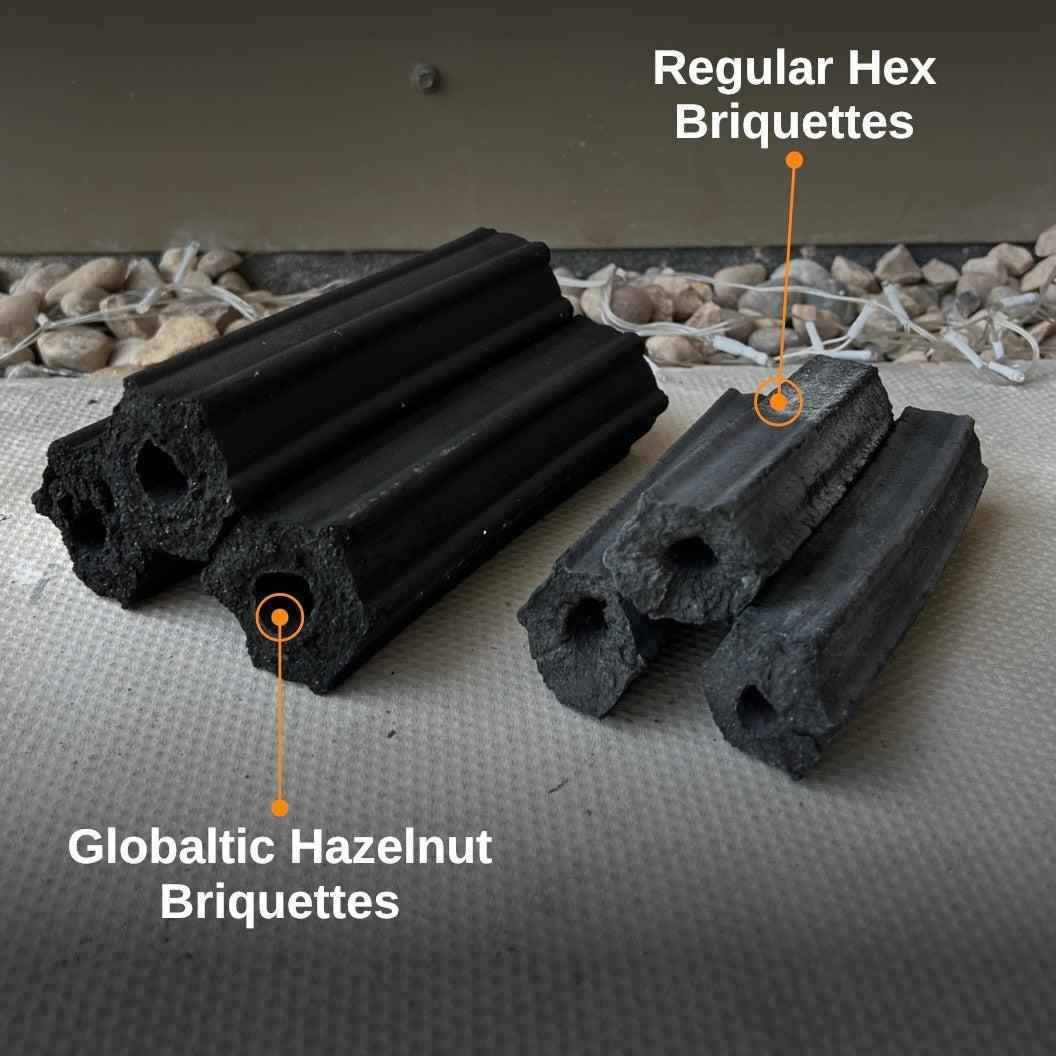
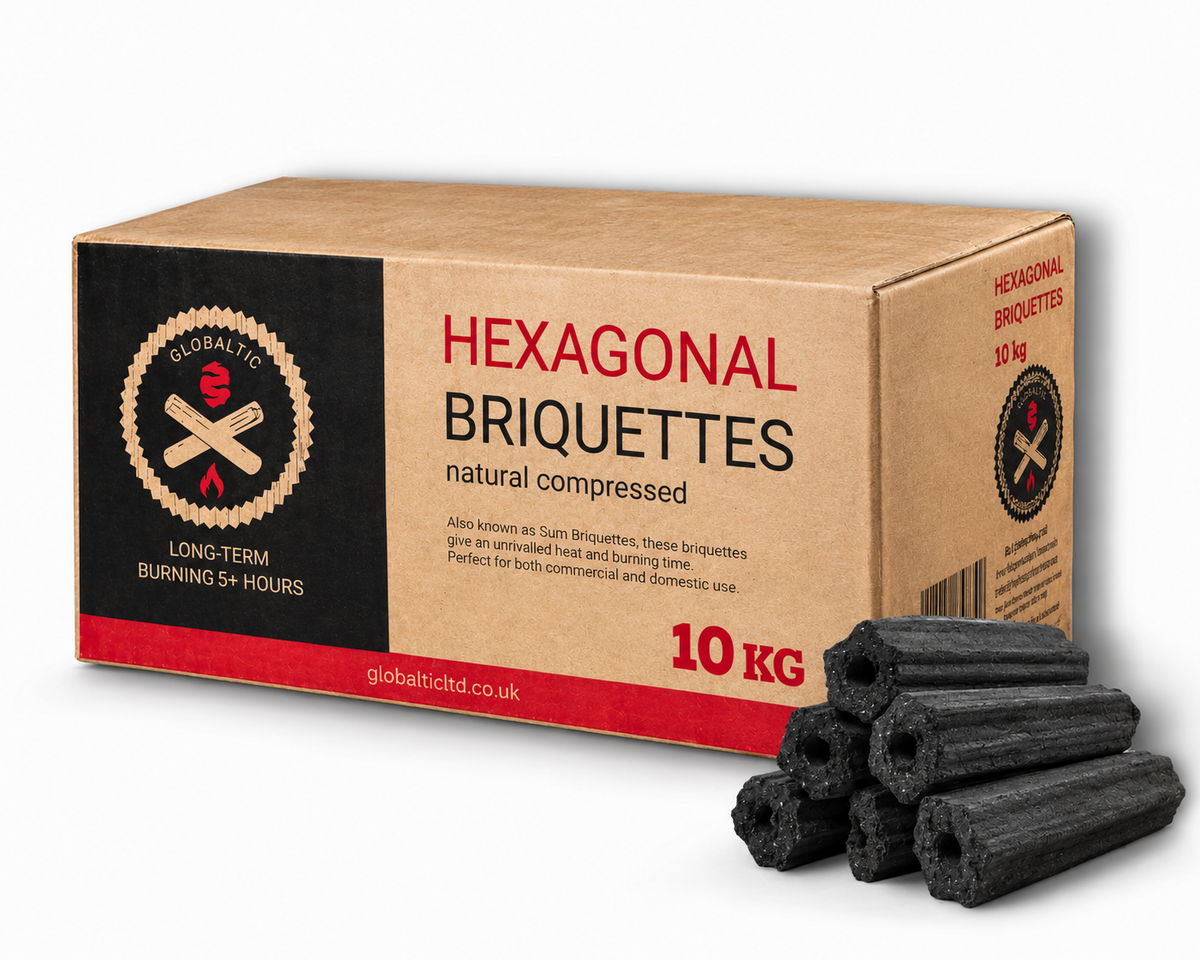
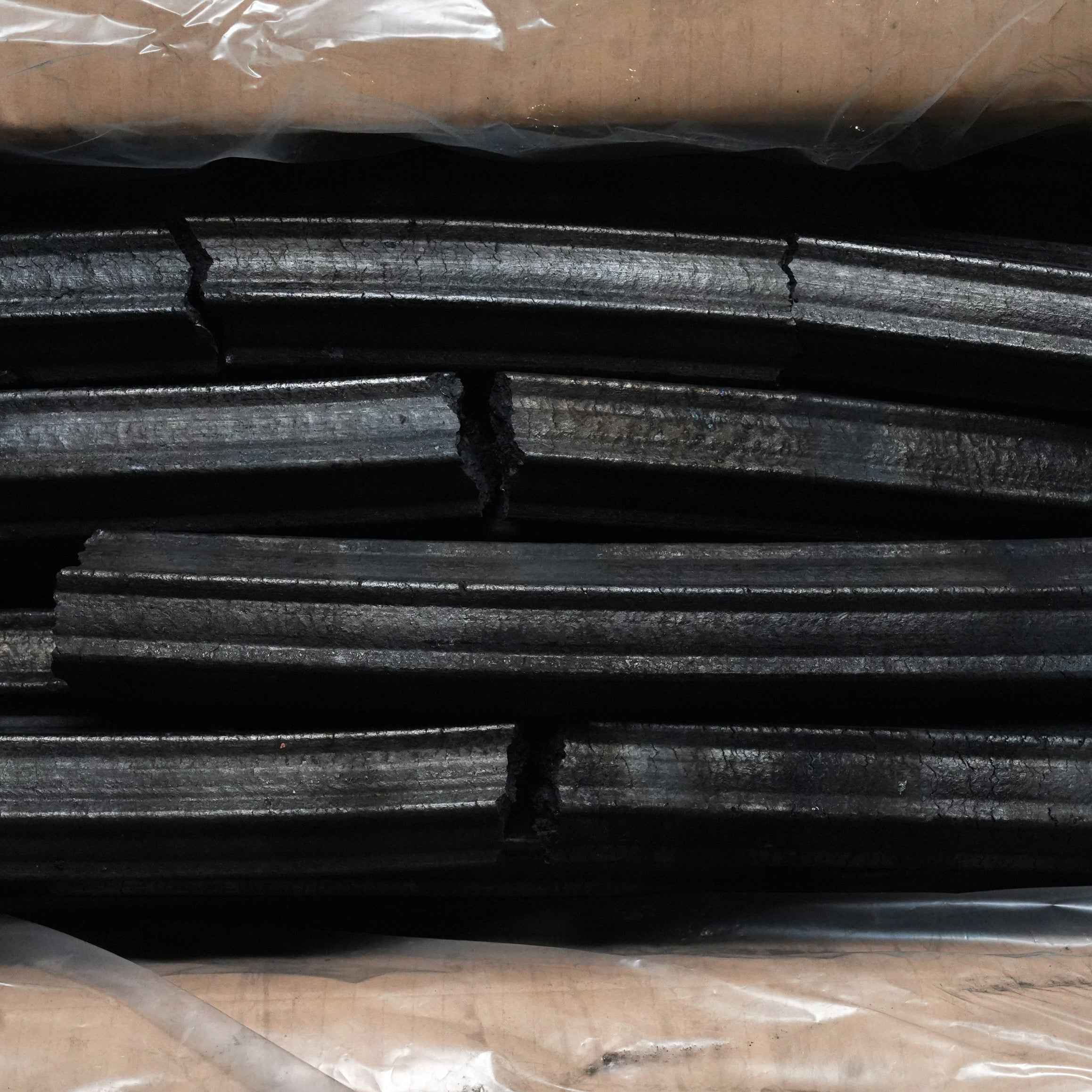
Quality briquettes give the long, stable bed that lumpwood alone can't. HazelHex is pressed from recycled hazelnut shells with a natural starch binder into hollow-centre hexagons. It is rated at 6–8 hours on a single load and up to 1100°C at peak. Our Hex briquettes are made Sumi Binchotan-style from recycled hardwood sawdust, burning 5–6 hours and up to 1000°C.
Lit together, not in stages
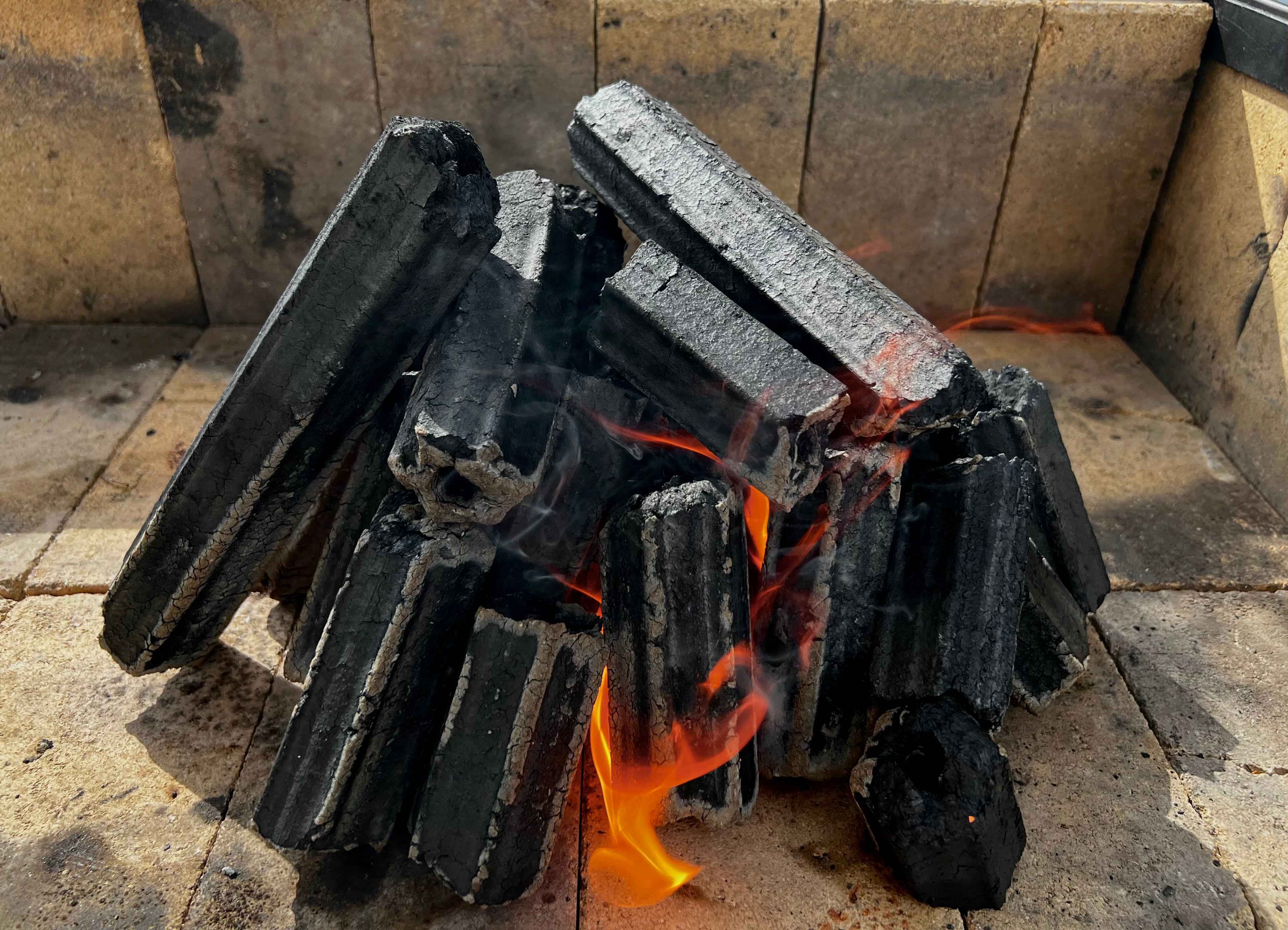
The setup we see working best in professional grills is HazelHex and lumpwood lit together in the grill. HazelHex acts as the powerbase. The lumpwood is there for extra heat and to add flavour. A combined load is typically service-ready in 40–60 minutes.

Who runs on it
These are kitchens and operators we currently supply. Each cooks differently, which is the point: the fuel gets specced to the grill and the service, not the other way round.
- Mana, Manchester. Simon Martin's Michelin-starred tasting-menu restaurant in Ancoats. Michelin kitchens don't leave anything to chance: the team dials in one setup and it holds through service.
- Opheem, Birmingham. Aktar Islam's two-Michelin-star modern Indian restaurant.
- Da Terra, London. Michelin-starred restaurant inside the Town Hall Hotel, Bethnal Green.
- Ember, Wellingborough. James Peck's wood-fired restaurant, cooking almost everything over live flame. Small plates, big heat, no room for a fuel that misfires mid-service.
- Pasture. Fire-based steak restaurants founded by chef-owner Sam Elliott in Bristol in 2018, now a growing group.
- Flat Iron. Steak restaurants where the grill sets the pace of the whole room.
- Great Scotland Yard Hotel and Exclusive Collection. Hotel kitchens, where consistency across outlets matters as much as peak heat.
- Roam Catering. Ross Anderson's private live-fire events, cooked anywhere from estates to fields.

How to choose for your own kitchen
- Start with the grill. A Josper or closed charcoal oven rewards dense, high-heat fuel such as Spanish Holm Oak or HazelHex. An open asado or parrilla wants lumpwood that peaks fast. A robata or konro needs small, clean embers. A kamado needs long, controlled burns.
- Then the service. How many hours is the grill live, and how many refuels can the team realistically manage on a busy night?
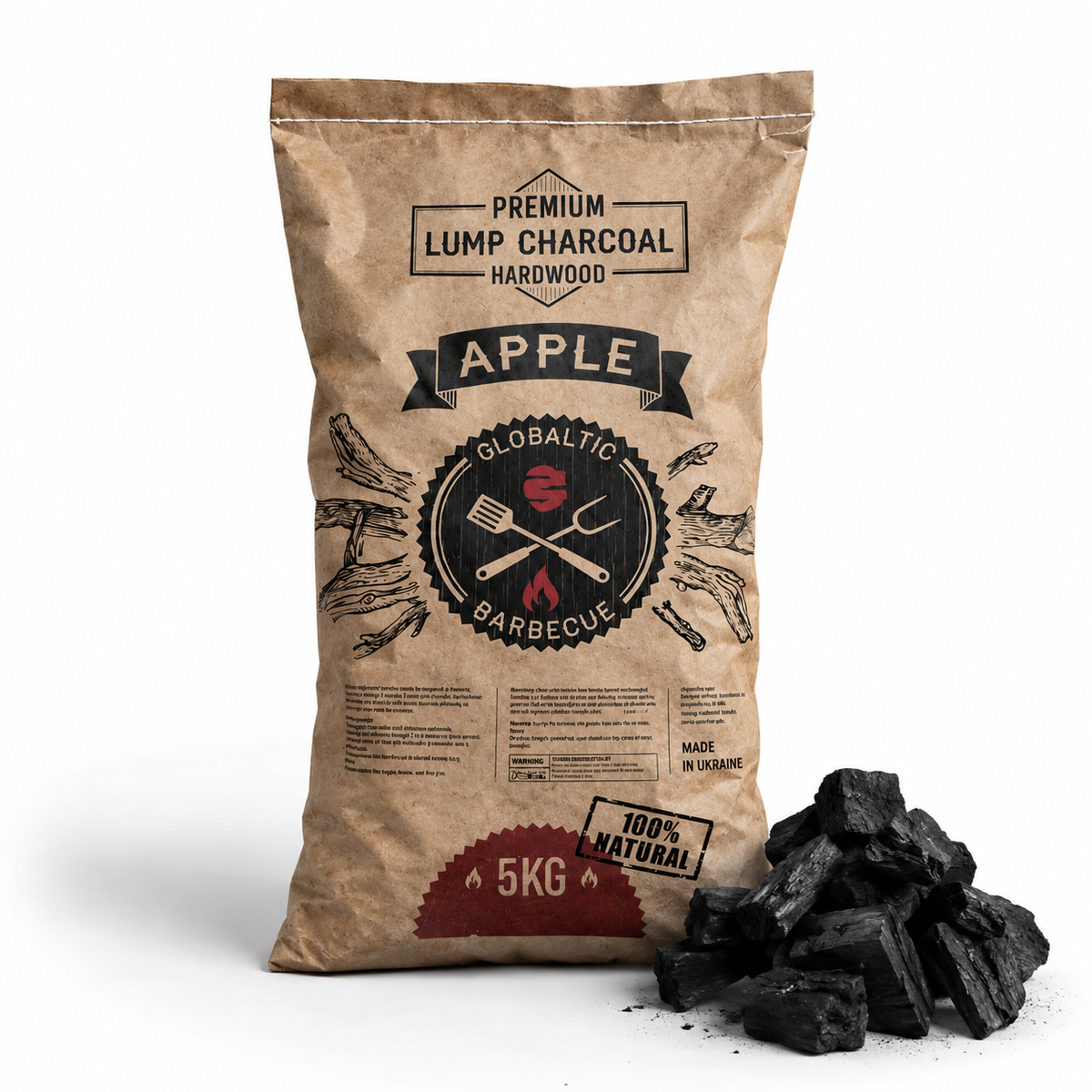
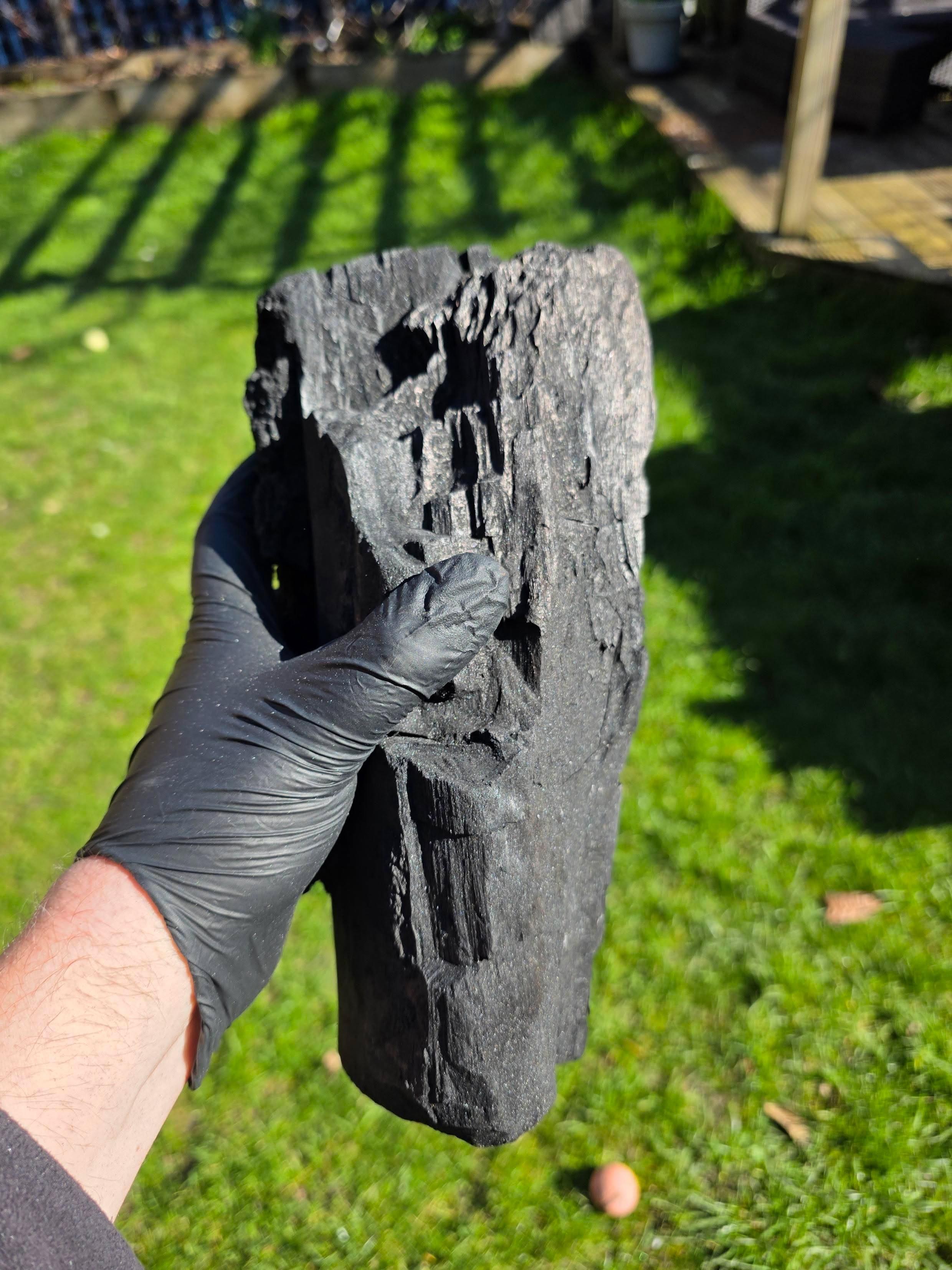
- Then the flavour. Birch is neutral. Oak is deeper. Apple and other fruitwoods add sweetness for specific dishes.
- Test side by side. Same grill, same load, same airflow, against your current fuel. Time lighting to service-ready, then service-ready to first refuel.
If you'd like us to spec it for you, tell us the grill and how you cook on it through our hospitality page. A trade account opens from a two-bag order, so you can test across a couple of services before committing to a pallet.
Frequently asked questions
What charcoal do Michelin-starred restaurants use?
There's no single brand. Most serious live-fire kitchens use graded single-species lumpwood for heat and flavour, often combined with dense natural briquettes for a long, stable base, and specify it to the grill they run. Globaltic supplies Michelin-starred kitchens including Mana, Opheem and Da Terra.
Do restaurants use lumpwood or briquettes?
Often both. Lumpwood gives fast heat and flavour, while quality briquettes such as HazelHex give a long, steady base. Many professional kitchens light them together in the grill.
What charcoal is best for a Josper oven?
Dense, high-heat fuel suits closed charcoal ovens. Spanish Holm Oak reaches up to 950°C and burns 4–6 hours in a closed oven, typically needing around one refuel across an 8-hour service. Always follow the oven manufacturer's fuel guidance.
How much charcoal does a restaurant use?
It depends on covers and how much of the menu goes over the grill. As a working guide, a 10kg bag of lumpwood cooks around 40 restaurant steaks and a 10kg bag of HazelHex around 60. See our charcoal-per-cover calculator for the full method.
Can I try restaurant charcoal before ordering a pallet?
Yes. A Globaltic trade account opens from a two-bag order, so you can test the fuel on your own grill before scaling up.
Sources
- MICHELIN Guide, Every MICHELIN-Star Restaurant in Great Britain & Ireland, 2026 ceremony (MICHELIN Guide)
- MICHELIN Guide, Indian restaurants in the UK and Ireland: Opheem holds two stars (MICHELIN Guide)
- MICHELIN Guide, Da Terra listing (MICHELIN Guide)
- Ember profile, BBQ Magazine (The BBQ Mag)
- Pasture, company website (Pasture)
- Ross Anderson quote and chef profiles: Globaltic hospitality page and interview with Ross Anderson
Share:
What "restaurant grade" charcoal actually means (and how to check a claim)
Best charcoal for your Kamado Joe (UK, 2026 edition)