
By Klim Artemov, founder of Globaltic
Short answer: "Restaurant grade" is not a legal or regulated term in the UK. Any supplier can print it on a bag. What makes charcoal genuinely fit for a professional kitchen is measurable: high fixed carbon, low moisture, low ash, few fines, and published burn data under stated conditions. If a supplier can't give you those numbers, the label is marketing, not a specification.
At Globaltic we print "restaurant grade" on some of our own products, so we think it's fair to explain what we mean by it, and how you can test any supplier's claim, including ours.
Why the term exists at all
Professional kitchens push charcoal harder than almost anyone. A Josper, robata or asado grill runs for a full service, often at temperatures a weekend barbecue never reaches. The fuel has to light predictably, hold heat between refuels, and not spit, flare or dump ash into the cooking area halfway through a busy evening.
Cheaper charcoal tends to fail on exactly those points. So "restaurant grade" grew up as shorthand for "this will survive a service". The problem is that the shorthand never came with a definition, so it's now used on everything from carefully graded single-species lumpwood to mixed bags of dust and offcuts.
The five checks that actually matter
1. Fixed carbon
Fixed carbon is the carbon left once moisture, volatile matter and ash are removed. It's the part that burns hot and clean. The European standard for barbecue charcoal, EN 1860-2, sets a minimum of over 75% fixed carbon for quality barbecue charcoal (Springer, citing EN 1860-2:2023).
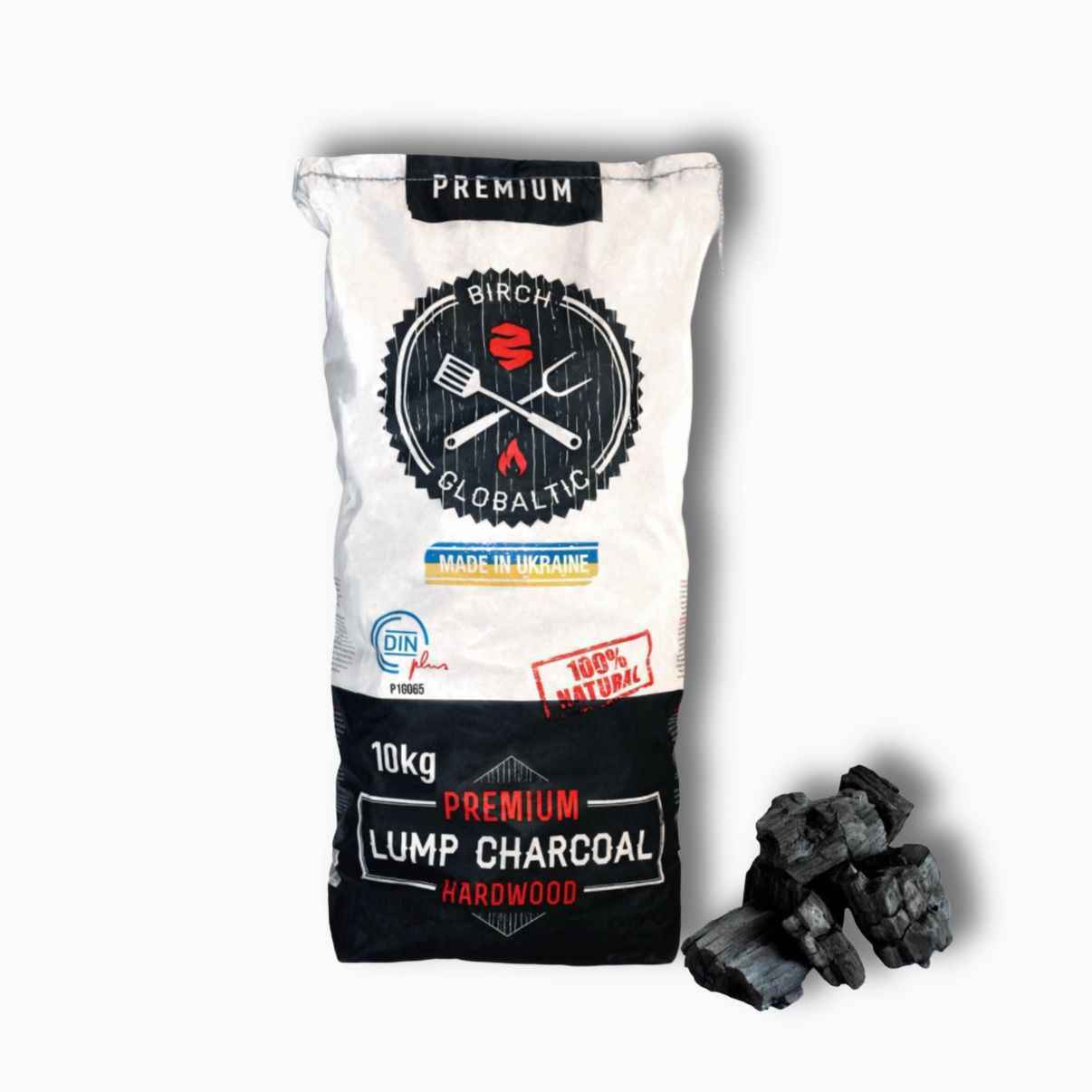
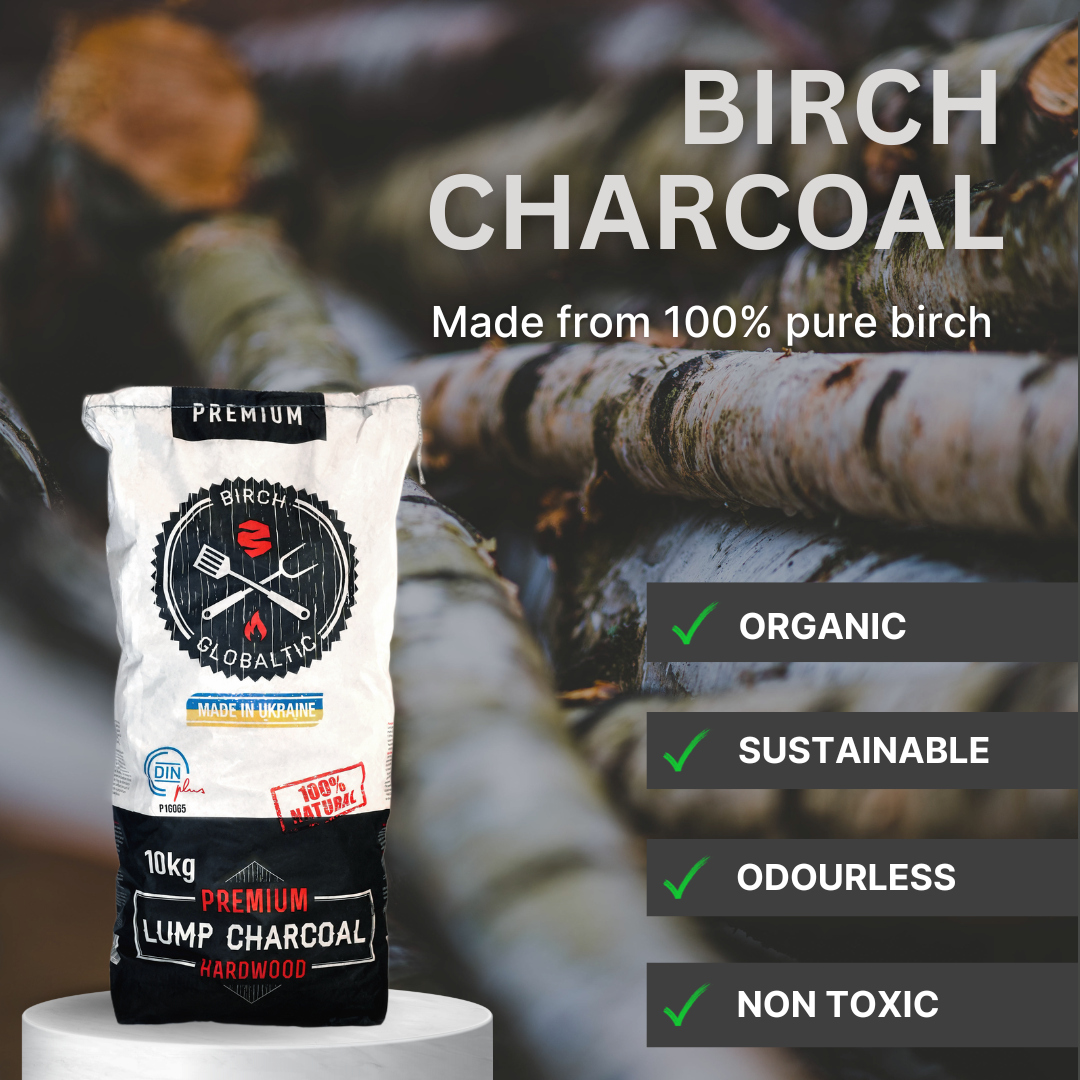
That's the floor, not the target. For reference, our silver birch lumpwood is specified at 80–90% carbon.
2. Moisture
Damp charcoal is slow to light, smokes on startup and burns cooler. EN 1860-2 caps moisture at under 8% (Springer). Charcoal is also hygroscopic: it picks moisture back up if it's stored badly, so a good spec at the factory gate means little if the bag spent a winter in a damp yard.
Our birch lumpwood is specified at under 4% moisture as delivered.
3. Ash
Ash is the non-combustible residue. More ash means more cleaning, more airflow choking as the fire matures, and more chance of ash lifting onto food. The standard allows up to 8% (Springer).
For a working kitchen you want well under that. Our birch lumpwood is specified at under 3% ash.
4. Fines and piece size
Fines are the dust and small fragments at the bottom of the bag. EN 1860-2 expects small particles to be kept under 7% (Springer). Fines block airflow, burn off fast and are effectively wasted money.
Piece size matters too. Consistent, larger pieces give an even bed and predictable heat. A bag of mixed sizes gives you hot spots and cold spots.

5. Burn data with the conditions stated
This is where most claims fall apart. "Burns for hours" means nothing without the setup. Burn time depends on the grill, how much airflow you allow, how much fuel you load and the outside temperature.
Look for a supplier who tells you the conditions. Ours, for example:
| Fuel | Burn time (approved figures) | Conditions |
|---|---|---|
| Birch lumpwood | Up to 8 hours / 3–4 hours | Closed kamado, low airflow, long cook / open grill, single load |
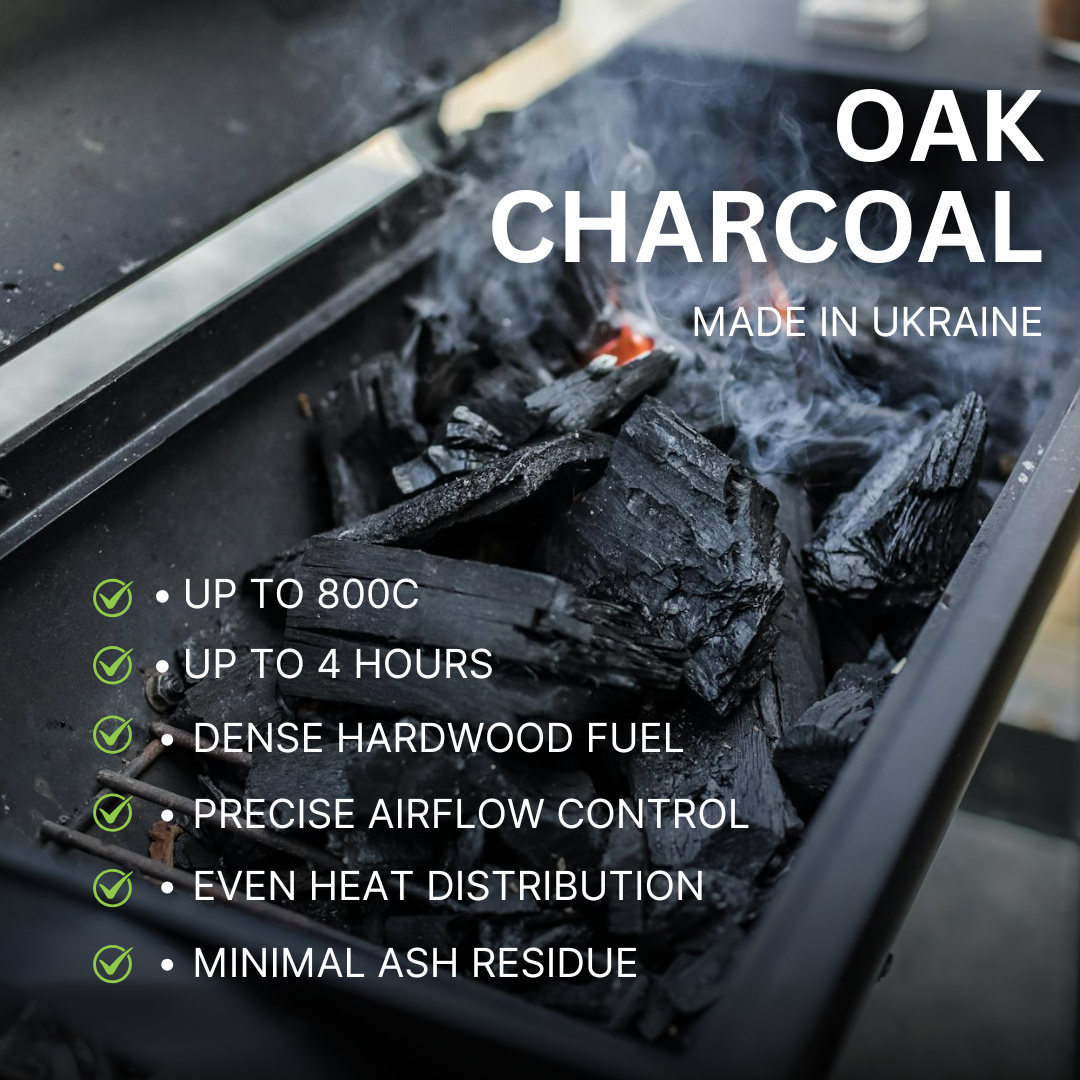
| Oak lumpwood | Up to 8 hours / 4 hours | Closed kamado, low airflow / open grill, single load |
| Spanish Holm Oak | 4–6 hours | Single load, closed Josper or kamado |
| HazelHex briquettes | 6–8 hours | Single load, closed ceramic grill or kamado |
If a supplier gives you one number with no conditions, ask what grill it was tested on and how much airflow was allowed.
Red flags on a "restaurant grade" bag
- "Smokeless" or "smoke-free". All charcoal produces some smoke, especially on startup. Honest suppliers say "low smoke" and explain when.
- No species or origin. "Hardwood charcoal" can mean anything. Single-species bags behave consistently, while mixed bags vary from batch to batch.
- No composition data. If nobody can tell you the carbon, moisture or ash figures, nobody has measured them.
- Accelerants or chemical binders. Lumpwood shouldn't need them. Briquettes need a binder, and it should be a natural one such as starch.
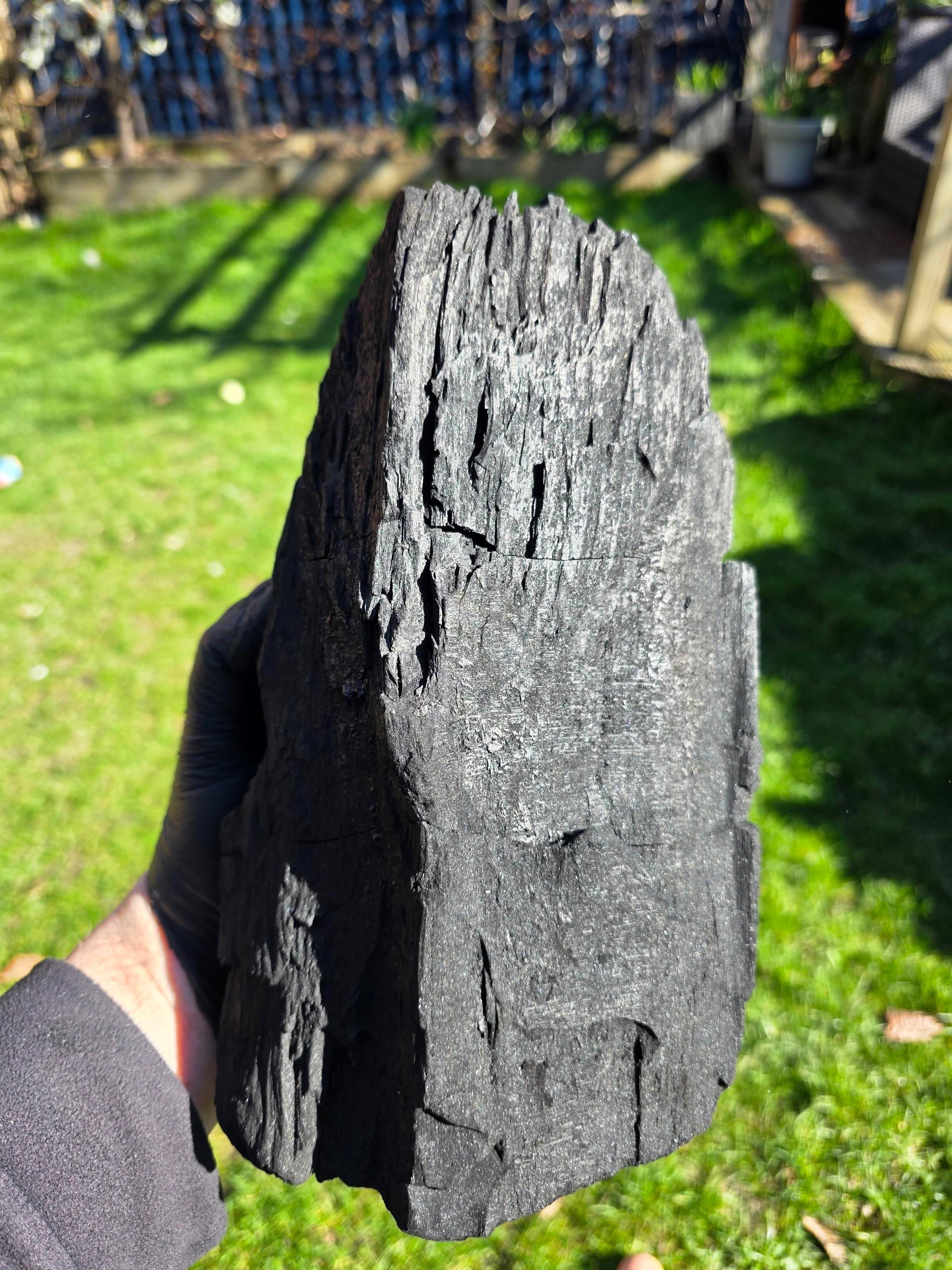
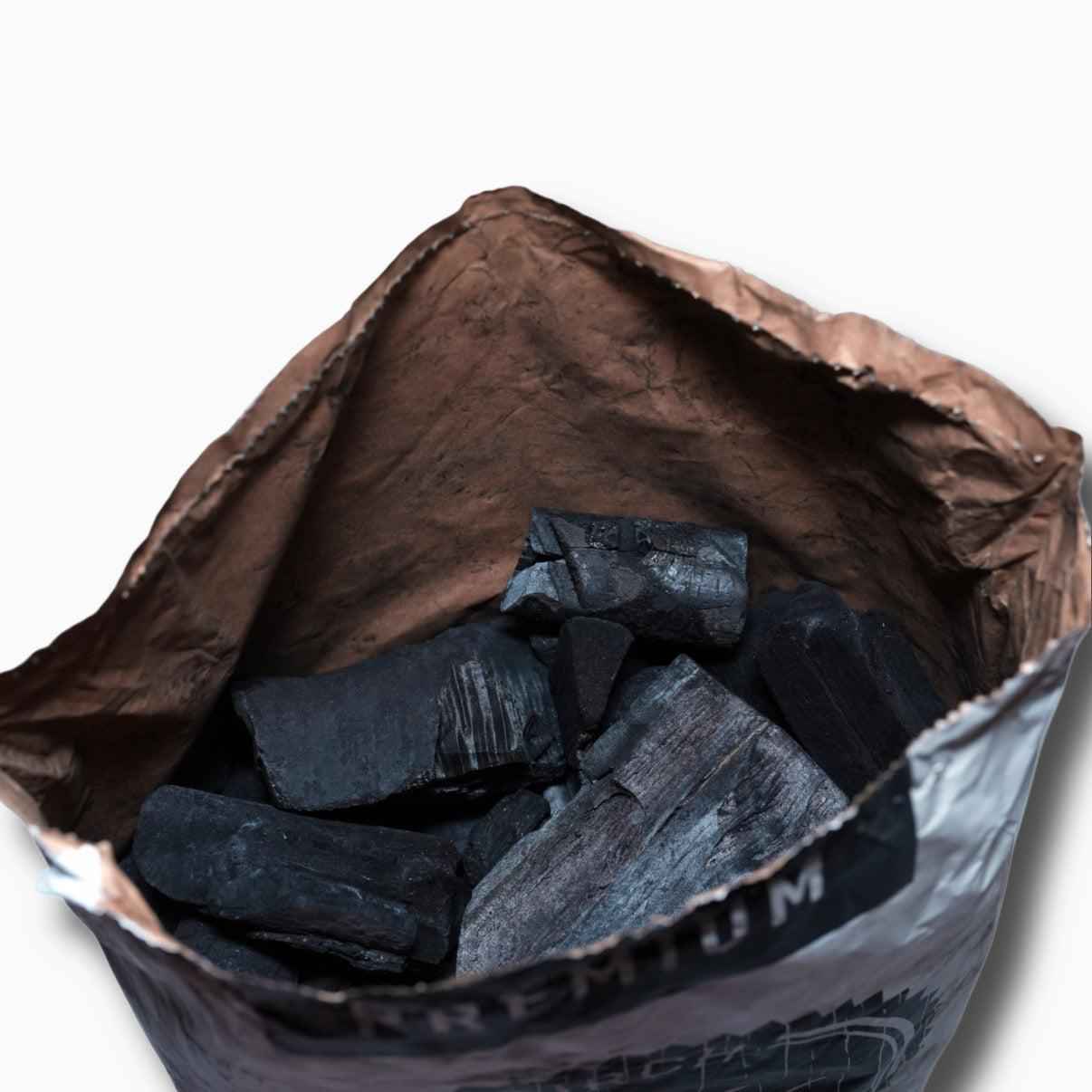
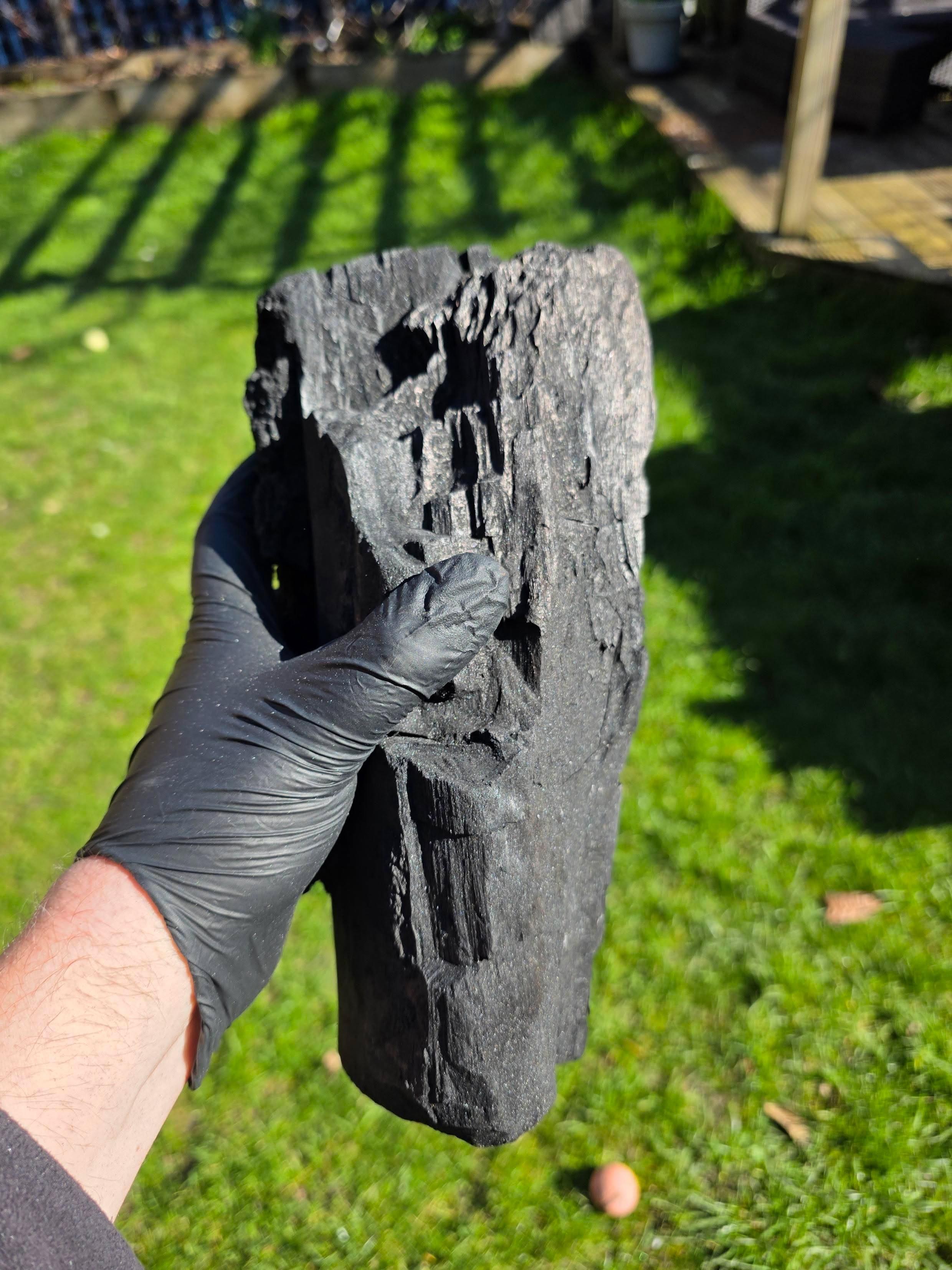
- A heavy bag full of dust. Tip a bag out. If the bottom inch is powder, you're paying for fines.

Lumpwood or briquettes for a professional kitchen?
Both can be restaurant grade. They do different jobs.
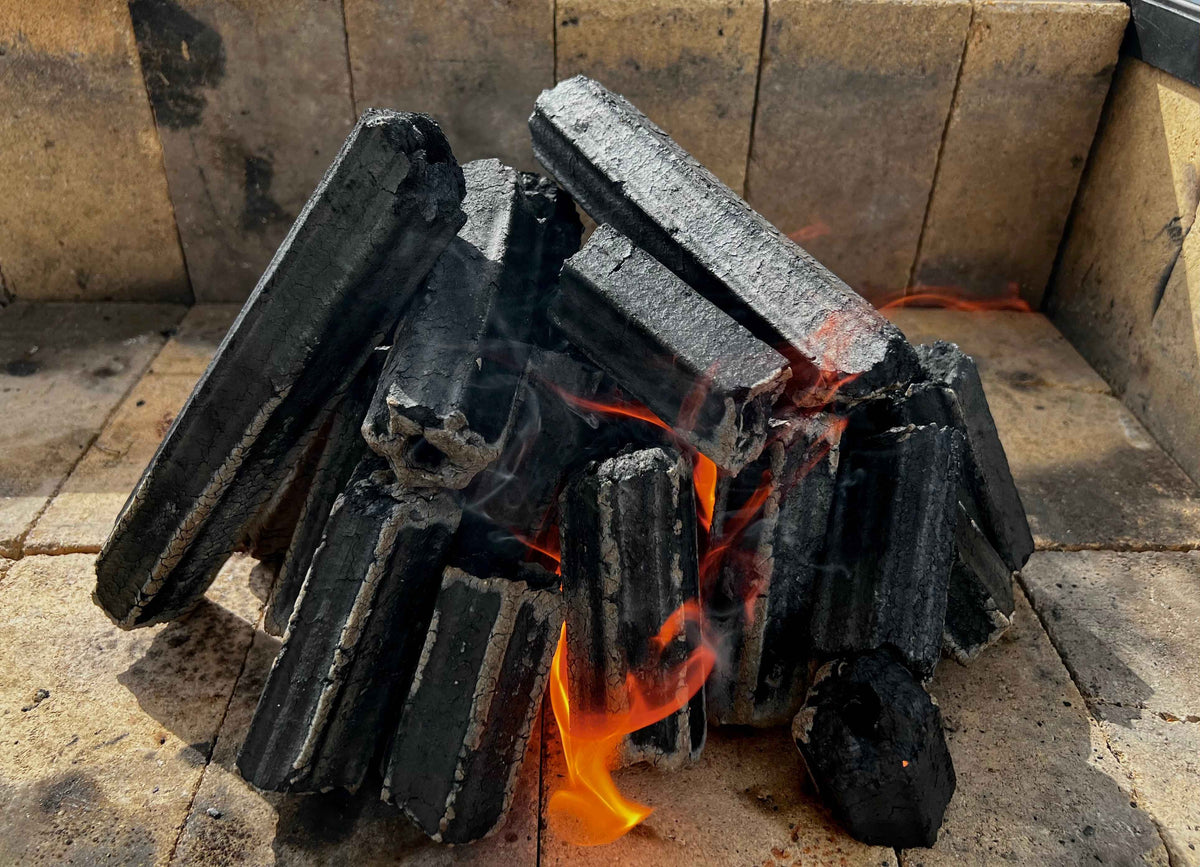
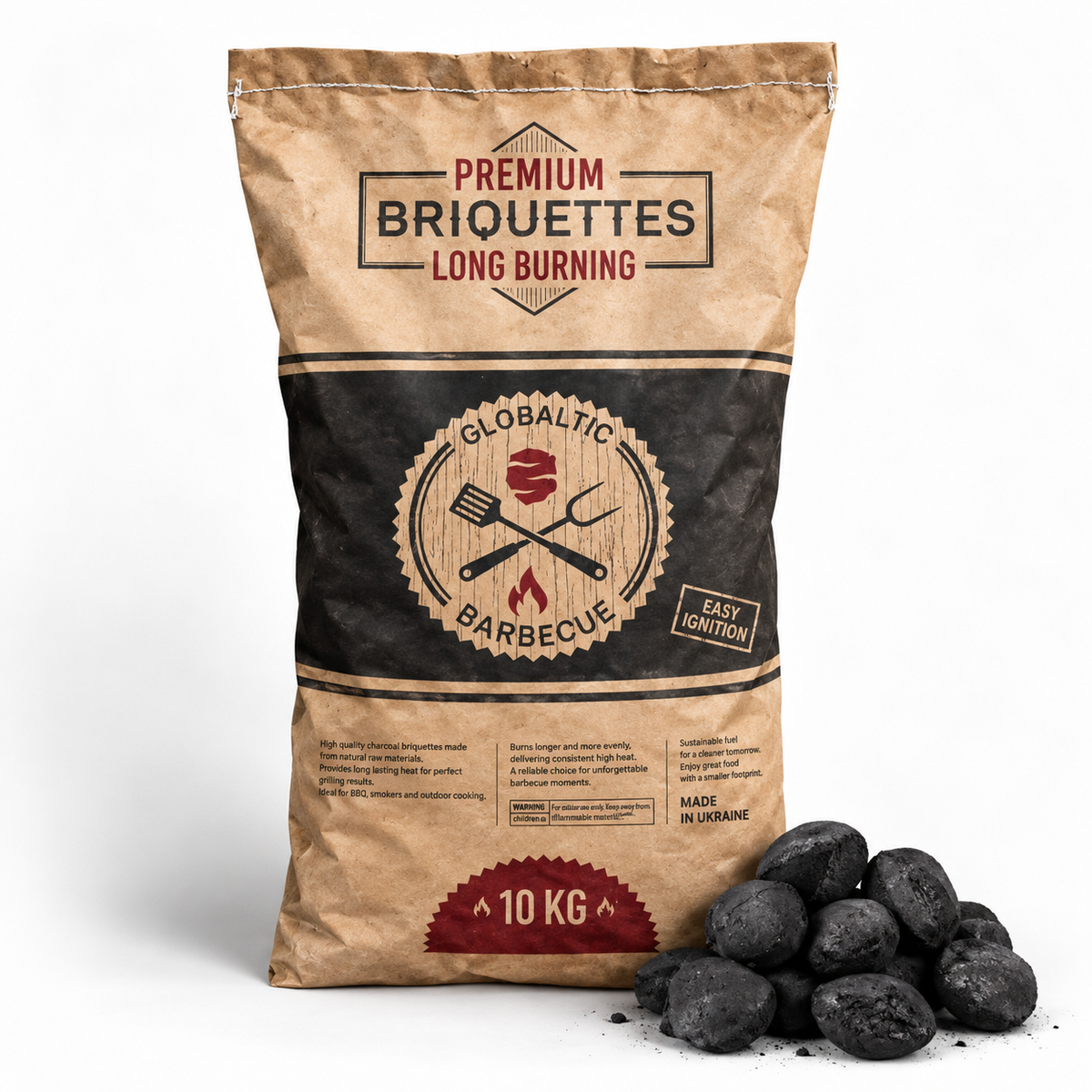
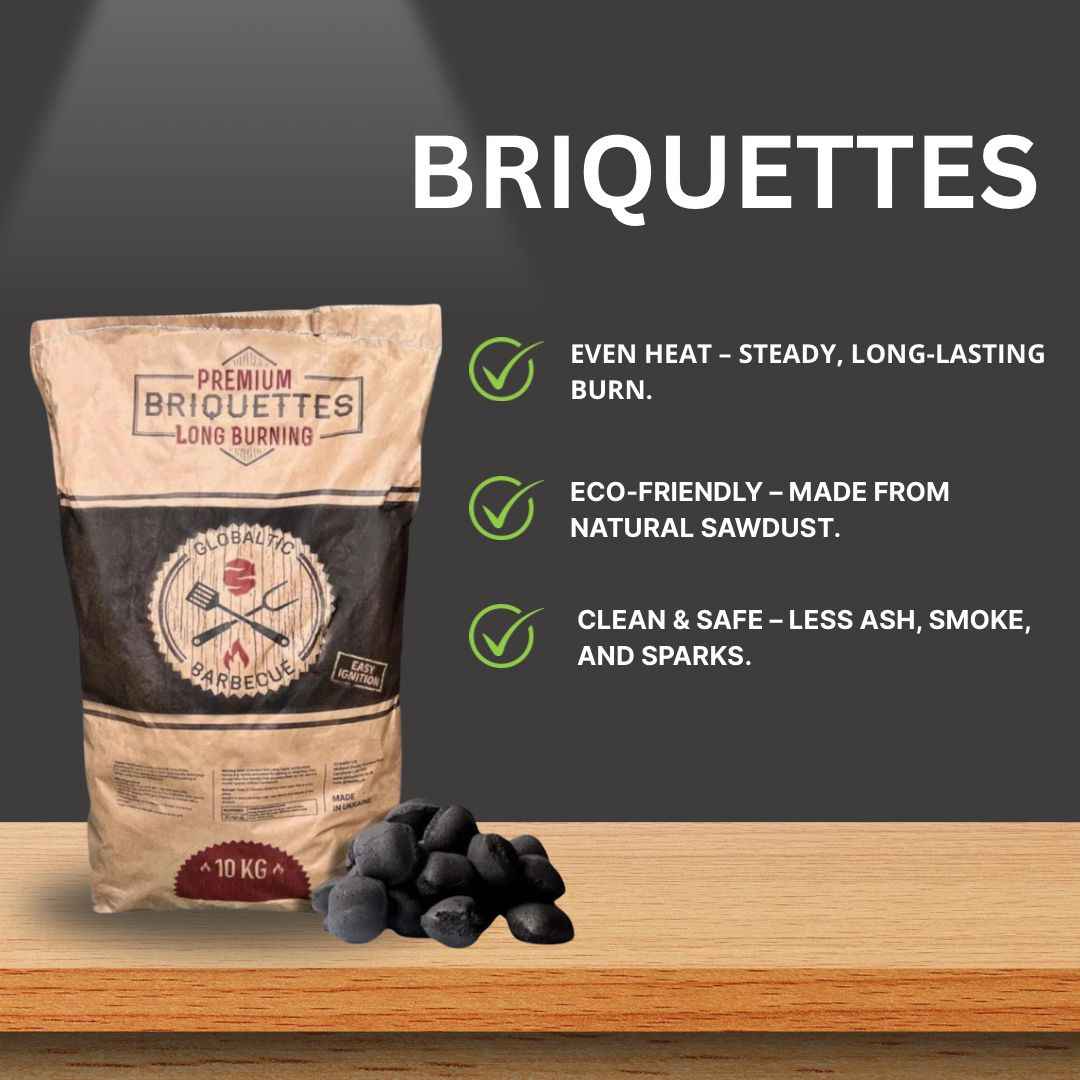
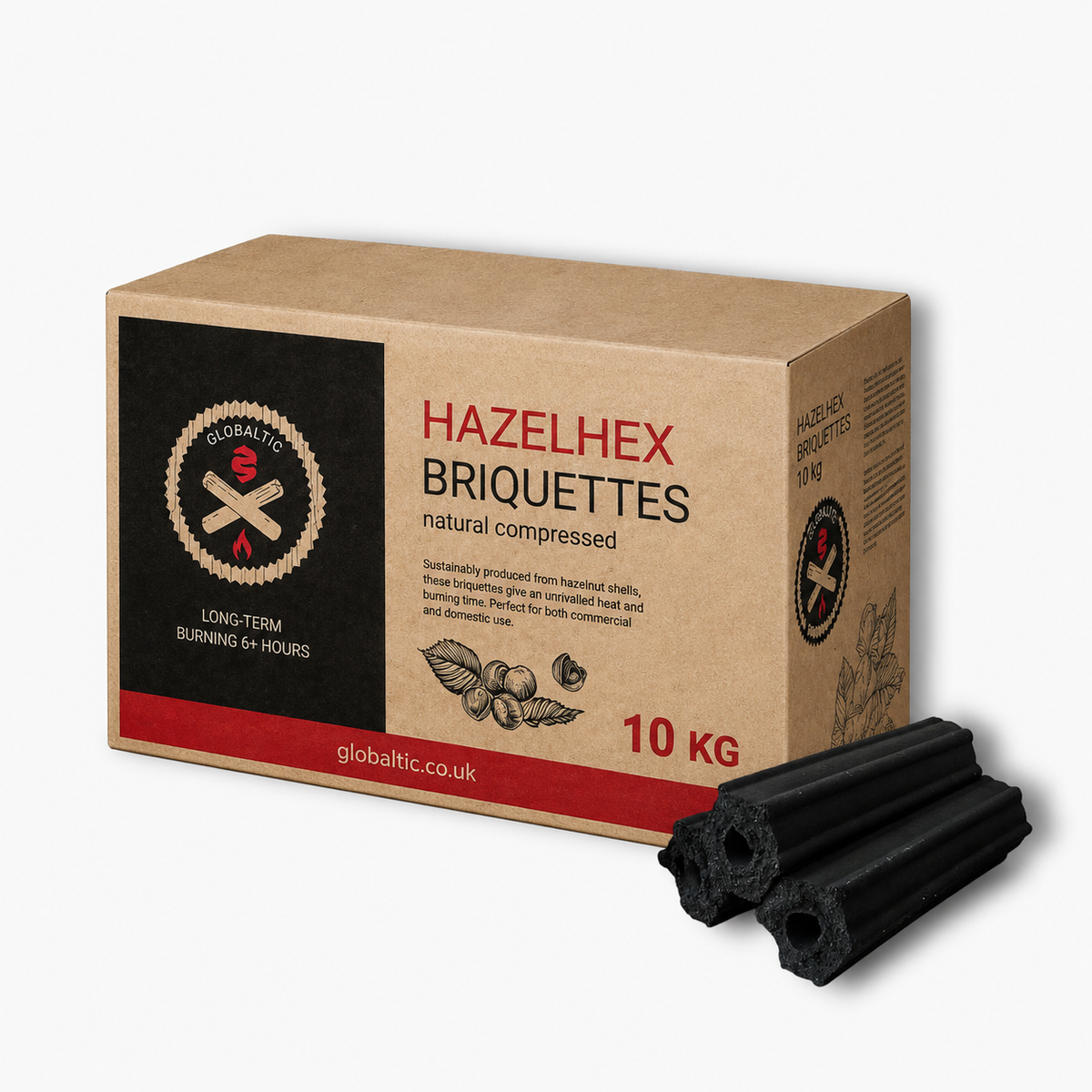
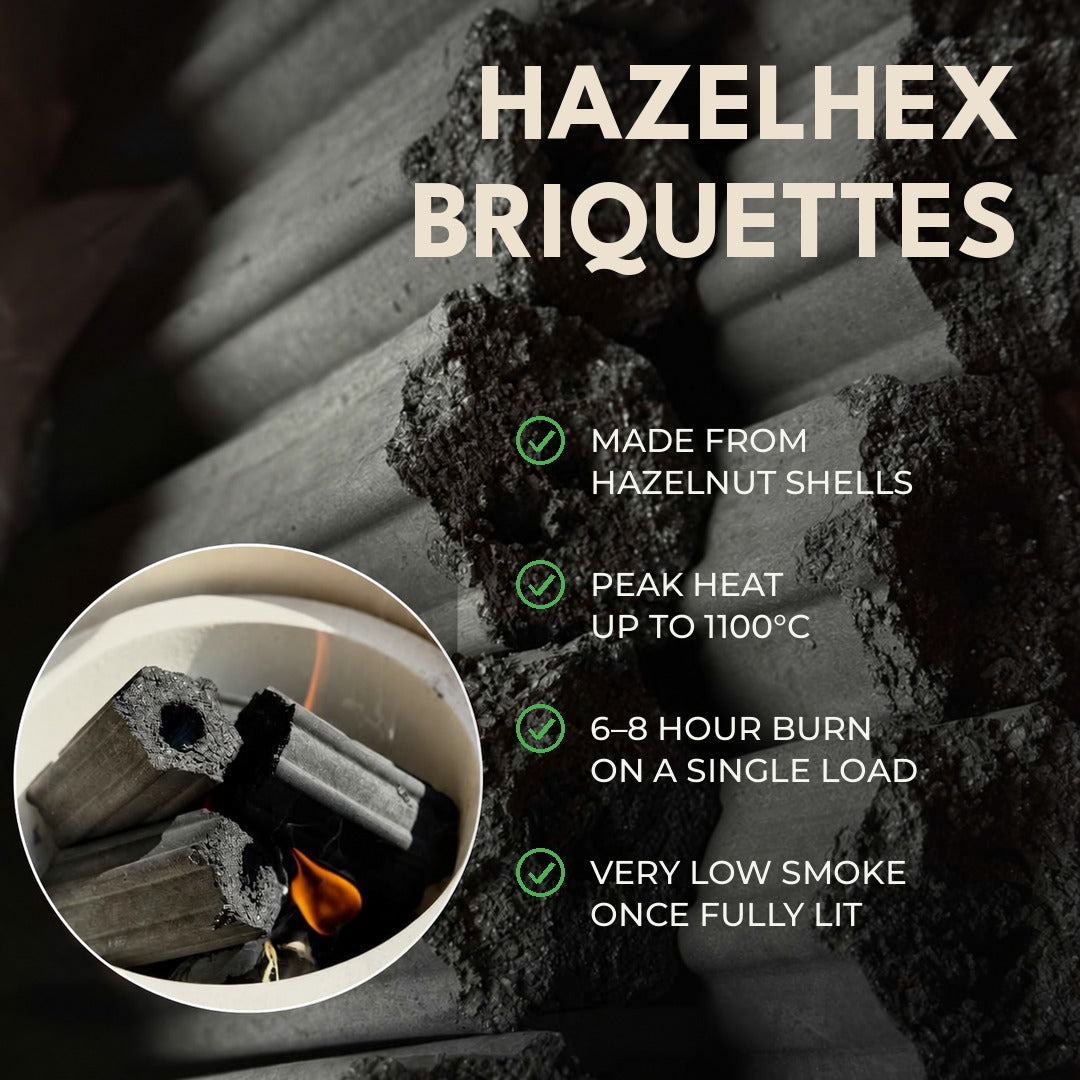
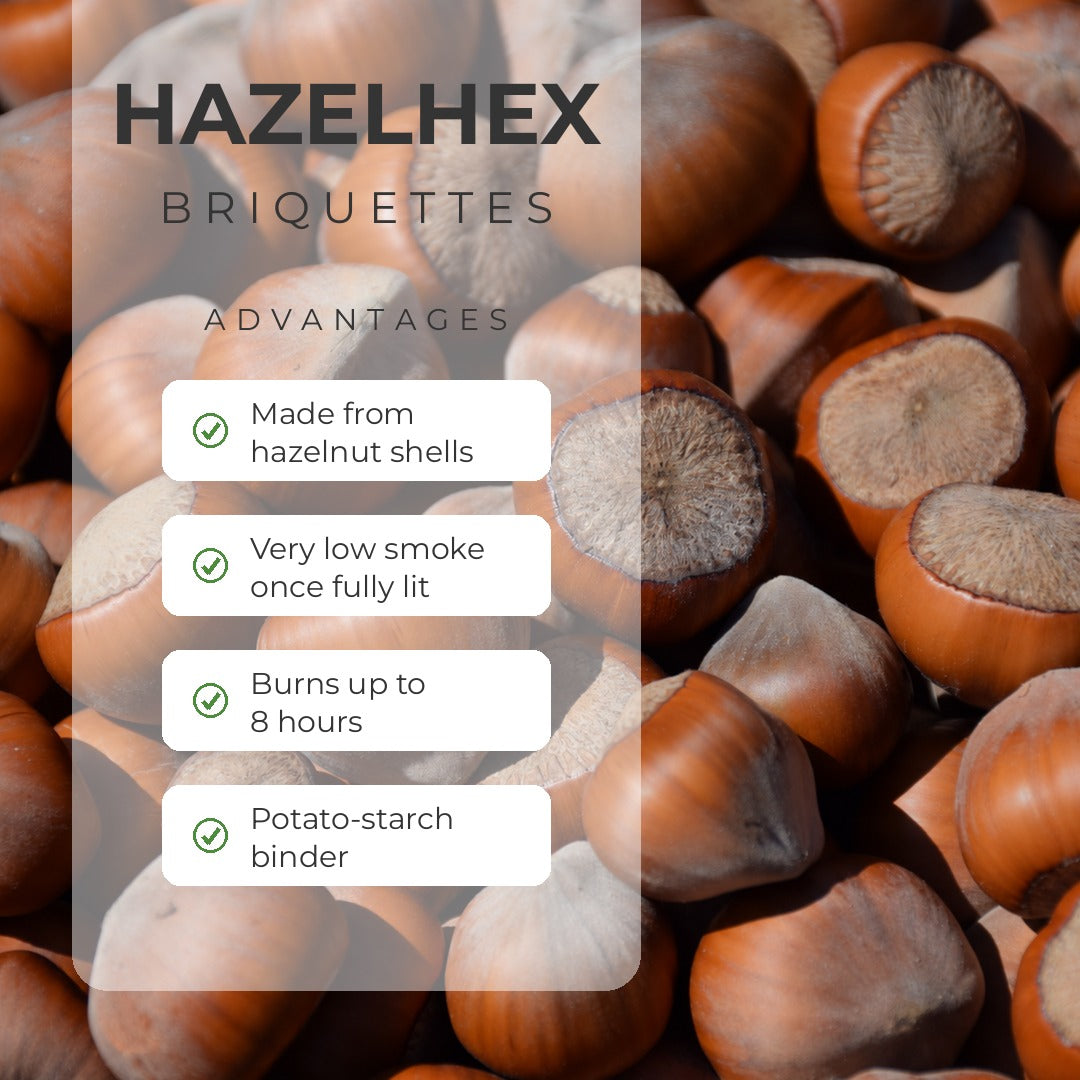
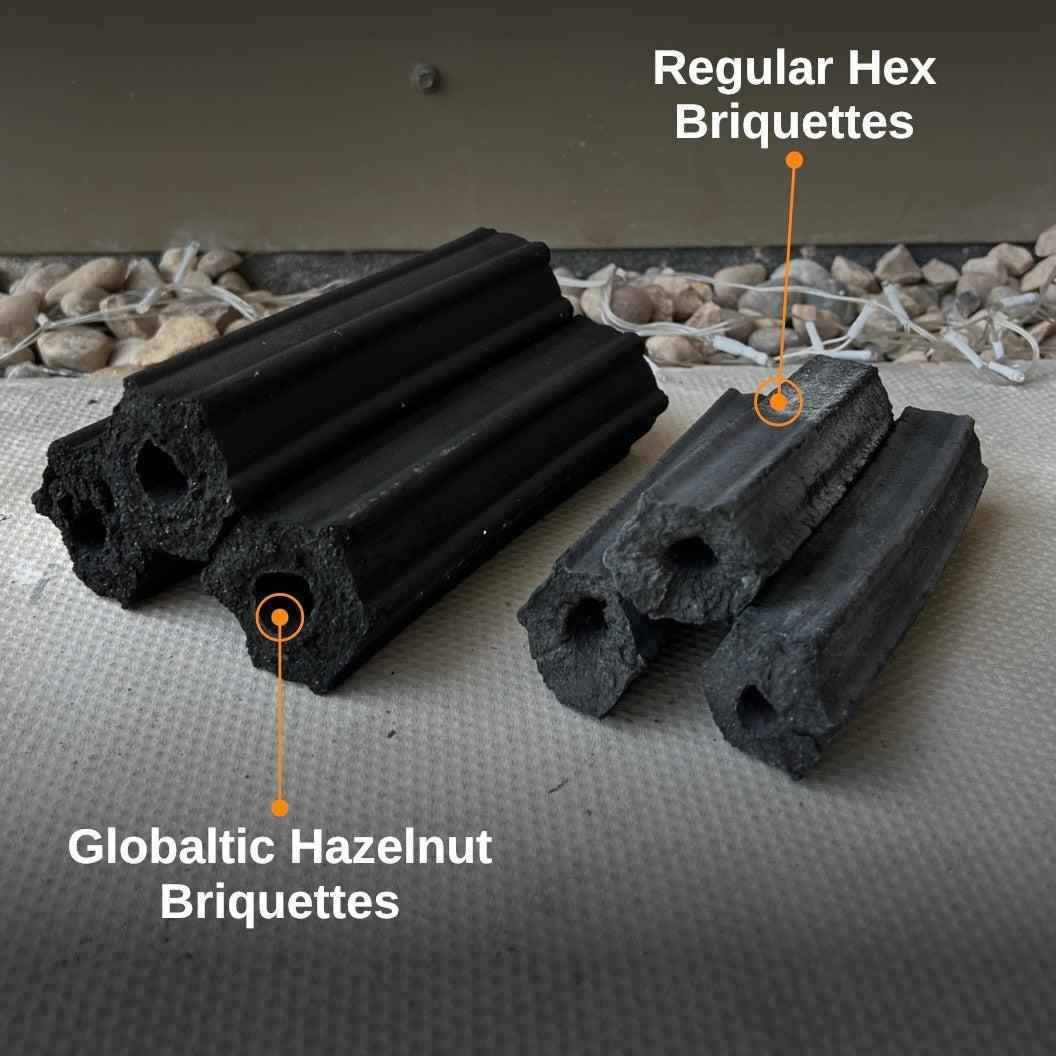
Lumpwood (birch, oak, Spanish Holm Oak) lights faster, gives you sear heat and adds wood character. Quality briquettes such as HazelHex, made from recycled hazelnut shells and pressed into hollow-centre hexagons, give a long, stable burn. HazelHex is rated up to 6–8 hours on a single load and reaches up to 1100°C at peak.
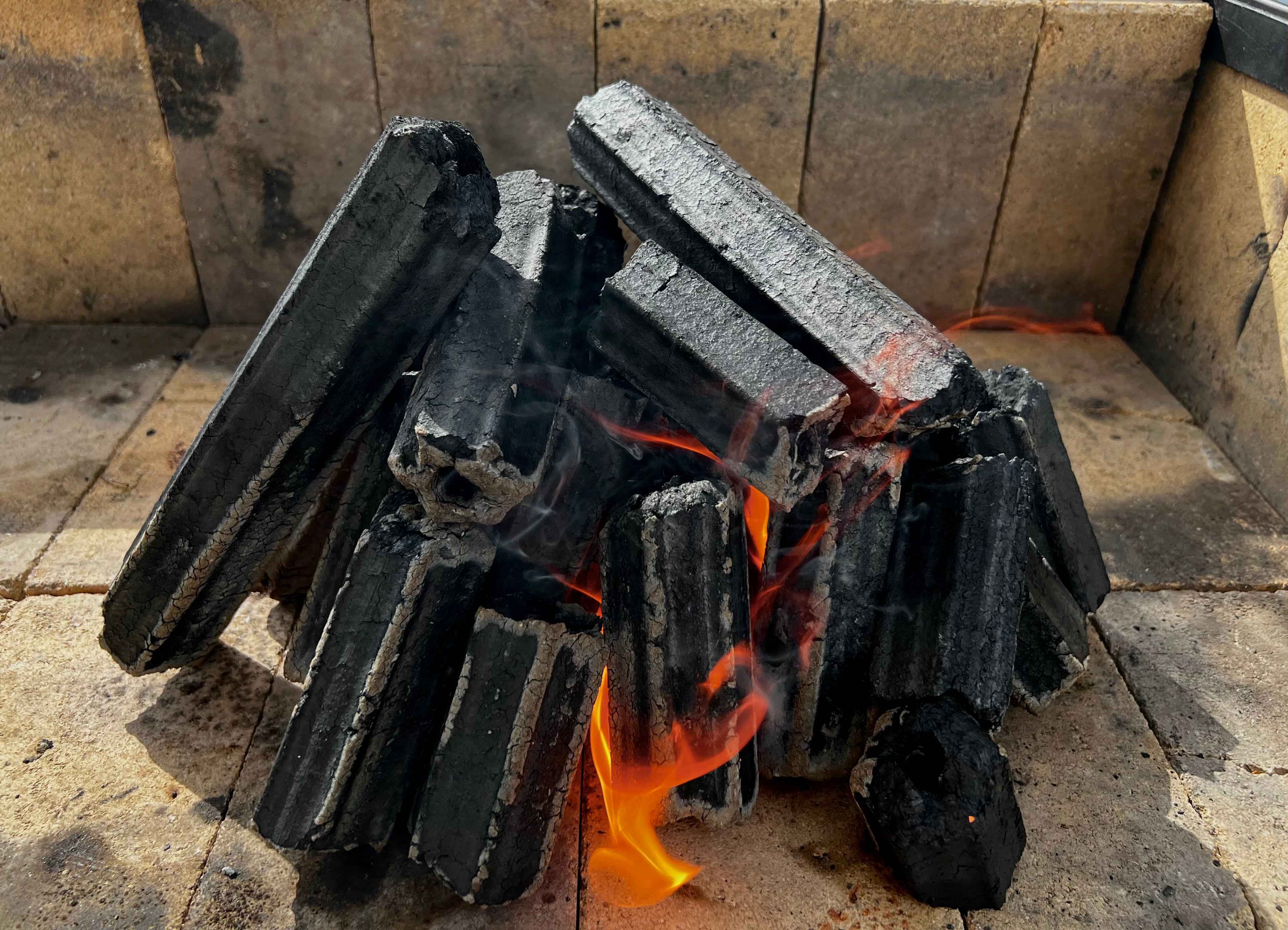
Many cooks get the best of both by lighting briquettes and lumpwood together in the grill: the briquettes give you a long, steady base and the lumpwood adds heat and flavour on top. For restaurant set-ups and service-specific advice, see our hospitality page.

How to test a supplier in one week
- Ask for the spec sheet. You want carbon, moisture, ash, species and origin in writing.
- Ask how the burn times were measured. Grill type, load size and airflow.
- Run it on your own grill. Same grill, same load, same airflow, side by side with your current fuel. Time it from lighting to cooking-ready, then to your first refuel.
- Weigh what's left. Sieve out the ash and fines after the cook. Less residue means more of what you paid for actually burned.
- Check the bottom of the bag. Fines percentage tells you a lot about grading and handling.
If you're a restaurant or retailer and want to run that test with our fuel, request samples through our hospitality page or our wholesale page.
Frequently asked questions
Is "restaurant grade" charcoal a regulated term in the UK?
No. There is no legal definition, so any supplier can use it. The closest thing to an objective benchmark is the European standard EN 1860-2, which sets minimum quality requirements for barbecue charcoal and briquettes.
What fixed carbon content should good charcoal have?
EN 1860-2 sets a minimum of over 75% fixed carbon. Well-made single-species lumpwood typically sits well above that. Globaltic birch lumpwood is specified at 80–90% carbon.
Is restaurant grade charcoal worth it for home cooking?
If you cook long or hot on a kamado, kettle or offset, yes. Lower moisture and ash mean faster lighting, steadier heat and less cleaning. For a quick 30-minute grill, the difference is smaller.
Does restaurant grade charcoal produce smoke?
All charcoal produces some smoke, mostly during lighting. Good charcoal is low smoke once fully lit and has no chemical odour. Be wary of any bag claiming to be completely smokeless.
Are briquettes ever restaurant grade?
Yes, if they're made from quality raw material with a natural binder. Dense briquettes such as HazelHex give a longer, more stable burn than lumpwood and are commonly used as a base under lumpwood in professional grills.
Sources
- EN 1860-2:2023, Appliances, solid fuels and firelighters for barbecueing, Part 2: Barbecue charcoal and barbecue charcoal briquettes (iTeh Standards catalogue)
- Thresholds summarised in "Can the qualitative characteristics of commercial charcoal…", Biomass Conversion and Biorefinery, 2025 (Springer)
- FAO, Chapter 8: Quality control of charcoal and by-products (FAO)
Share:
Know what fuels your fire
What charcoal do top UK restaurants actually use?