
By Klim Artemov, founder of Globaltic
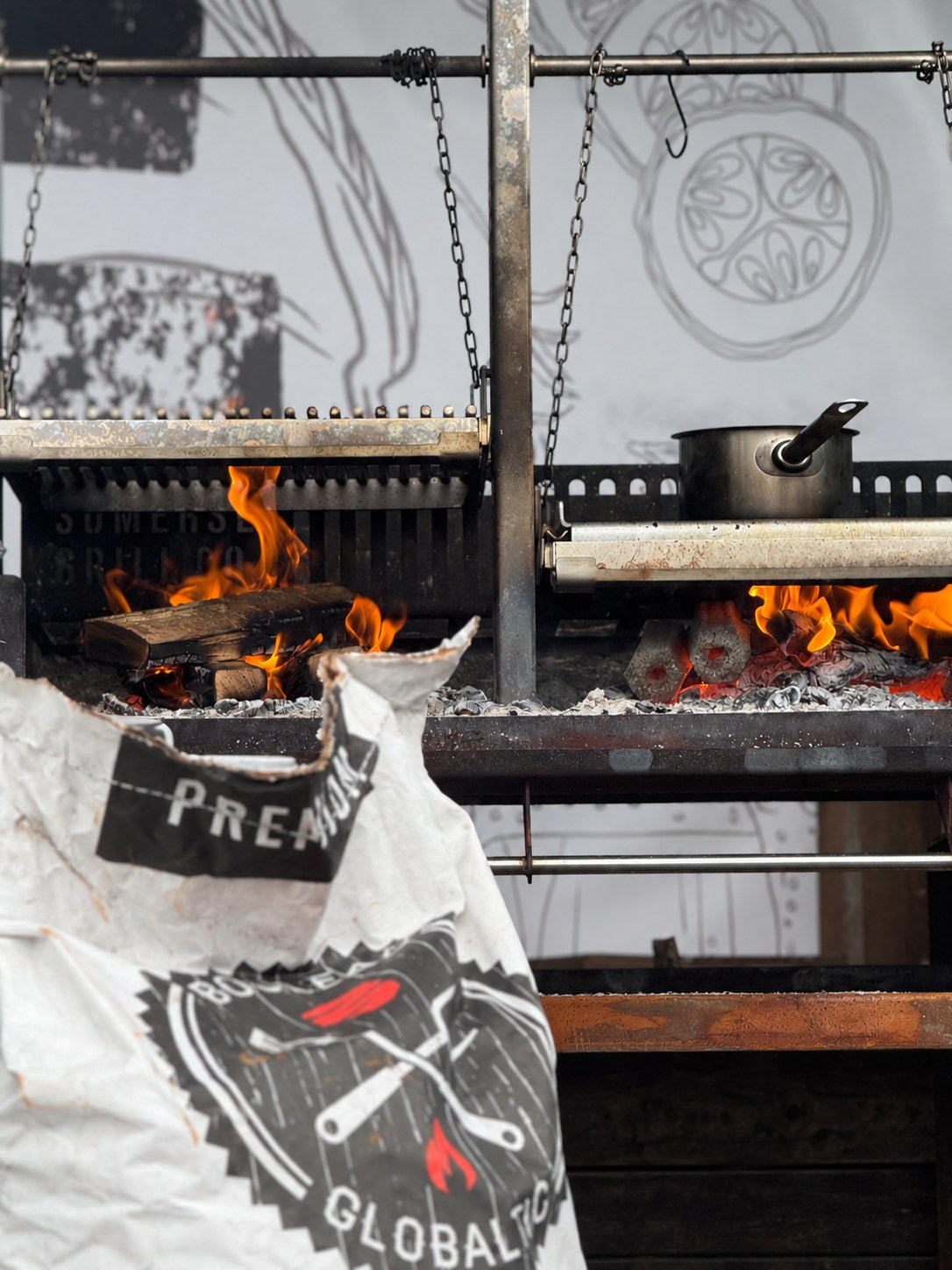
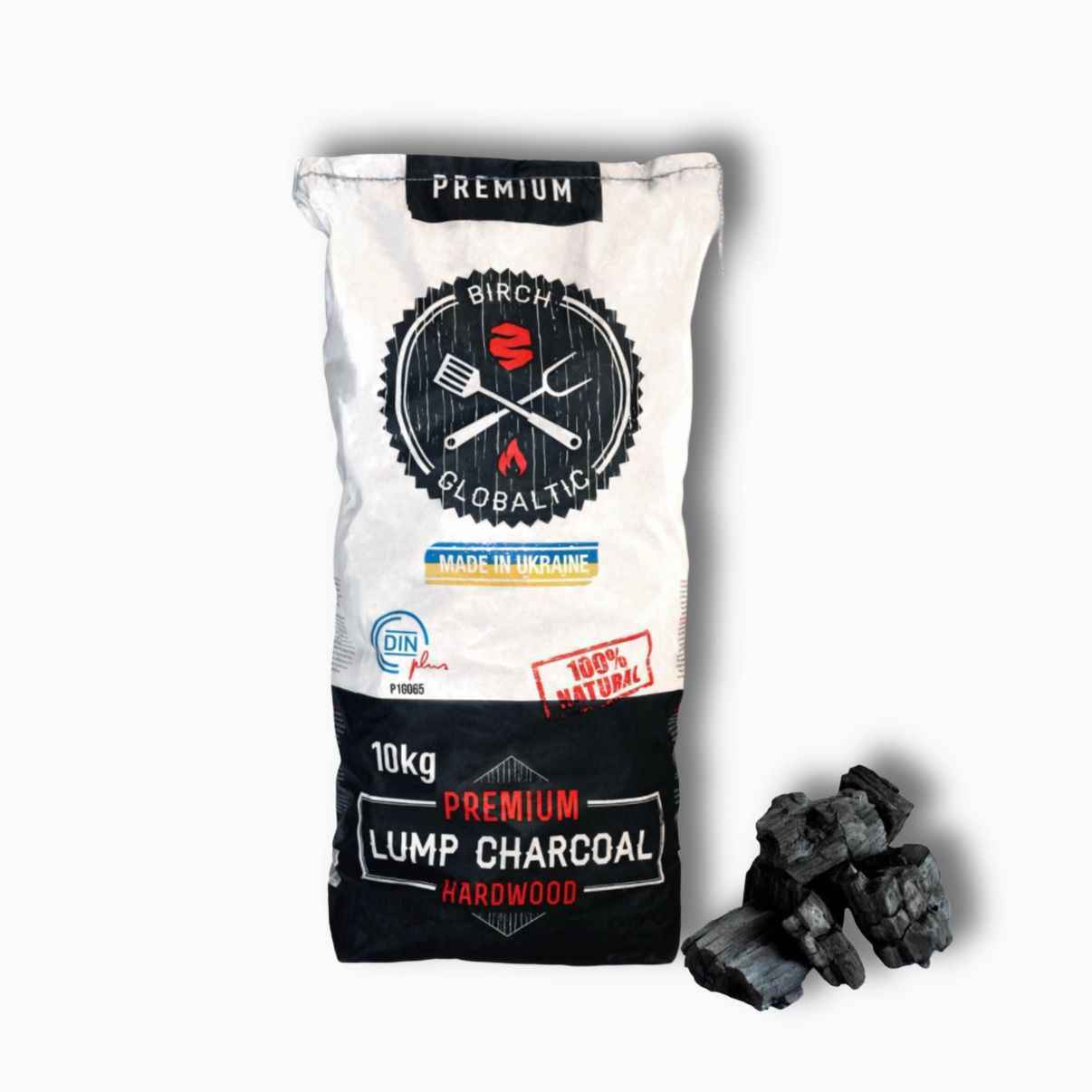
Short answer: Work from grill portions, not total covers. As a working guide, a 10kg bag of quality lumpwood cooks around 40 restaurant steaks, and a 10kg bag of HazelHex briquettes around 60. Divide your weekly grill portions by that figure to get bags per week, add a buffer for quiet services, and you have your order. At current trade prices, that works out at roughly 37–41p of fuel per steak.
Those yields come from how our fuel performs in professional grills during busy service. A quiet Tuesday with the grill lit for four hours will always cost more per cover than a full Saturday, so the method below builds that in.
Step 1: count grill portions, not covers
Not every cover touches the grill. A steak restaurant might put 80% of mains over charcoal. A tasting-menu kitchen might use the grill for two courses in ten. Start with:
Weekly grill portions = covers per week × share of covers ordering a grilled dish
Count a grilled side or a course cooked over fire as a portion if it holds grill space for a similar time to a steak. If it's a quick flash over the coals, count it as half.
Step 2: convert portions to bags
Bags per week = weekly grill portions ÷ portions per 10kg bag
| Fuel (10kg) | Approx. restaurant steaks per bag | Peak heat | Burn time |
|---|---|---|---|
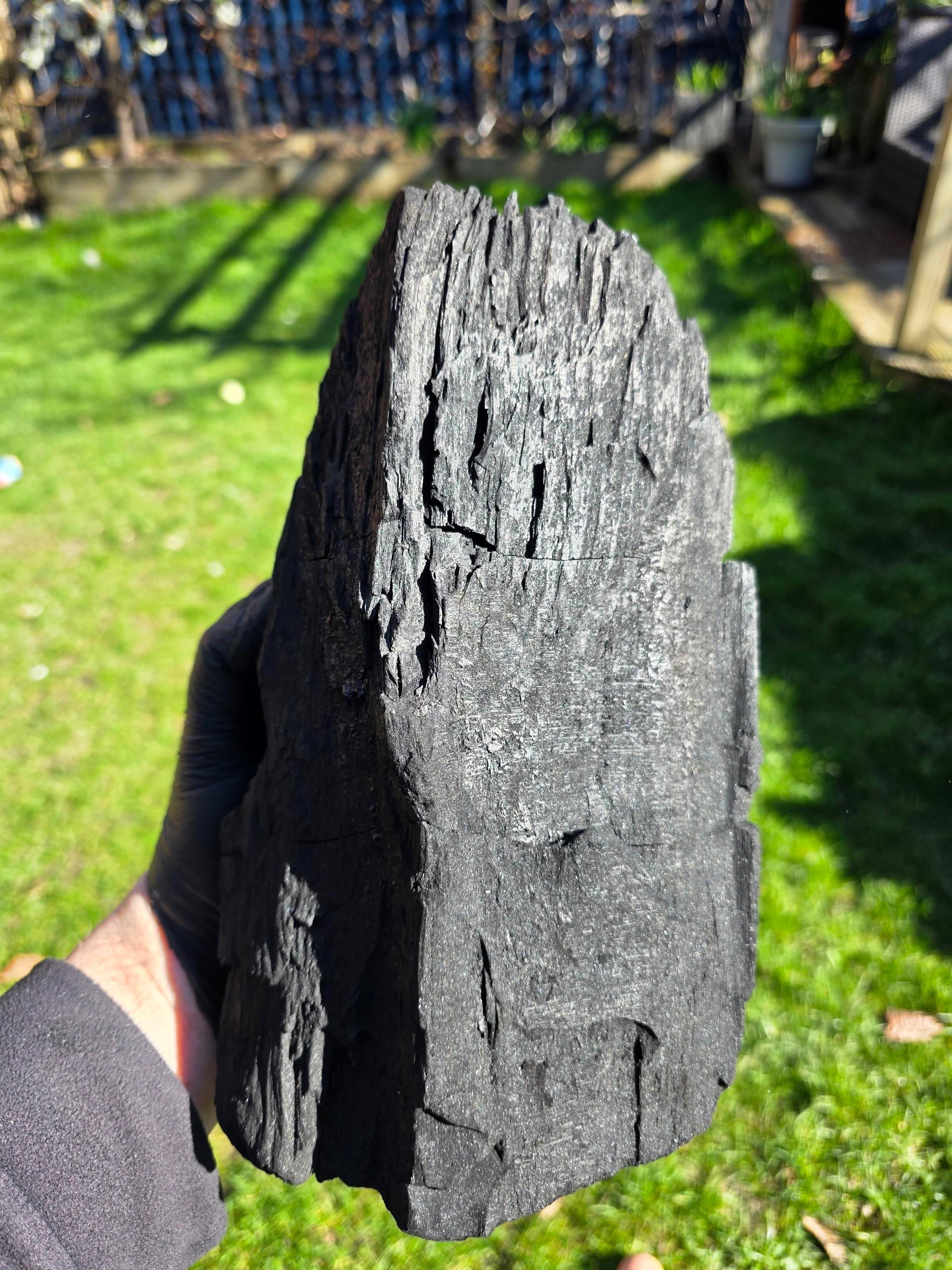
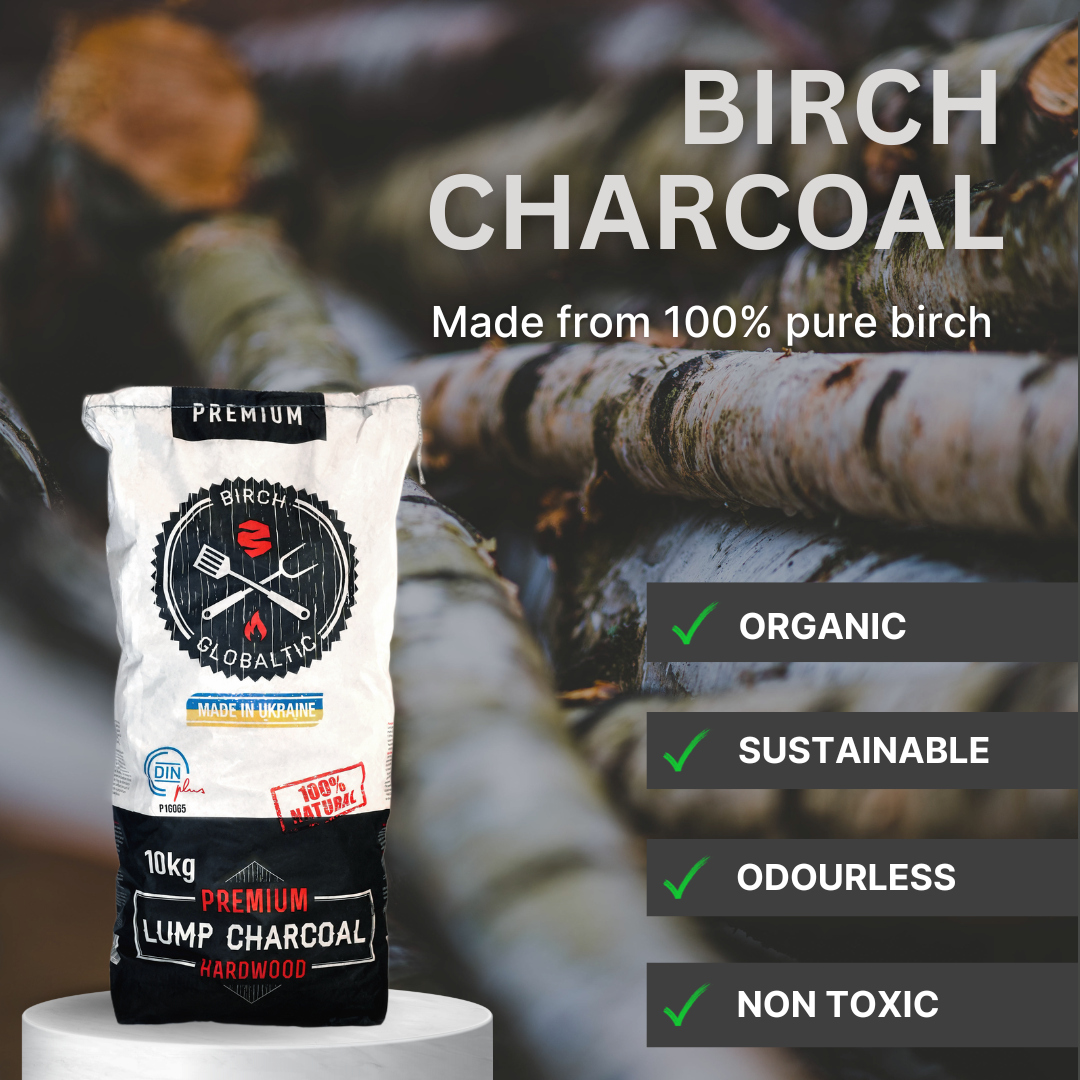
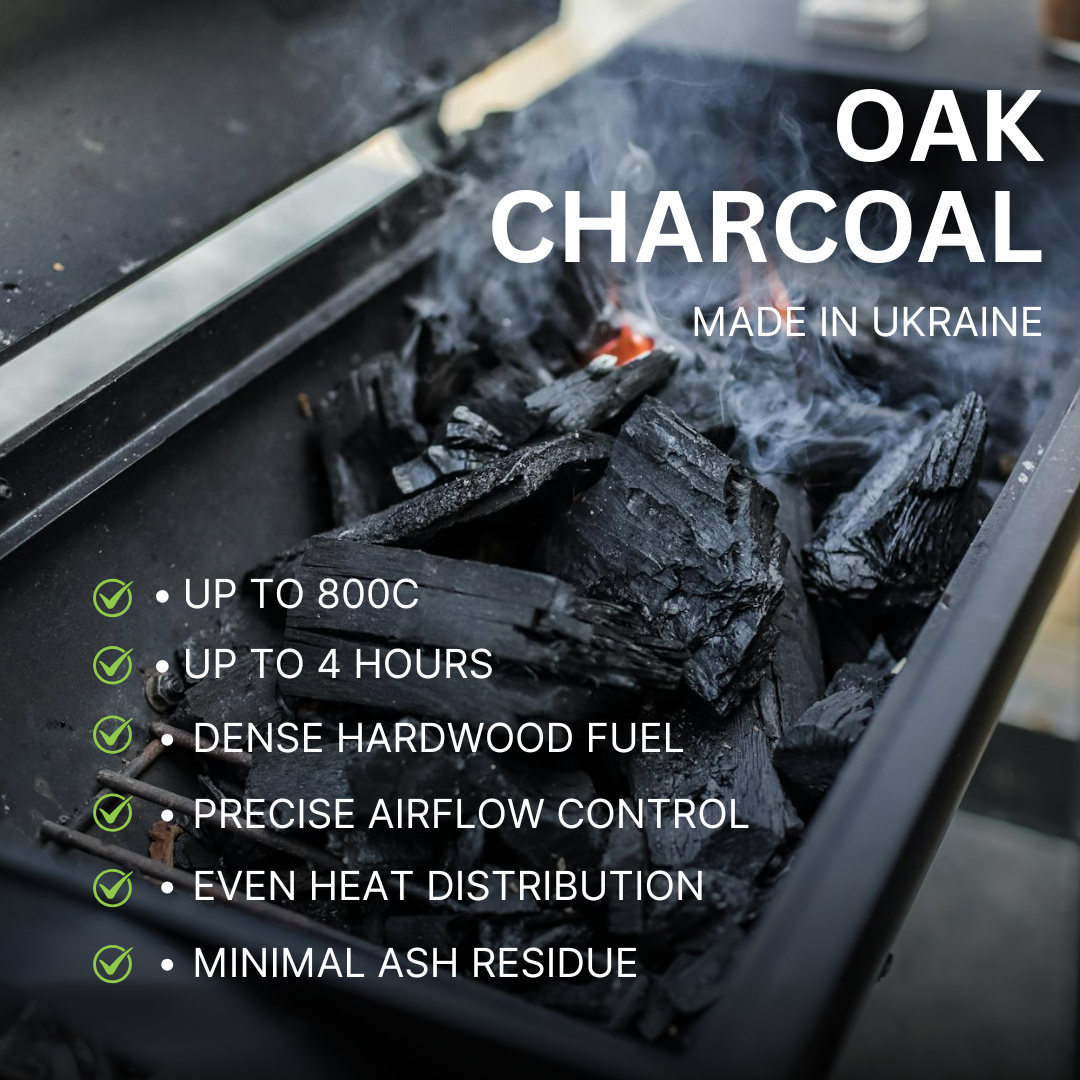
| Silver birch lumpwood | ~40 | Up to 700°C | 3–4 hours open grill |
| Hex briquettes | ~50 | Up to 1000°C | 5–6 hours |
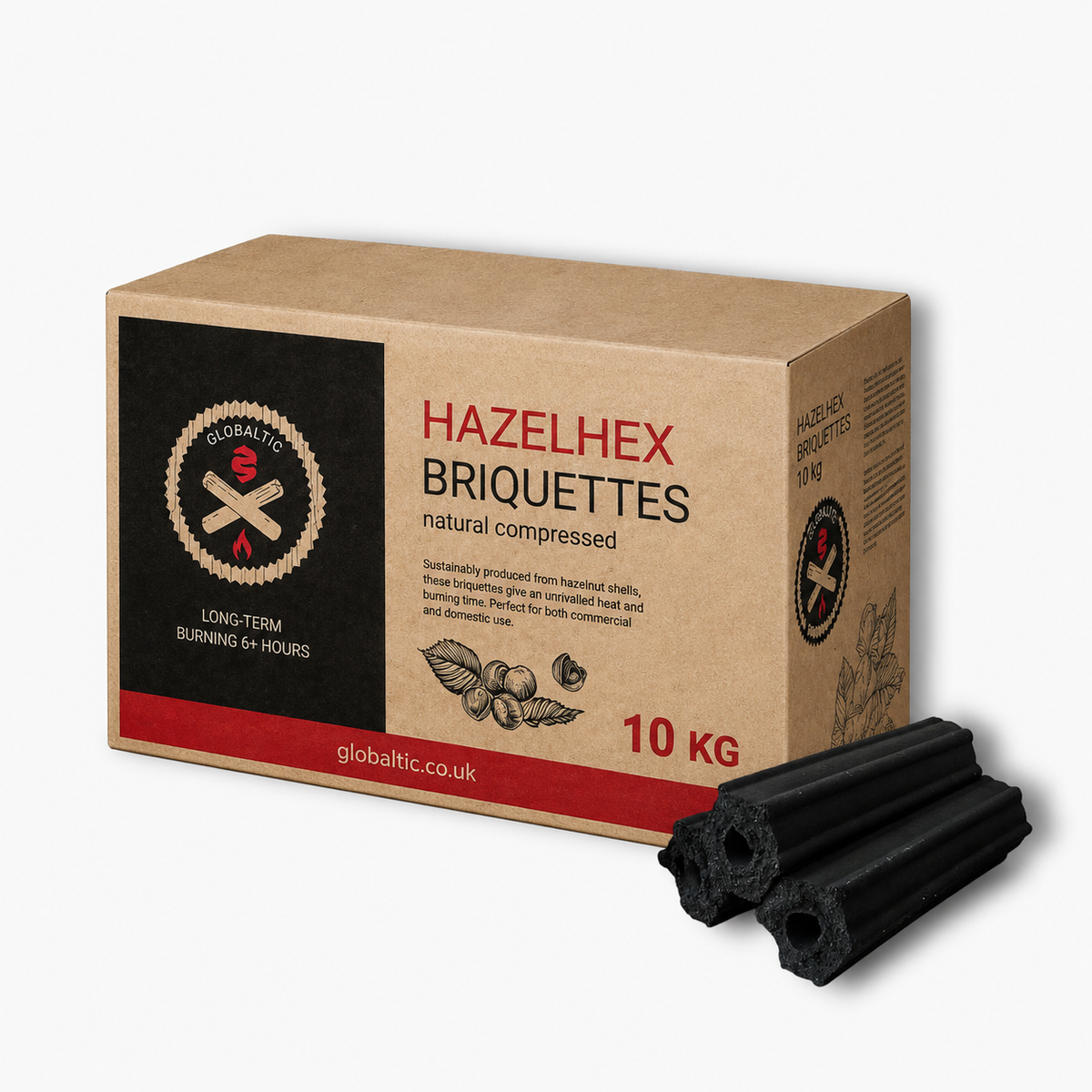
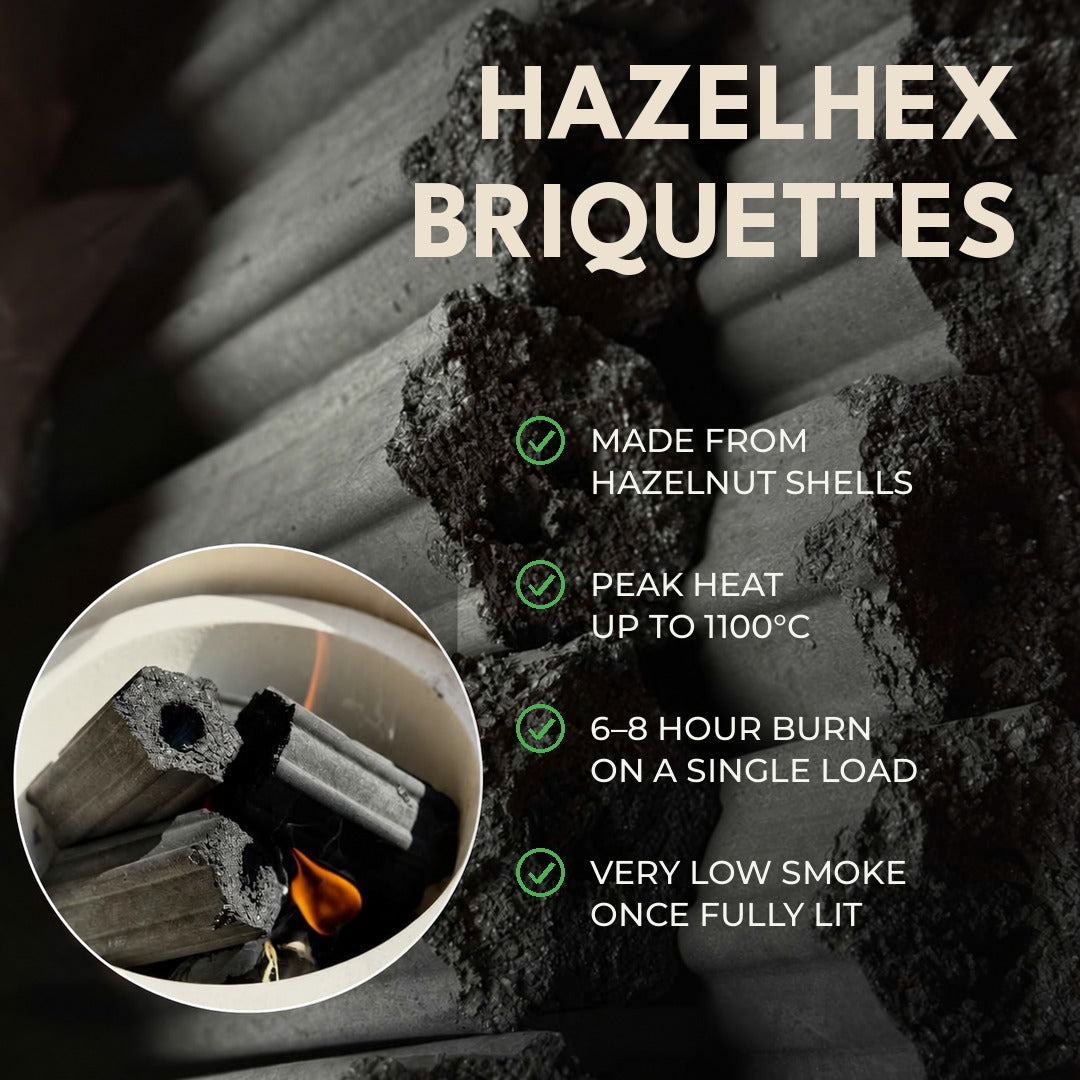
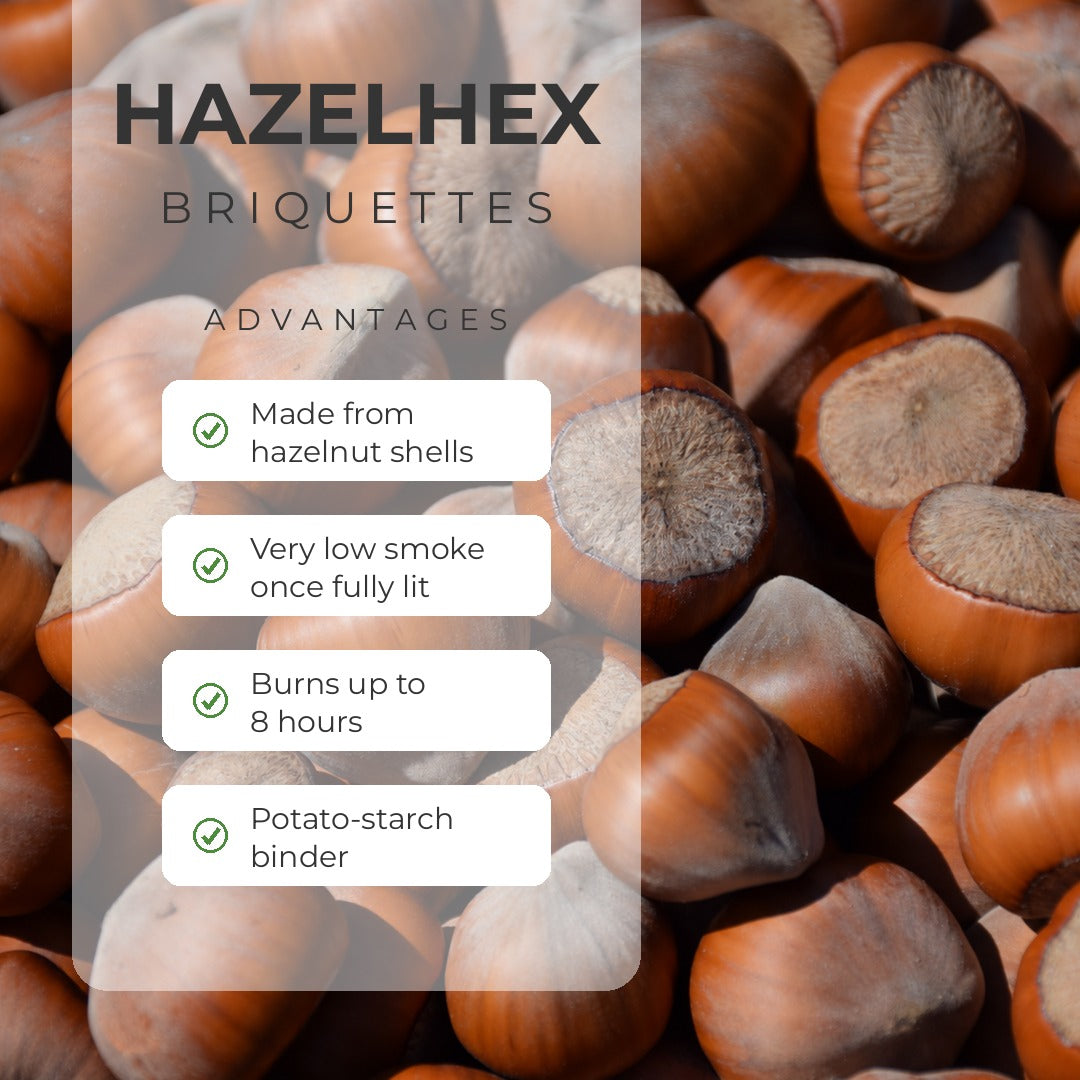
| HazelHex briquettes | ~60 | Up to 1100°C | 6–8 hours |
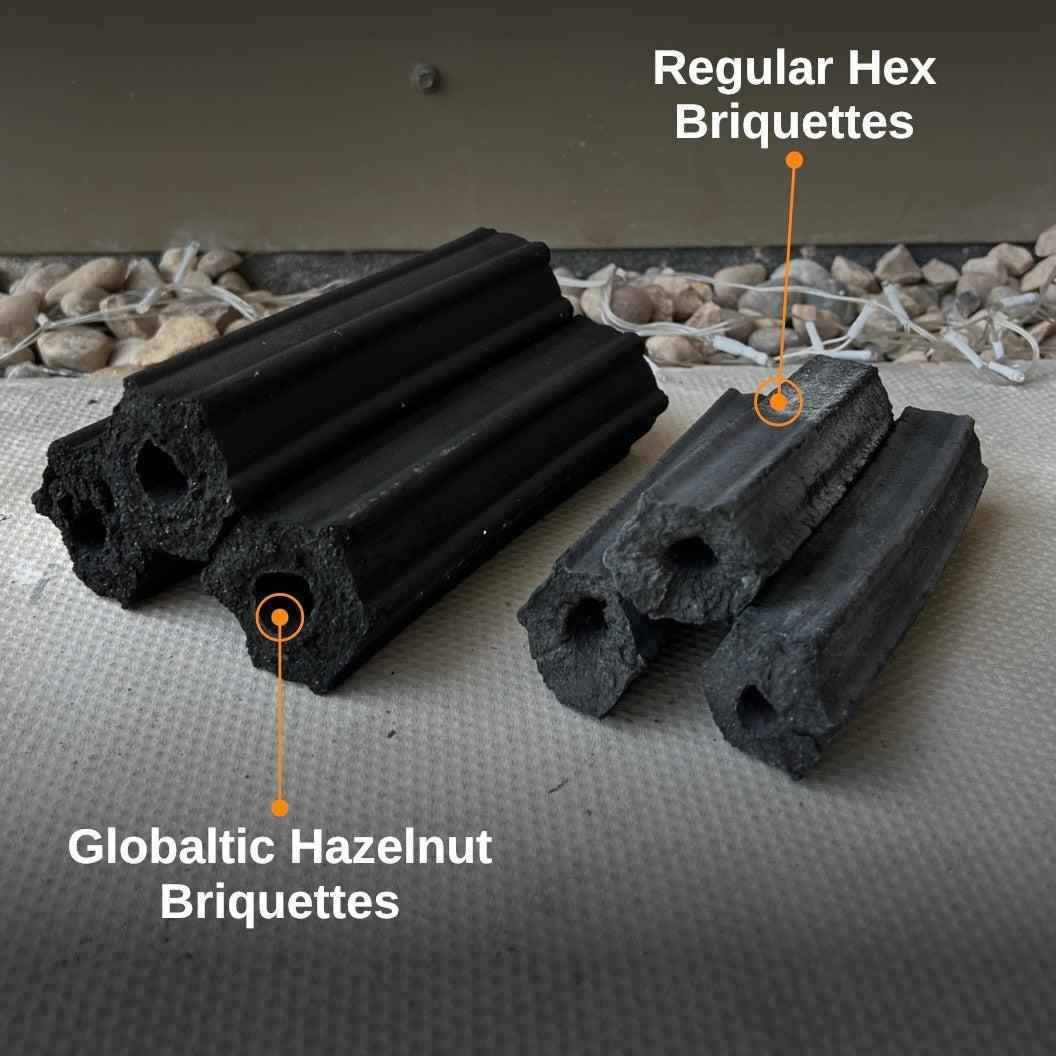
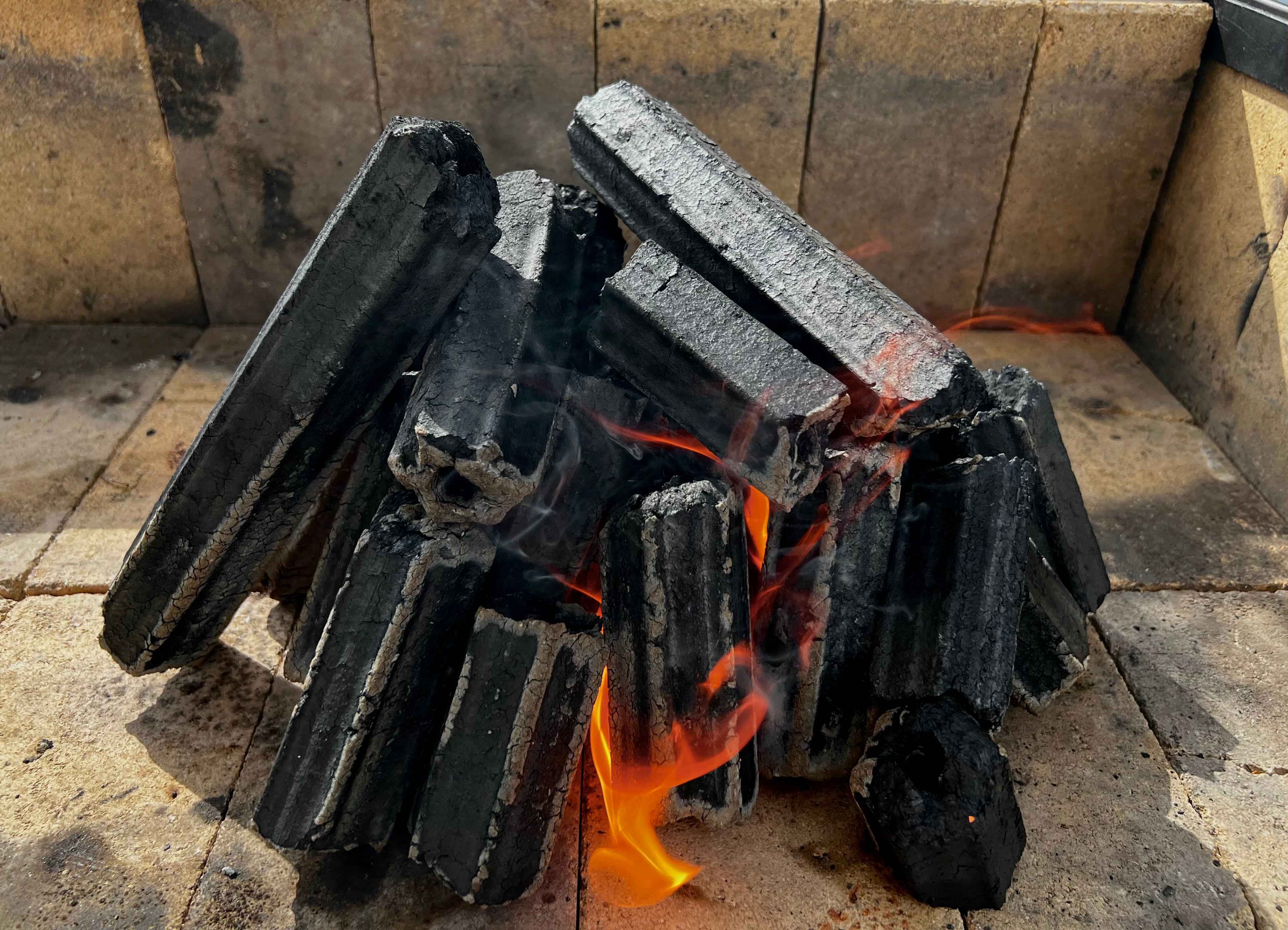
Most live-fire kitchens don't run one fuel. The setup we see working best is HazelHex and lumpwood lit together in the grill: HazelHex acts as the powerbase, and the lumpwood is there for extra heat and to add flavour. For a combined load, split your portions by the share of each fuel in the grill and work each line out separately.
Step 3: add a buffer for real service
The per-bag figures assume a busy grill. Every service also burns fuel while the fire comes up (typically 40–60 minutes for a combined load) and while the grill sits ready between orders. We suggest planning a buffer of around 15–20% on top, more if your covers swing a lot from night to night. That's a rule of thumb, not a test result, so refine it against your own first month.
Worked example
A 120-cover steak and grill restaurant, open five nights a week:
- Covers per week: 120 × 5 = 600
- Share ordering a grilled main: 50%, so 300 grill portions
| Lumpwood only | HazelHex only | |
|---|---|---|
| Bags per week (300 ÷ yield) | 7.5 | 5 |
| With a 15% buffer | ~9 | ~6 |
| Trade price per bag (Zone 2, half pallet, ex VAT) | £16.20 | £22.20 |
| Weekly fuel cost (with buffer) | ~£146 | ~£133 |
| Fuel cost per grill portion (before buffer) | ~41p | ~37p |
| Fuel cost per cover across the week (with buffer) | ~24p | ~22p |
The headline: HazelHex costs more per bag but less per steak, because each bag goes further. It also means fewer refuels during service, which matters as much as the money when the grill is three deep in tickets.

What it costs at trade prices
These are our current Zone 2 trade prices per bag, ex VAT. Delivery zones are set by postcode, so your quote may differ slightly. Prices are correct as of October 2026.
| Product | Full pallet | Half pallet | Quarter pallet (20 bags) |
|---|---|---|---|
| Silver birch lumpwood 10kg | £15.20 (60 bags) | £16.20 (30 bags) | £17.40 |
| Oak lumpwood 10kg | £15.70 (60 bags) | £16.80 (30 bags) | £18.00 |
| Hex briquettes 10kg | £18.50 (65 bags) | £18.80 (35 bags) | £20.00 |
| HazelHex briquettes 10kg | £21.50 (70 bags) | £22.20 (35 bags) | £23.40 |
| Spanish Holm Oak 15kg | £21.10 (50 bags) | £21.90 (30 bags) | £22.30 |
Fuel cost per steak at half-pallet prices:
- HazelHex: £22.20 ÷ 60 ≈ 37p
- Hex: £18.80 ÷ 50 ≈ 38p
- Silver birch: £16.20 ÷ 40 ≈ 41p
Sizing your order
- Work out bags per week using the steps above, buffer included.
- Choose a pallet size you can store dry. Charcoal picks up moisture if it sits on a damp floor, and damp charcoal lights slower and burns cooler. Keep bags off the floor and under cover.
- Match the pallet to 3–5 weeks of use. In the example above, a half pallet of birch (30 bags) covers a little over three weeks. A half pallet of HazelHex (35 bags) covers almost six.
- Set a reorder point. Standard trade delivery is 2–3 working days, so reorder when you're down to at least a week's stock. Next-working-day delivery is available on most orders if you're caught short.
Frequently asked questions
How much charcoal does a restaurant use per week?
It depends on grill portions. Divide weekly grill portions by about 40 for a 10kg bag of lumpwood or about 60 for a 10kg bag of HazelHex, then add 15–20% for warm-up and quiet services. A 120-cover grill restaurant open five nights with half its covers on the grill uses around 6–9 bags a week.
What is the charcoal cost per steak in a restaurant?
At Globaltic Zone 2 half-pallet trade prices (ex VAT, October 2026), fuel costs roughly 37p per steak on HazelHex, 38p on Hex briquettes and 41p on silver birch lumpwood.
Is lumpwood or briquette cheaper for a restaurant?
Per bag, lumpwood is cheaper. Per steak, dense briquettes such as HazelHex usually work out cheaper because each bag cooks more. Most kitchens light both together: HazelHex as the base, lumpwood for heat and flavour.
How much charcoal should a restaurant keep in stock?
At least one week of use above your reorder point, given a 2–3 working day standard delivery. A pallet sized to 3–5 weeks of use balances price per bag against dry storage space.
Are these prices ex VAT?
Yes. All trade prices shown are per bag, ex VAT, for delivery Zone 2, as of October 2026. Your postcode sets your zone, and we confirm the price on your quote.
Related: the operational case for hexagonal briquettes and how much charcoal a Josper uses.
Get a quote for your kitchen
Tell us your covers, your grill and how many nights you run it, and we'll spec the fuel and quote your zone price. Start through our hospitality page. A trade account opens from a two-bag order, so you can test the yield on your own grill before committing to a pallet.
Share:
Best charcoal for your Kamado Joe (UK, 2026 edition)
How to become a Globaltic charcoal stockist: pallet tiers, prices, margins and lead times