
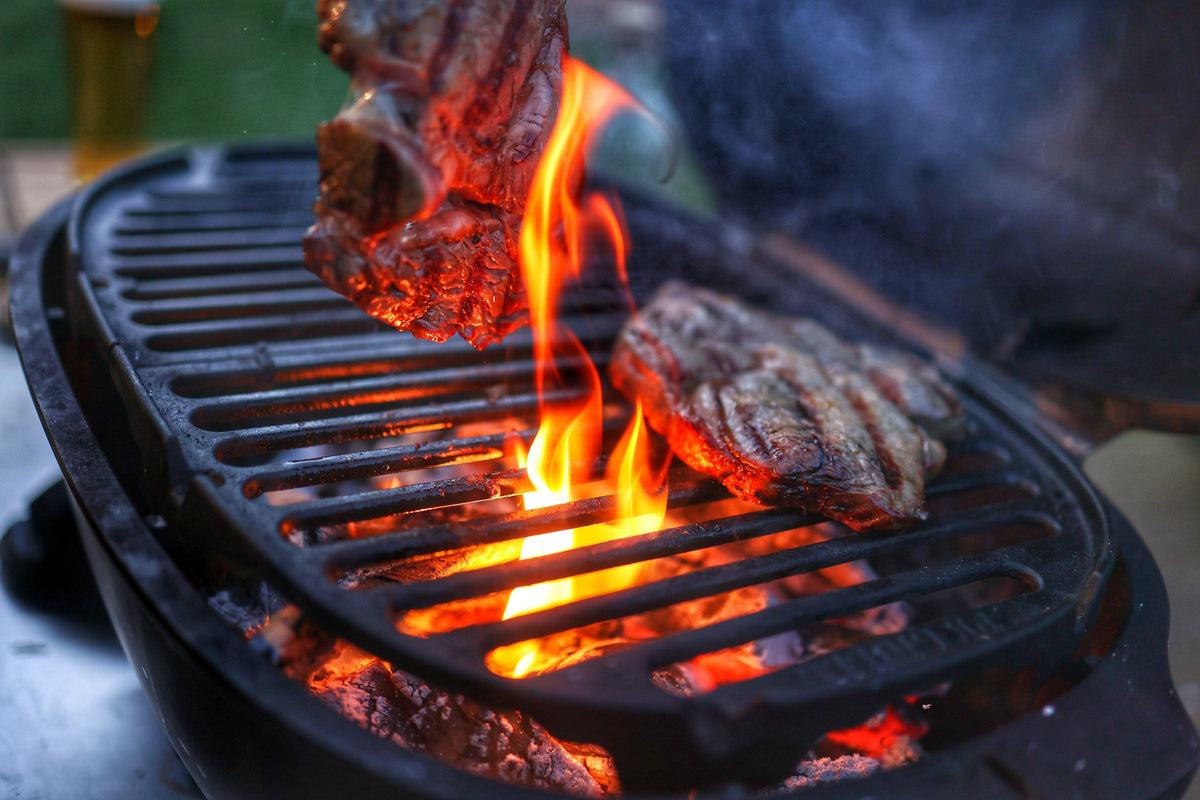
Cooking over charcoal is one of the best ways to get flavour into food. It also comes with a few habits worth getting right, some about food safety and some about how meat behaves over high heat. None of this is complicated. Most of it makes the food taste better too.
1. Cook meat all the way through, and check it
The Food Standards Agency says the biggest barbecue risk is undercooked meat, especially chicken and burgers, because the outside can look done while the inside is still raw. Its advice is to cook them all the way through, with juices running clear, and to aim for a probe thermometer reading of at least 75°C at the thickest part. Steaks are different: they can be served pink as long as the surface is properly seared.
A cheap probe thermometer is the single most useful barbecue tool you can own.
2. Wait for the coals, not the flames
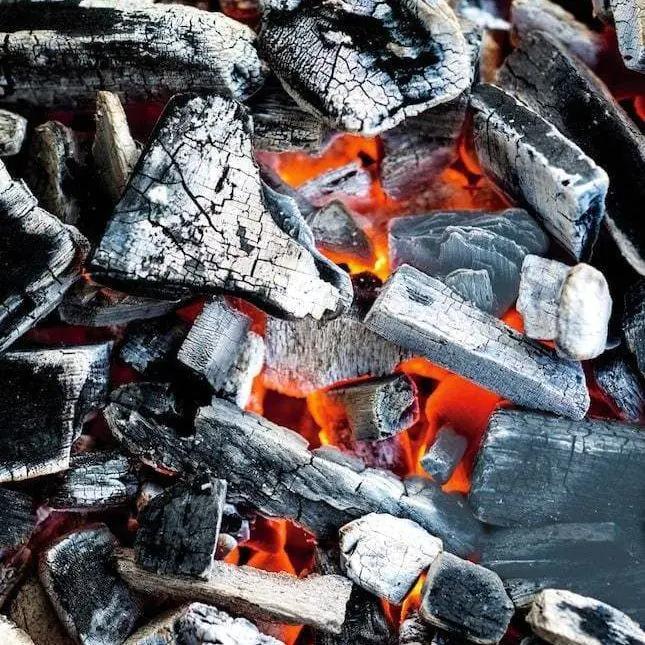
Cooking over flames chars the outside before the inside is cooked. Let the charcoal burn until the top pieces have greyed over. With silver birch lumpwood in a chimney starter that takes 10–15 minutes. Light it with a wood wool firelighter rather than lighter fluid, so there's no fuel taint on the food.
3. Build two zones
Bank the coals on one side of the grill. Sear over the hot side, then move food across to finish over indirect heat. Two zones give you control, cut flare-ups and stop the outside burning while you wait for the middle to cook. They're also how you cook thicker cuts, whole chickens and anything low and slow.
4. Keep flare-ups down and turn often
When fat drips onto hot coals it flares and smokes. The US National Cancer Institute notes that this smoke carries polycyclic aromatic hydrocarbons (PAHs) that stick to the surface of the meat. High-temperature cooking also forms heterocyclic amines (HCAs). Both have been found to cause DNA changes in laboratory studies. The NCI's practical advice:
- avoid exposing meat directly to open flame;
- avoid very long cooking times at high temperature;
- turn meat frequently rather than leaving it on one side;
- cut off any charred or burnt bits before eating.
Trimming excess fat before cooking means less dripping and fewer flare-ups.
5. Marinate
A marinade adds flavour and keeps lean meat moist. In The Independent, Professor Tim Spector suggests marinating meat in something acidic, such as lemon juice with chicken, as one way to reduce the compounds that form when meat is barbecued.
6. Think about what goes on the grill
Cancer Research UK's Maxine Lenza told The Independent that, for cancer risk, what you eat matters more than how you cook it. Processed and red meats are linked to bowel cancer. Mix in fish, chicken, vegetables, halloumi and fruit; they all take beautifully to charcoal. Our guide to BBQ cuts covers how to cook each one.
7. Keep it clean
Clean the grill before every cook, keep raw and cooked food apart with separate tongs and plates, and get leftovers into the fridge within a couple of hours.
The short version
Use a thermometer, cook over glowing coals rather than flame, set up two zones, turn often and trim the char. You'll get better food and fewer problems.


Share:
Behind the Scenes at a Charcoal Factory: A Fascinating Look at the Process of Creating Charcoal
From Ancient Flames to Modern Marvels: The Fascinating History of Charcoal Production