
Short answer: Most kitchens can cut charcoal spend by changing how fuel is stored, lit, loaded and shut down, before they touch the supplier. The levers that move the number are dry storage, lighting to the clock, refuelling before the bed drops, a damper someone actually owns, clearing ash before every light, snuffing and reusing part-burnt charcoal, matching lumpwood or briquettes to each cook, and buying by the pallet.
The money is real. Charcoal can take on 4–16% of its weight in water in the hours after production (CERNE), and damp fuel gives less heat per kilo. On the buying side, a single bag of our Hex briquettes is £27.50 on our website, against £20.48 a bag on a full pallet (public prices inc VAT, 18 November 2026).

Where does the charcoal money go?
Before changing anything, find out. Run a fuel log for two weeks. One line per service:
| Service | Covers | Grill portions | Bags opened | Refuels | Left in the grill at close |
|---|---|---|---|---|---|
| Tue dinner |
Grill portions divided by bags opened gives you portions per bag. Compare it with the working yields in our charcoal per cover calculator: around 40 restaurant steaks per 10kg bag of lumpwood, 50 for Hex briquettes and 60 for HazelHex. If you're well under, the gap is in how the fire is run, not in the price per bag.
The log usually points at the same few services: the quiet weeknight where a full grill burns for six covers, and the close where half a load goes in the bin.
Does storage change how much you burn?
Yes, and it's the cheapest fix on this list. Charcoal is hygroscopic: it pulls moisture out of the air. Wet fuel is slow to light, smokes more on startup and takes more energy to get going (CERNE).
The heat loss is measurable. In one published table, charcoal at 5% moisture gives 7,515 kcal/kg; at 10% it gives 7,076 kcal/kg, and at 15% it drops to 6,635 kcal/kg (Ciofu, 2015, Table 6). That's roughly 6% less heat at 10% moisture and 12% less at 15%, so you burn more kilos for the same service. The European standard for barbecue charcoal, EN 1860-2, caps moisture below 8% (Springer). Our silver birch lumpwood is specified at under 4% as delivered. Your store decides whether it stays there.
What to do:
- Off the floor. Bags on a pallet or racking, never on concrete.
- Under cover and away from the wash-up. Not next to the dishwasher, the back door or an extractor outlet.
- Close the bag. Fold and clip an open bag at the end of service.
- First in, first out. Use the oldest bags first so nothing sits for a season.
What's the cheapest way to light a restaurant grill?
Light what the first hour needs, at the time it needs it.
- No lighter fluid. Josper's manual says to use only charcoal as fuel, with no lighter fluids (Josper), and Weber doesn't recommend starter fluid either (Weber). A chimney starter, a gas torch or an electric starter does the job without buying a second fuel.
- Count back from the first ticket. Our birch lumpwood is ready in 10–15 minutes from a chimney, oak in 15–20 and Spanish Holm Oak in about 20. A briquette bed lit together with lumpwood in the grill needs 40–60 minutes. Light to that clock, not to when the porter arrives. We covered the cost of an early light for Jospers in the weekly Josper maths.
- Light one zone first on an open grill. On an asado, parrilla, robata or mangal, bring one section up for the early covers and light the rest as tickets build. A full bed for a quiet first hour is the most common waste we see.
How full should the grill be, and when do you refuel?
Load for the service you're about to cook, then top up before you need to.
A bed of glowing coal is where the heat is. Piling fresh fuel on a dying bed means waiting for it to catch while tickets stack up, so cooks overload to be safe. The better habit is smaller additions onto live coal, timed ahead of the rush.
Timing depends on the fuel:
- Lumpwood catches fast, so it can go on shortly before you need it.
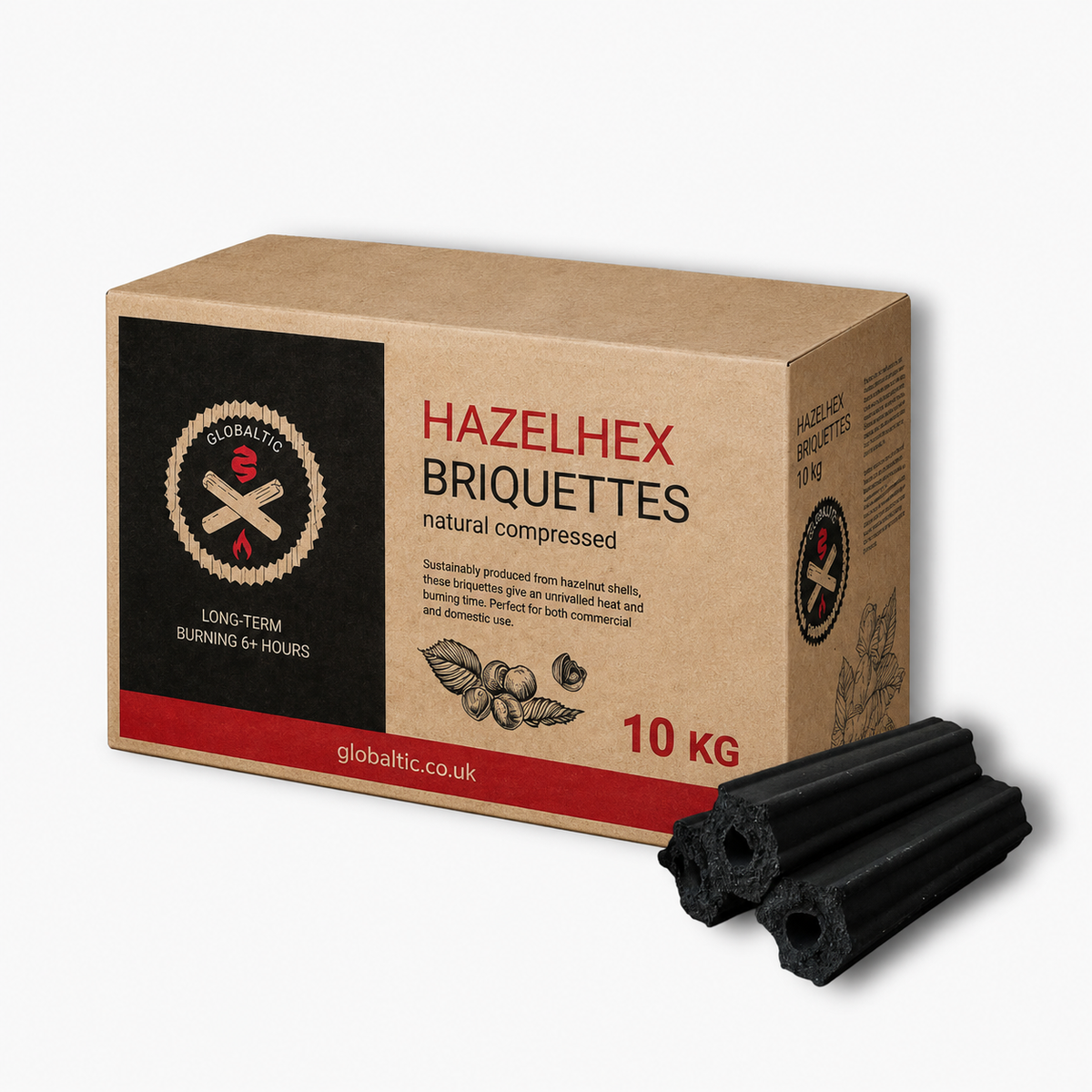
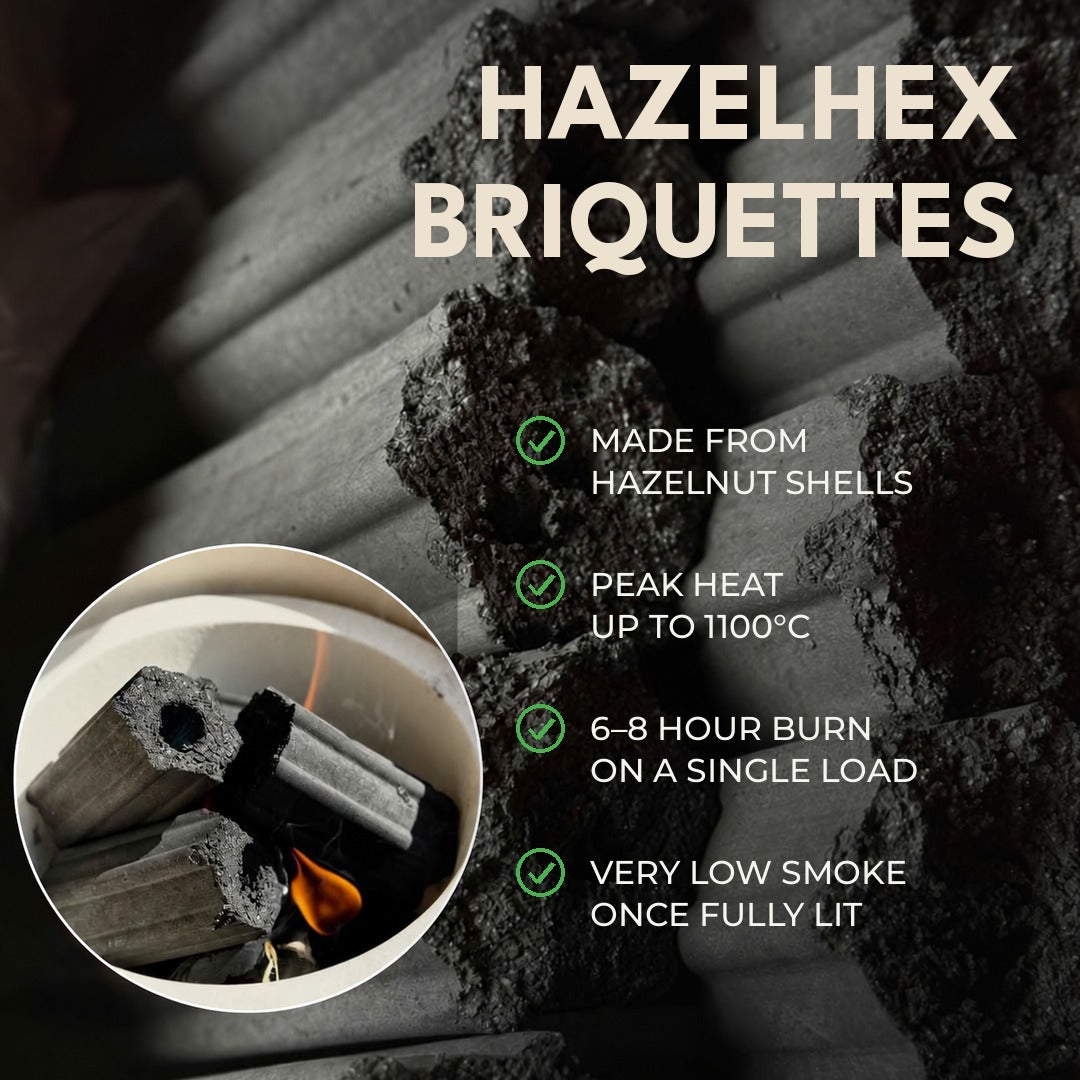
- Briquettes take longer to come up, so add them earlier. The reward is a long single load: 5–6 hours for Hex and 6–8 hours for HazelHex, both on a single load in a closed grill or kamado.
- Spanish Holm Oak in an asado-style grill typically needs about one refuel across an 8-hour service, depending on the grill, the chef and the cover count.
Write the refuel points into the service plan ("briquettes on at 18:15 on Fridays"), so it's a decision, not a reaction.
How much do dampers and airflow matter?
More than most kitchens think. The more air a charcoal fire gets, the hotter it grows and the more often you have to replenish it (Weber). A grill left at full draught through a quiet spell is burning fuel to heat the extraction.
- Open to light, then close down to hold. Full air while the bed comes up, then reduce once you're at working heat.
- Close down between pushes. If there's a 30-minute lull, the fire doesn't need full draught.
- Give the damper an owner. One person on each service sets it. Mark "service", "hold" and "shut" positions on the damper with a heat-proof paint pen so the setting doesn't depend on who's on.
- Keep doors and lids shut. On a closed oven or kamado, every opening pulls in air and speeds the burn.
Does ash management save fuel?
Yes. A build-up of ash restricts airflow through the bottom vents, which makes the fire harder to light and harder to control (Weber). Crews then add fuel to make up for heat that's really missing because the fire can't breathe.
- Clear ash before every light, once it's completely cold (Weber).
- Riddle gently mid-service if the bed is choking, rather than adding fuel on top.
- Watch the bottom of the bag. Fines and dust burn off fast and block air. EN 1860-2 expects fines under 7% (Springer); we explain how to check a supplier on this in what restaurant-grade charcoal means.
- Store ash safely. Cold ash goes into a metal container with a lid, never plastic (Weber).
Low-ash fuel helps here too. Our birch lumpwood is specified at under 3% ash.
Can you reuse part-burnt charcoal?
Yes, and at the end of every service this is where money goes in the bin. Starving the fire of oxygen puts it out, and what's left can be reused. Weber's guidance is to close all vents to cut off oxygen and let the coals die out gradually (Weber UK), then shake leftover fuel free of ash and re-use it (Weber).
In a kitchen:
- Closed ovens and kamados: shut every damper at the end of service and leave it.
- Open grills: transfer the remaining coals with tongs into a lidded metal snuffer or ash bin and close it.
- Never use water. Weber advises against it (Weber), and you'd be putting back the moisture you paid to keep out.
- Mix the pieces into the next light with fresh fuel, rather than binning them.
Coals and ash can stay hot for many hours (Weber). Follow your own fire risk assessment for anything left overnight.
Lumpwood or briquettes: which is cheaper for each cook?
Per bag, lumpwood is cheaper. Per steak, denser briquettes usually win because each bag cooks more: around 40 restaurant steaks per 10kg of lumpwood, 50 for Hex and 60 for HazelHex. So match the fuel to the job, from the same supplier:
| Cook | Fuel that tends to cost least per plate |
|---|---|
| Short, sear-led service, or a dish that needs lumpwood flavour | Lumpwood, lit to the clock |
| Long service on an open grill | Briquette powerbase, with lumpwood lit together with it for heat and flavour |
| Closed Josper-type oven | Large, dense lumpwood such as Spanish Holm Oak |
| Highest-volume service where you want the longest single load | HazelHex as the base |
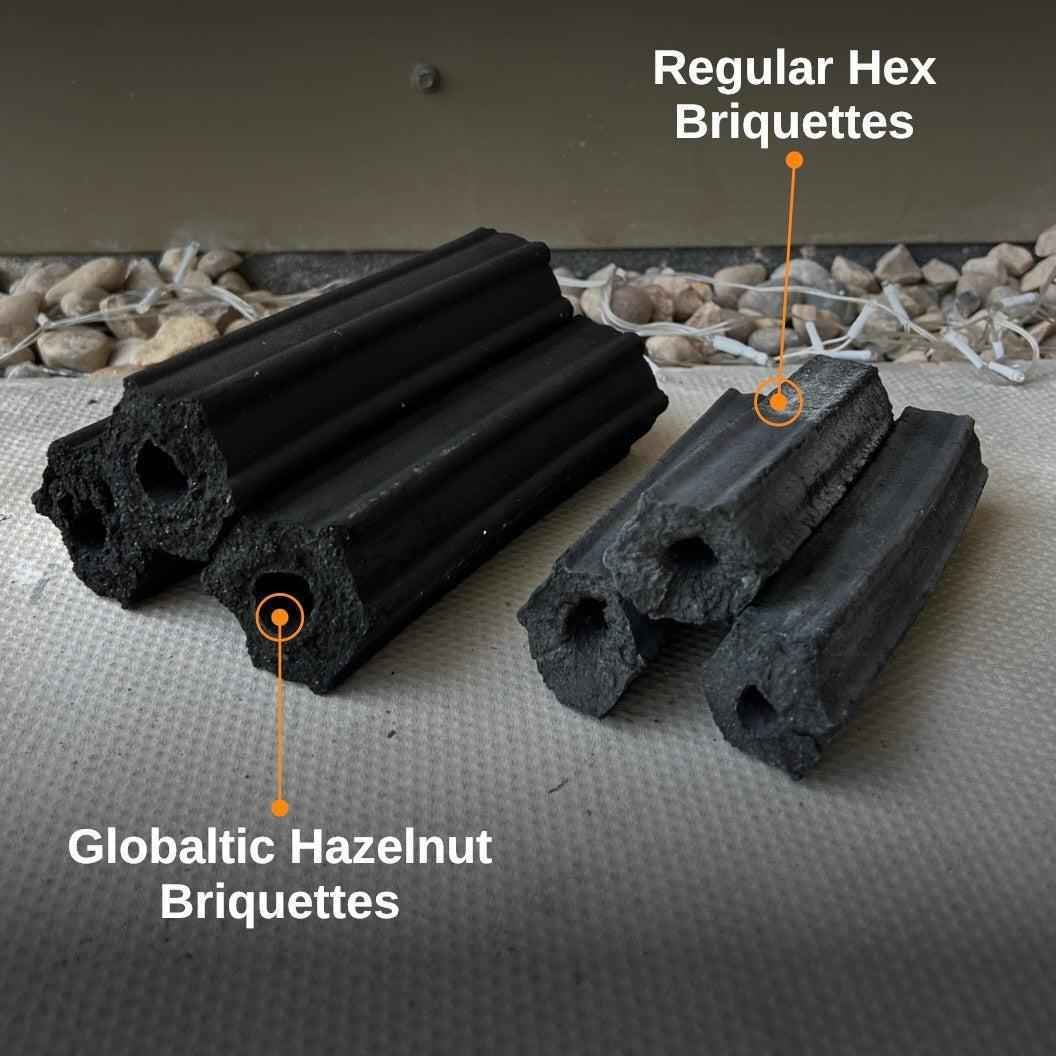
Hex is the volume briquette, and HazelHex burns longer. We set out the case for running a briquette base under lumpwood in hexagonal briquettes in a restaurant grill.
Is buying by the pallet worth it?
If you can store it dry, yes. These are our public website prices for Hex Briquettes 10kg, inc VAT, on 18 November 2026:
| Order | Bags | Price | Per bag |
|---|---|---|---|
| Single bag | 1 | £27.50 | £27.50 |
| Quarter pallet | 20 | £477 | £23.85 |
| Half pallet | 35 | £765 | £21.86 |
| Full pallet | 65 | £1,331 | £20.48 |
A full pallet works out at £7.02 less per bag than buying singles, about a quarter off. Trade accounts are priced ex VAT by delivery zone; the per cover calculator shows the trade tiers.

Two conditions. First, the storage rules above: a pallet that sits on a damp floor loses heat value before you open it. Second, size the pallet to 3–5 weeks of use so stock turns over. Standard pallet delivery takes 2–3 working days, so set a reorder point at least a week above zero.
What it adds up to
Say your log shows nine bags a week, like the lumpwood example in the per cover calculator. If these changes save one bag a week, that's 52 bags a year, close to a full pallet of birch lumpwood (60 bags). That's an illustration, not a promise; your own log is the test.
| Lever | The rule | Owner | How you know it's working |
|---|---|---|---|
| Storage | Off the floor, under cover, bags closed, oldest first | KP / porter | No damp or caked bags at the bottom of the stack |
| Lighting | No fluid; light to the clock; one zone first on open grills | Grill chef | Grill at heat when the first ticket lands, not an hour before |
| Refuels | Small additions on live coal, planned times | Grill chef | Fewer panic loads in the rush |
| Dampers | Open to light, close to hold, marked positions | Grill chef on shift | Same setting whoever's on |
| Ash | Clear before every light, riddle not refuel | Closing chef | Fire lights first time |
| Snuffing | Shut down or snuff every close, reuse next light | Closing chef | Less fuel in the bin |
| Fuel match | Right fuel for each cook | Head chef | Portions per bag rising in the log |
| Buying | Pallet sized to 3–5 weeks, reorder point set | GM / ops | Lower price per bag, no emergency orders |
Frequently asked questions
How can a restaurant reduce charcoal costs?
Store fuel dry and off the floor, light only what the first hour needs, refuel before the bed drops, close the dampers down between pushes, clear ash before every light, snuff and reuse part-burnt charcoal, match lumpwood or briquettes to each cook, and buy by the pallet if you can store it dry. Run a two-week fuel log first so you know which services waste the most.
Can you reuse charcoal in a restaurant grill?
Yes. Cut off the oxygen at the end of service by closing all dampers, or by moving the coals into a lidded metal snuffer on an open grill. Once cold, shake off the ash and mix the pieces into the next light. Don't use water, and follow your fire risk assessment for anything left overnight.
Does damp charcoal burn more fuel?
Yes. Moisture lowers heat value: one published table shows charcoal falling from 7,515 kcal/kg at 5% moisture to 7,076 kcal/kg at 10%, about 6% less heat. Damp fuel also lights slower and smokes more on startup.
Is it cheaper to buy restaurant charcoal by the pallet?
Usually. On our website, a single 10kg bag of Hex briquettes is £27.50 and a full pallet of 65 works out at £20.48 a bag (inc VAT, 18 November 2026). Trade accounts are priced ex VAT by delivery zone.
Are briquettes cheaper than lumpwood for restaurants?
Per bag, lumpwood is cheaper. Per steak, dense briquettes usually cost less because each 10kg bag cooks more: around 50 restaurant steaks for Hex and 60 for HazelHex, against around 40 for lumpwood. Many kitchens light briquettes and lumpwood together.
Run the numbers on your own grill
Tell us your grill, your covers and how many nights you run it through our hospitality page, and we'll look at your fuel mix and quote your zone price. A trade account opens from a two-bag order, so you can test Hex briquettes across a couple of services before committing to a pallet.
Sources
- Dias Júnior et al., Hygroscopicity of charcoal produced in different temperatures (CERNE)
- Ciofu, F. (2015), Activated carbon (charcoal) obtaining. Application, Table 6: calorific value by moisture (Fiabilitate si Durabilitate)
- EN 1860-2:2023 limits for moisture and fines, as cited in (Springer)
- Weber, charcoal grill owner's guide: air, dampers, ash and extinguishing (Weber)
- Weber UK, how to use a charcoal barbecue: extinguishing by closing vents (Weber UK)
- Weber, Go-Anywhere handbook: re-using leftover fuel (Weber)
- Weber, how to clean a charcoal barbecue: ash and airflow, safe ash storage (Weber)
- Josper, HJX-PRO user manual: fuel and lighting (Josper)

Share:
Big Green Egg charcoal alternative: choosing lumpwood for your EGG
Private-label charcoal for UK retailers: what the arrangement actually looks like