
By Klim Artemov, founder of Globaltic
Short answer: On a single load, dense briquettes burn longer than lumpwood: 5–8 hours for hexagonal briquettes against 3–4 hours for birch lumpwood on an open grill. But lumpwood lights in 10–15 minutes and runs hotter at the start, and in a closed kamado with the vents nearly shut, good lumpwood can last up to 8 hours too. How you cook matters as much as what you burn.
The figures below are our own product burn times, in Celsius, for the conditions stated. Your grill, the wind and how wet the British summer has been will move them, so treat them as a guide.

The burn times side by side
| Fuel | Ready to cook | Open grill, single load | Closed grill or kamado | Peak heat |
|---|---|---|---|---|
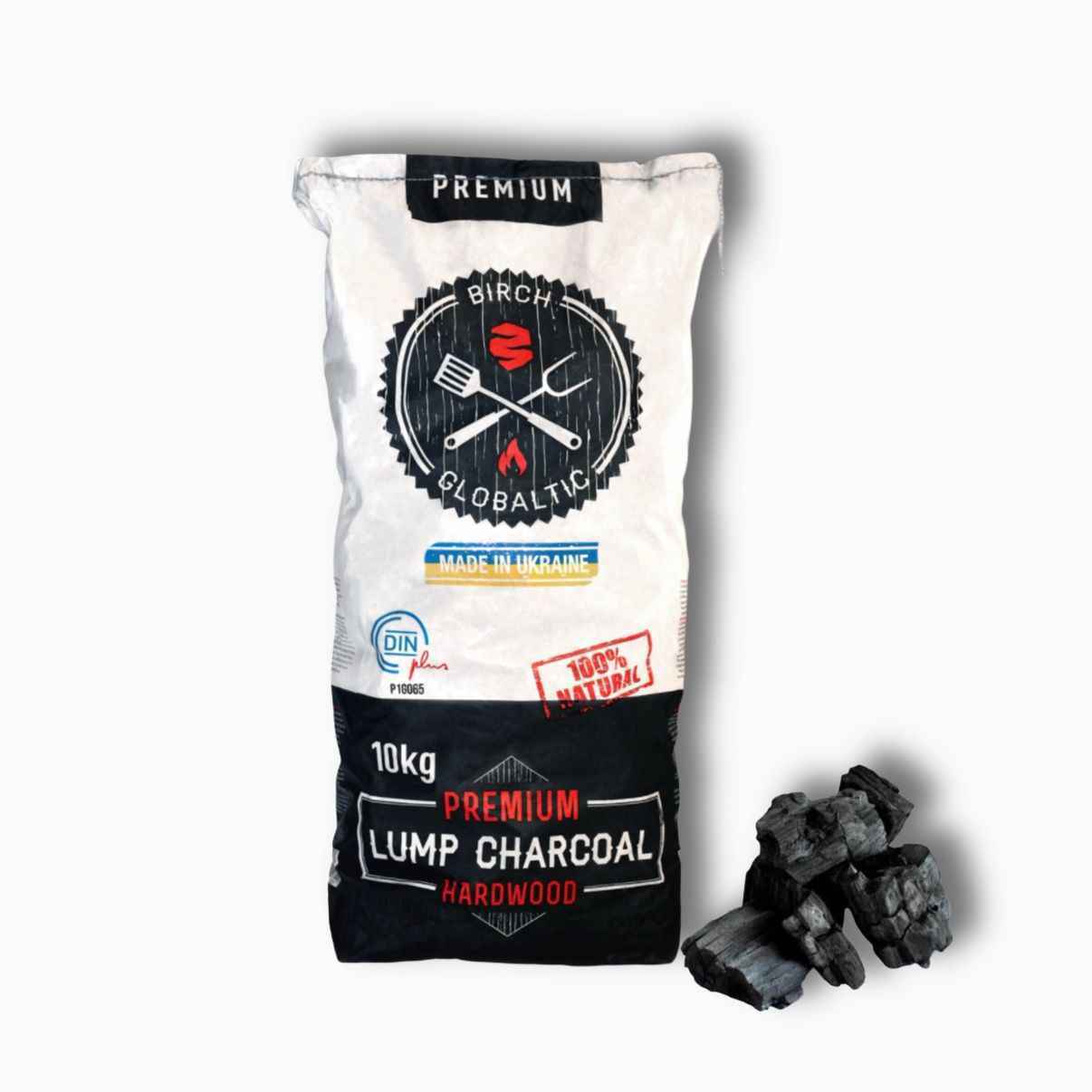
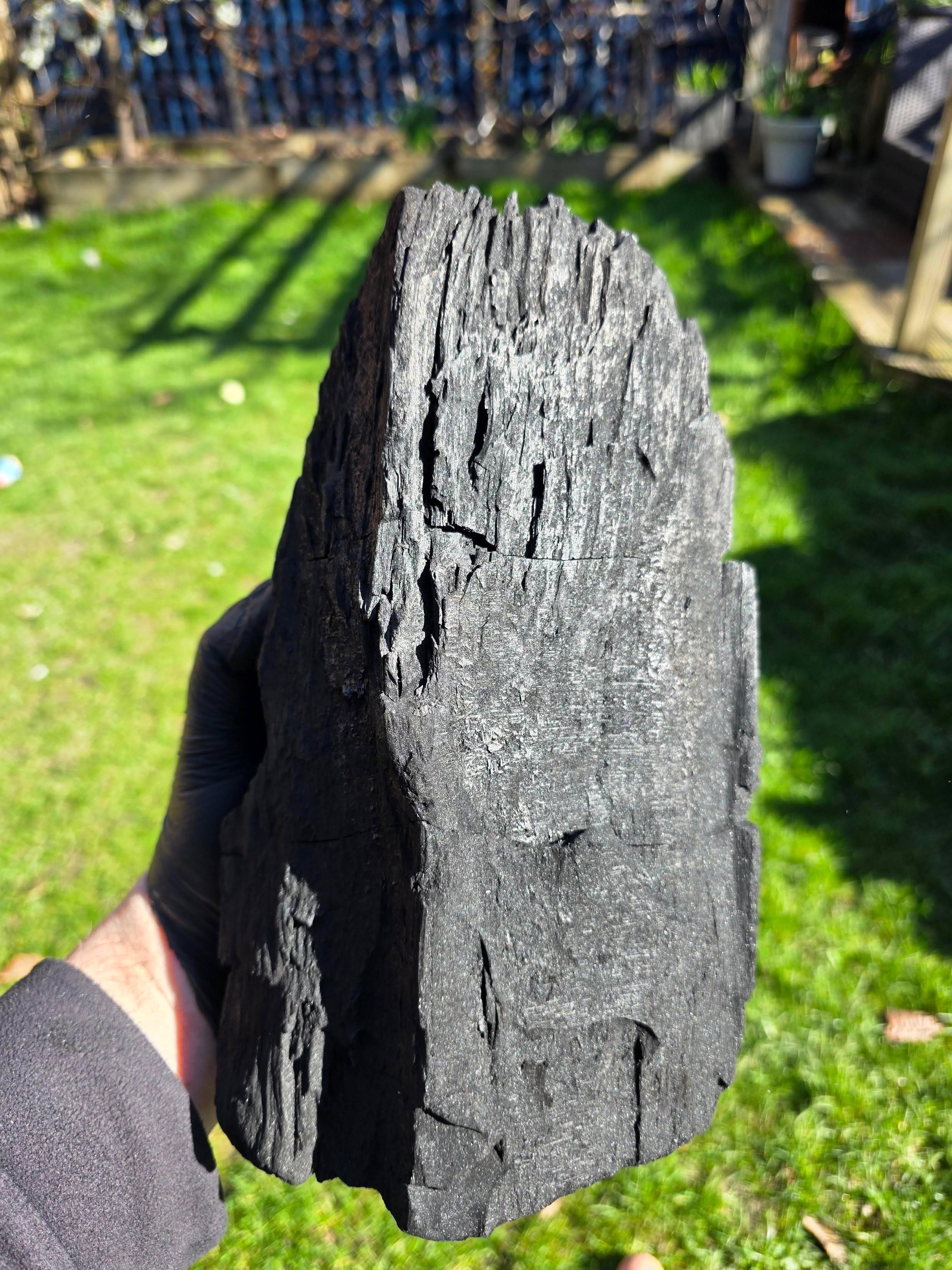
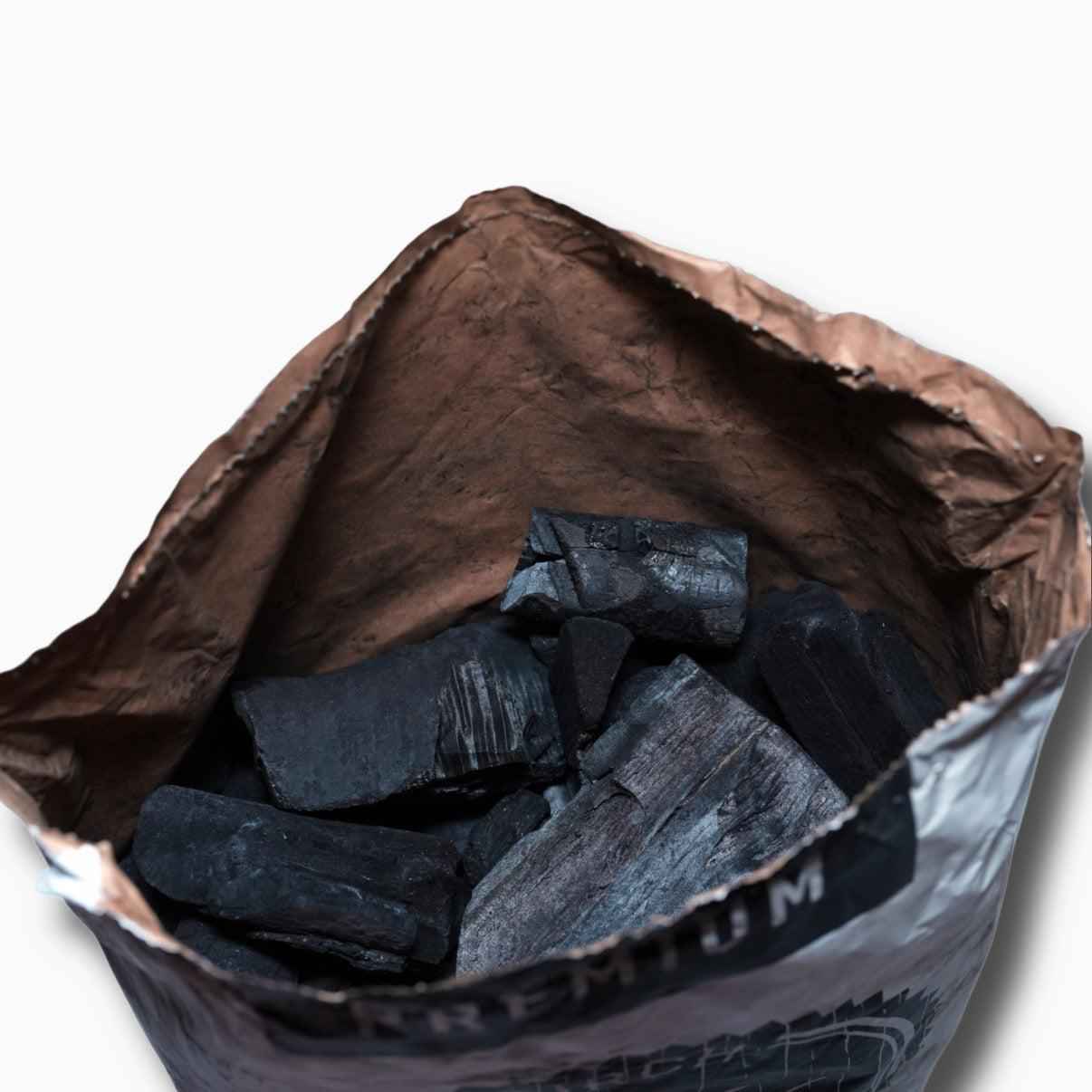
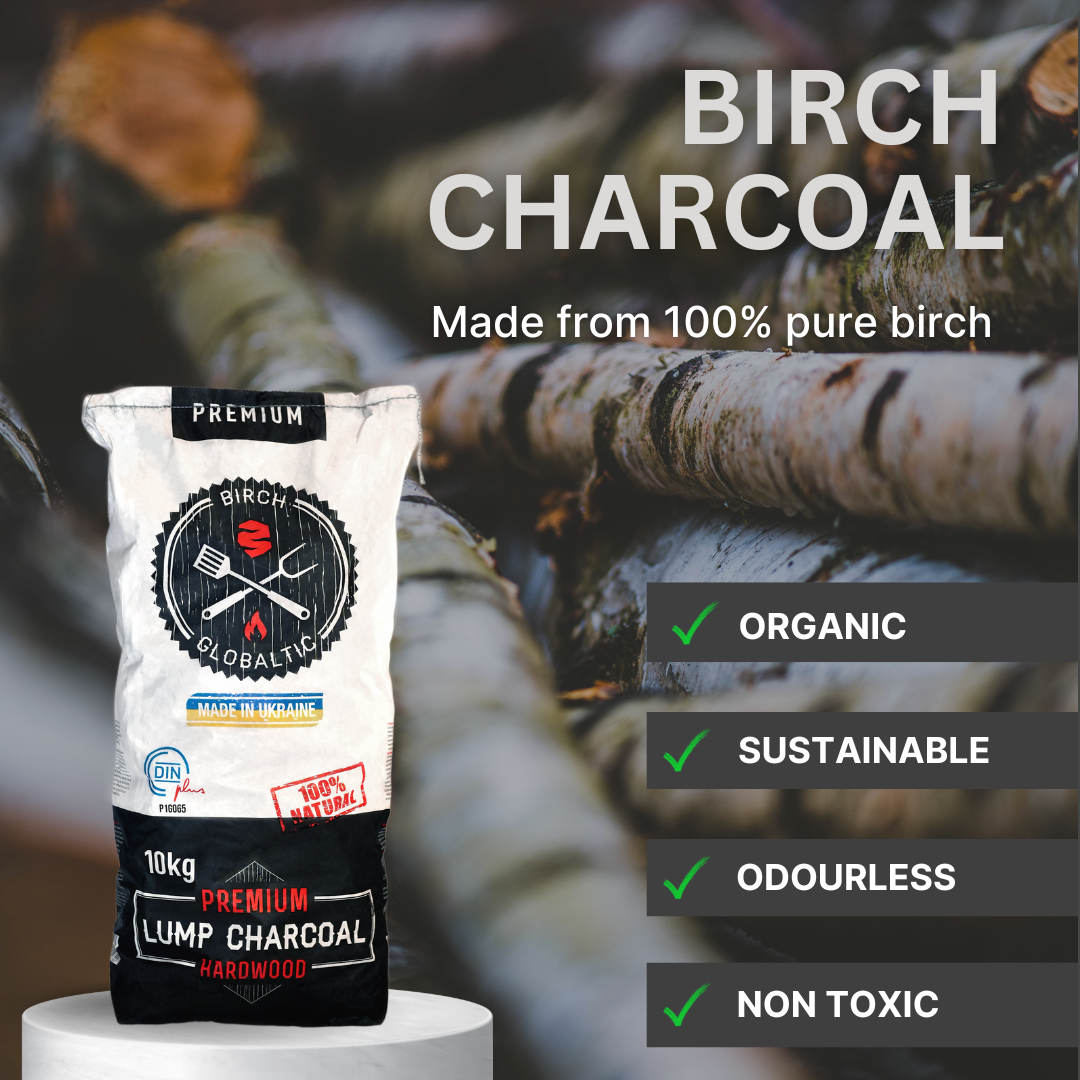
| Silver birch lumpwood | 10–15 min | 3–4 hours | up to 8 hours, low and slow | up to 700°C |
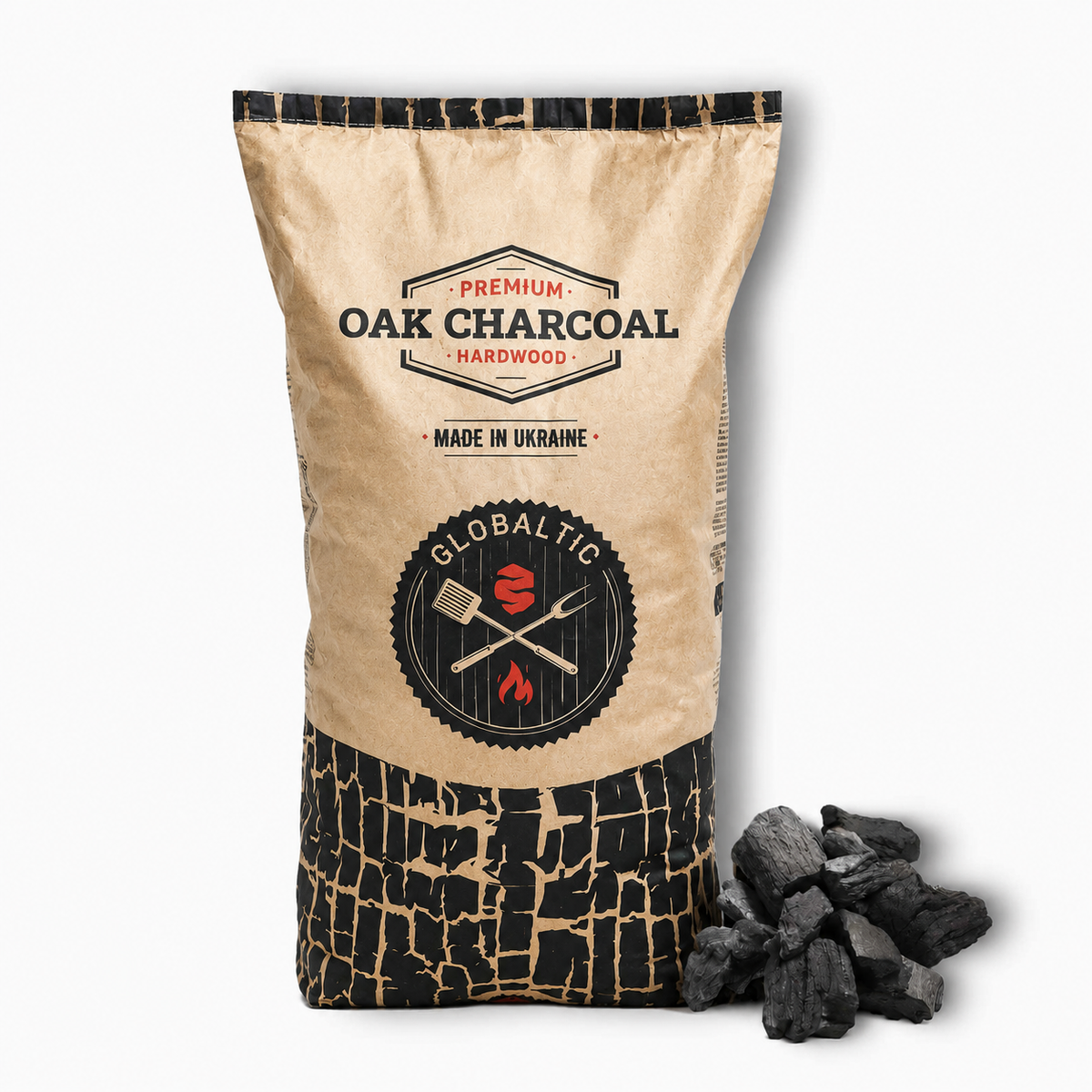
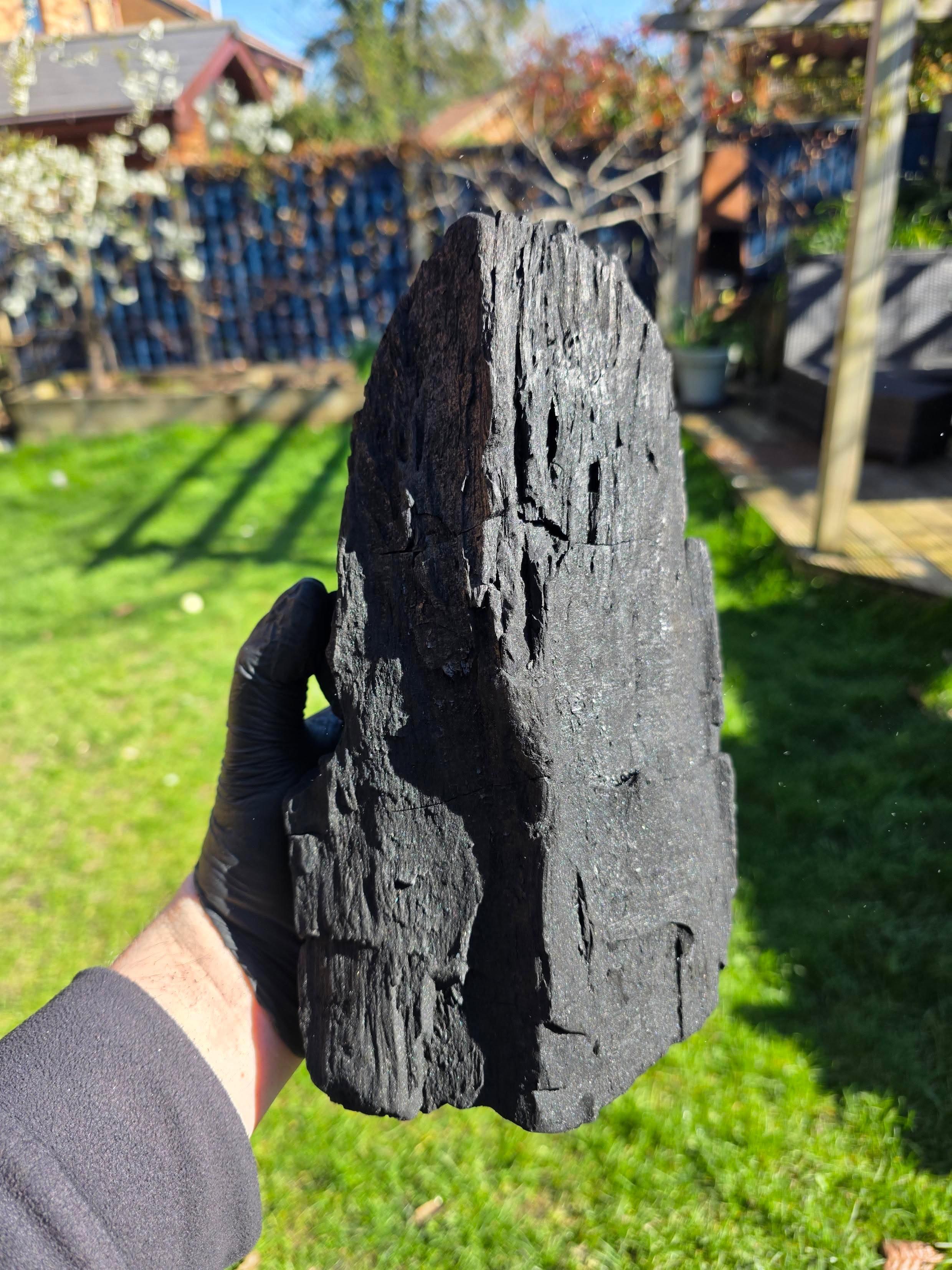
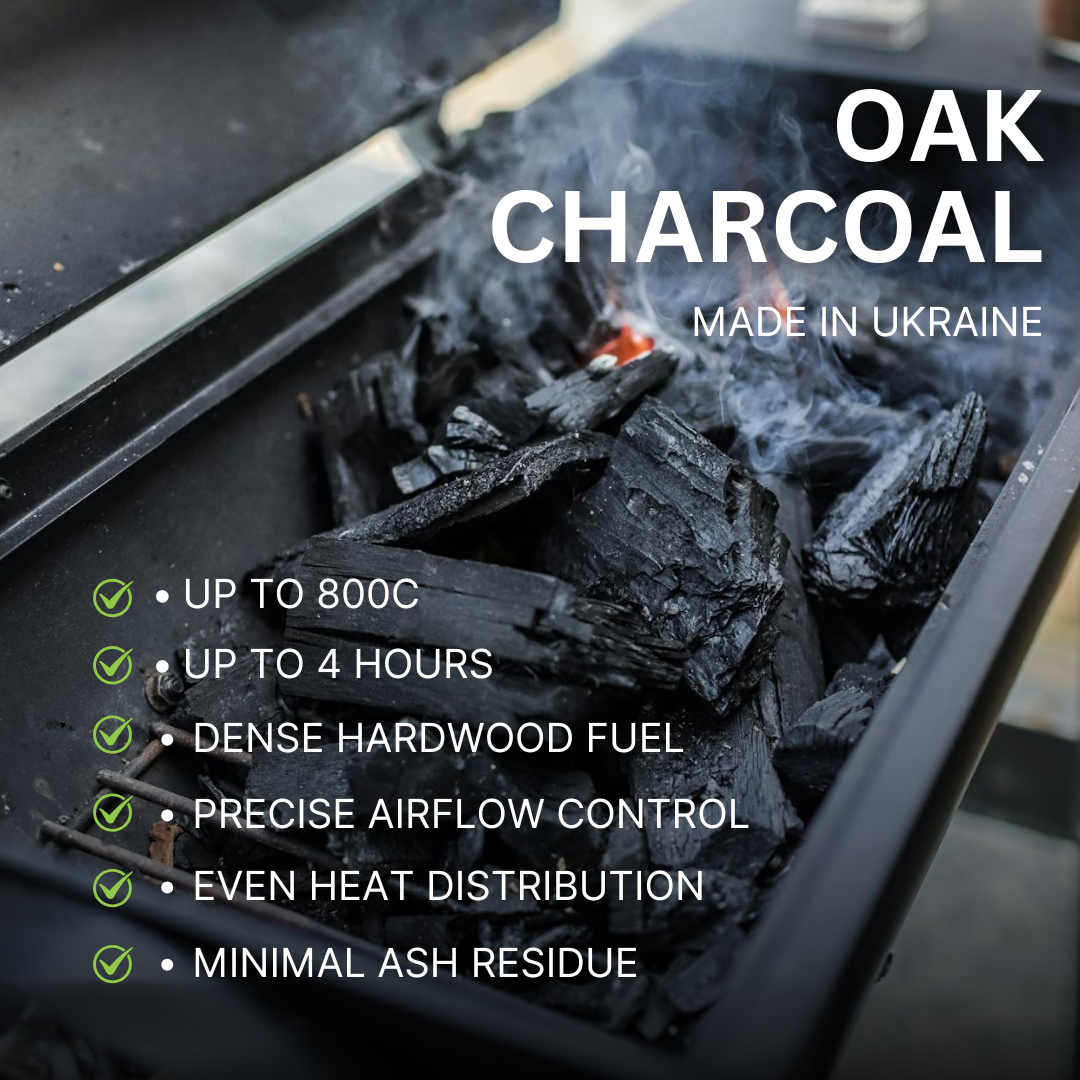
| Oak lumpwood | 15–20 min | 4 hours | up to 8 hours, low and slow | up to 800°C |
| Spanish holm oak lumpwood | about 20 min | — | 4–6 hours | up to 950°C |
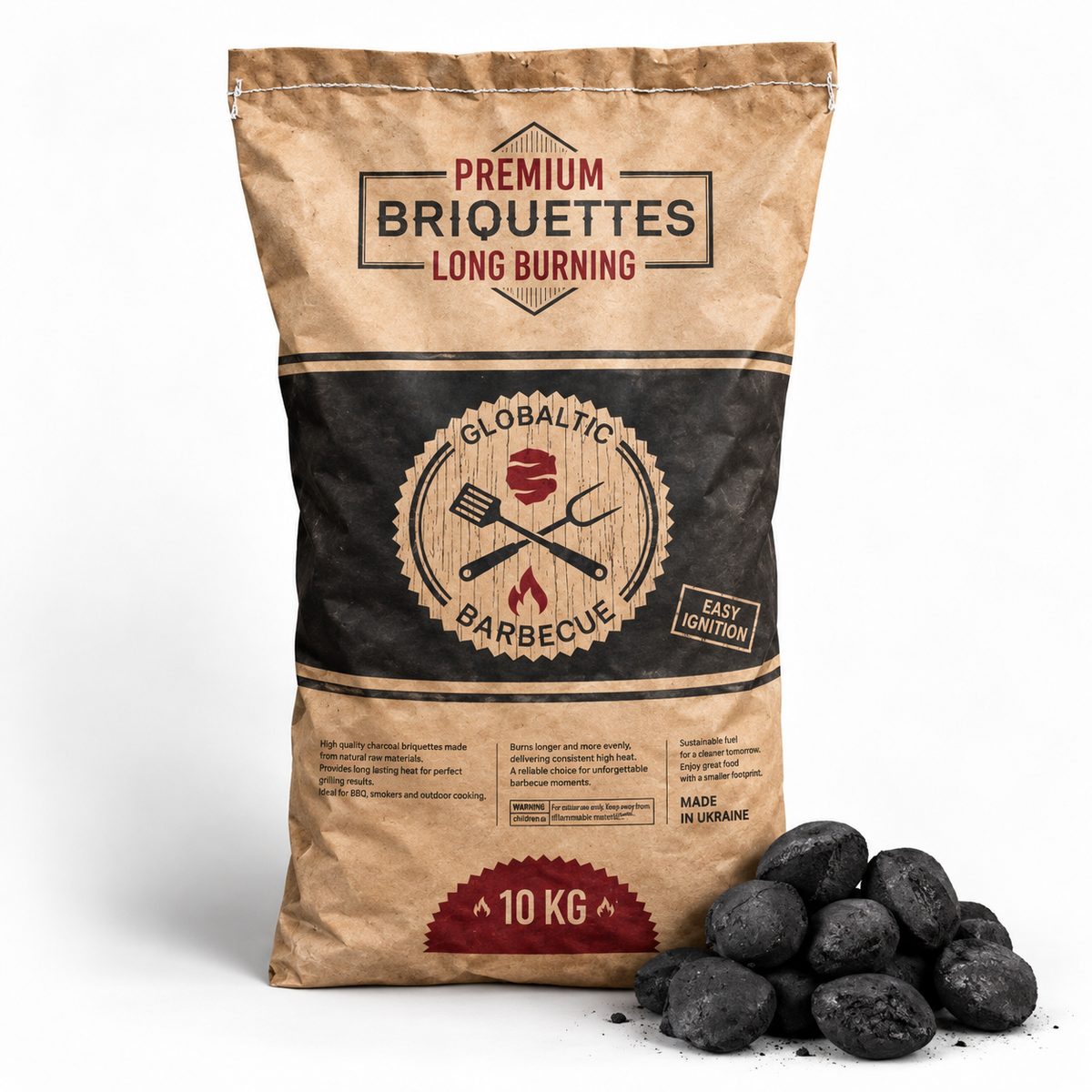
| Birch briquettes | about 20–30 min | — | 3–5 hours | up to 800°C |
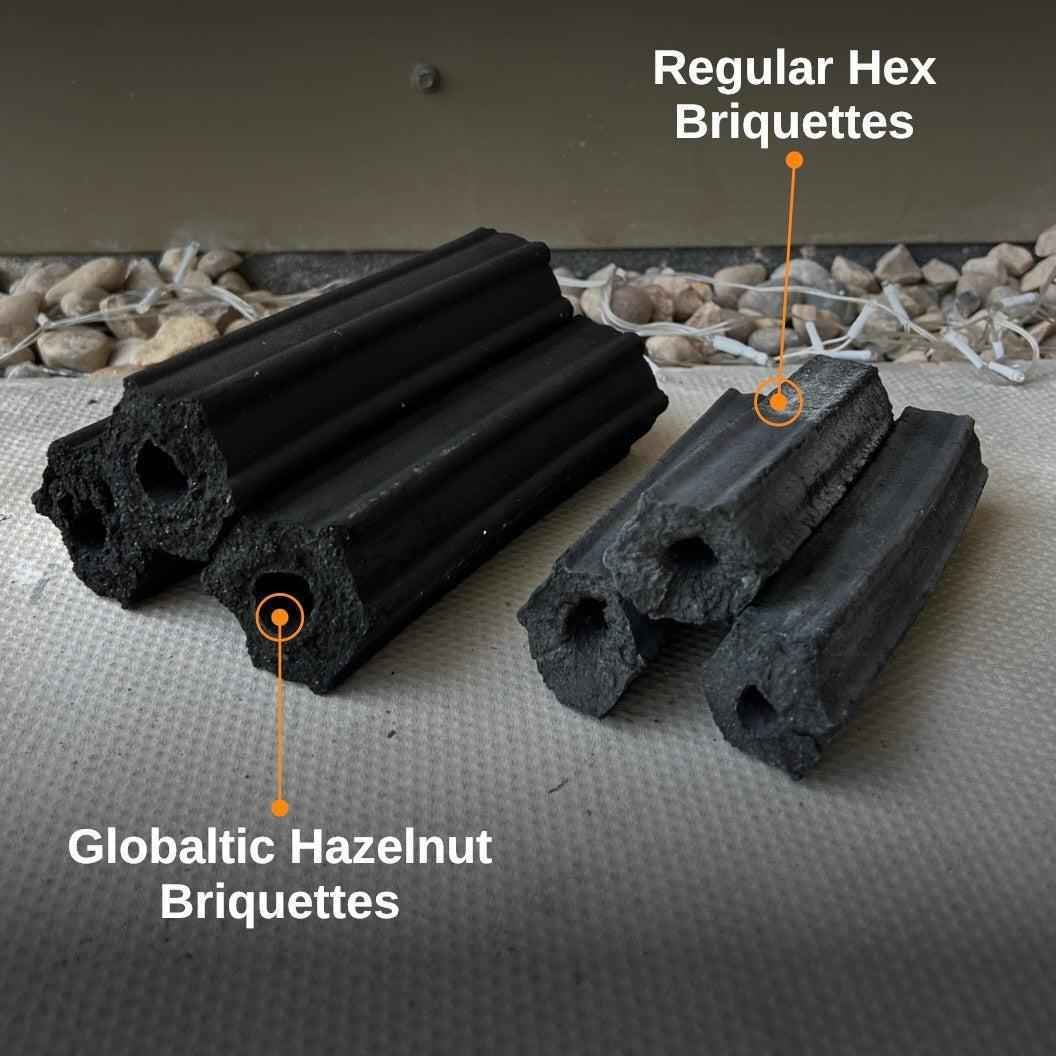
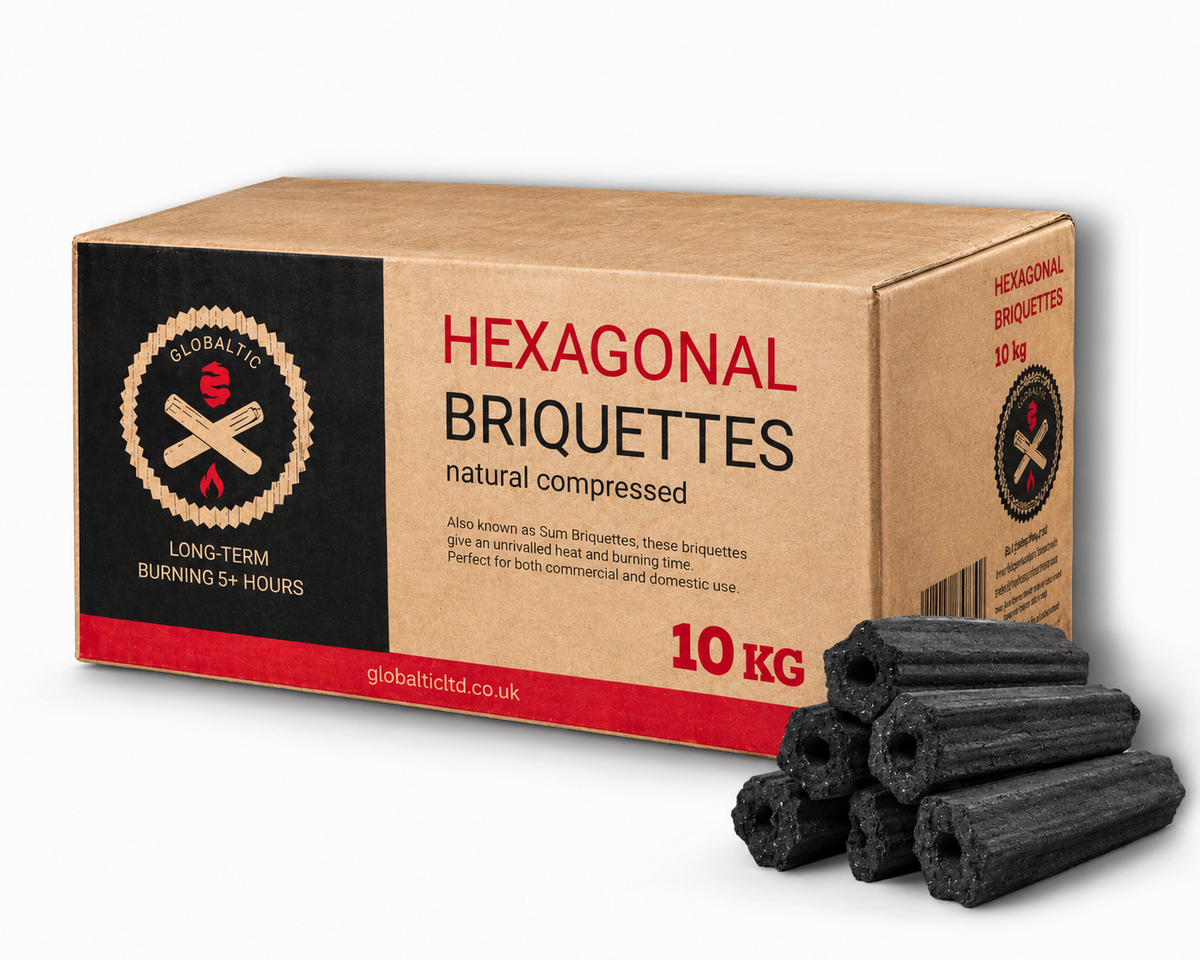
| Hex briquettes | 40–60 min, lit with charcoal | — | 5–6 hours | up to 1000°C |
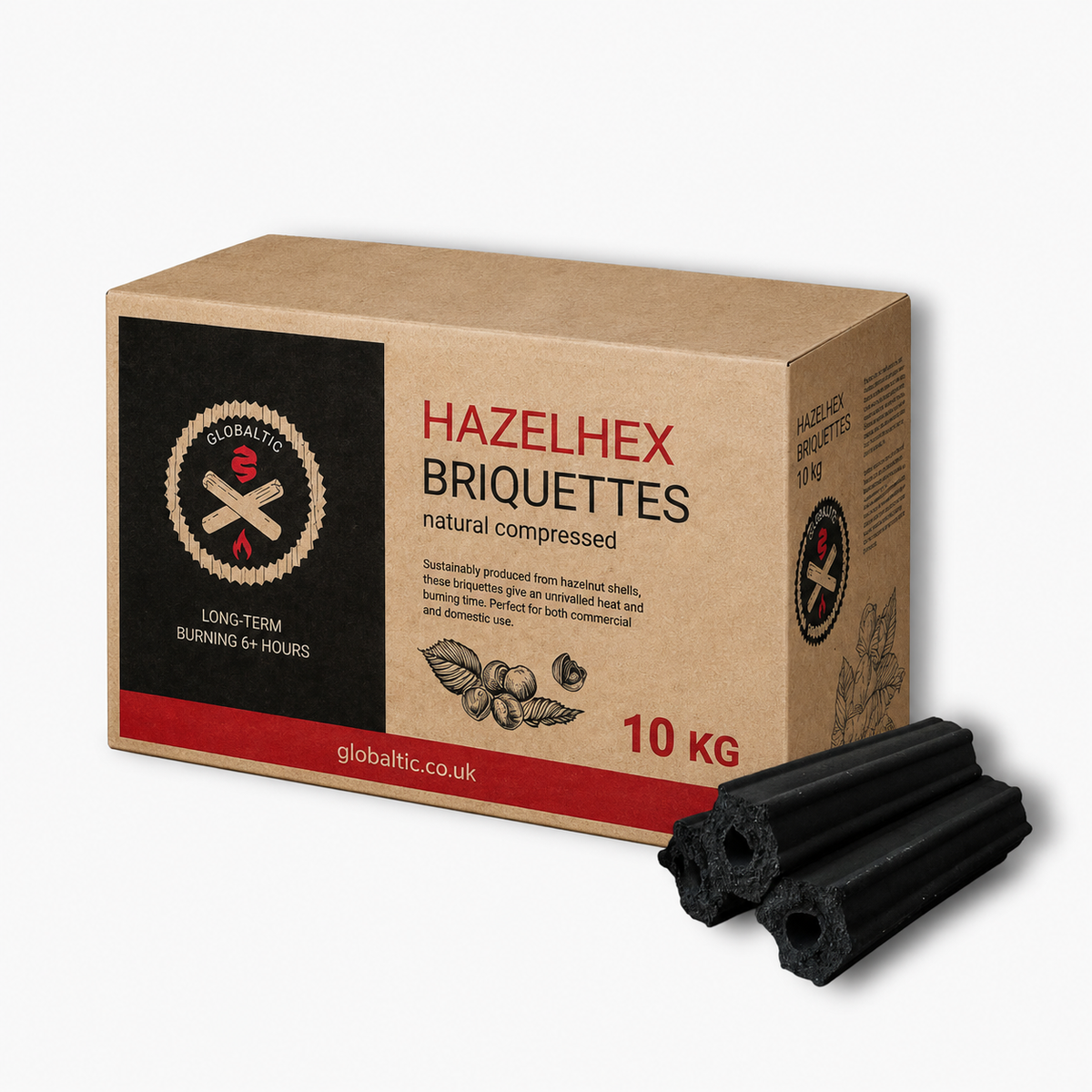
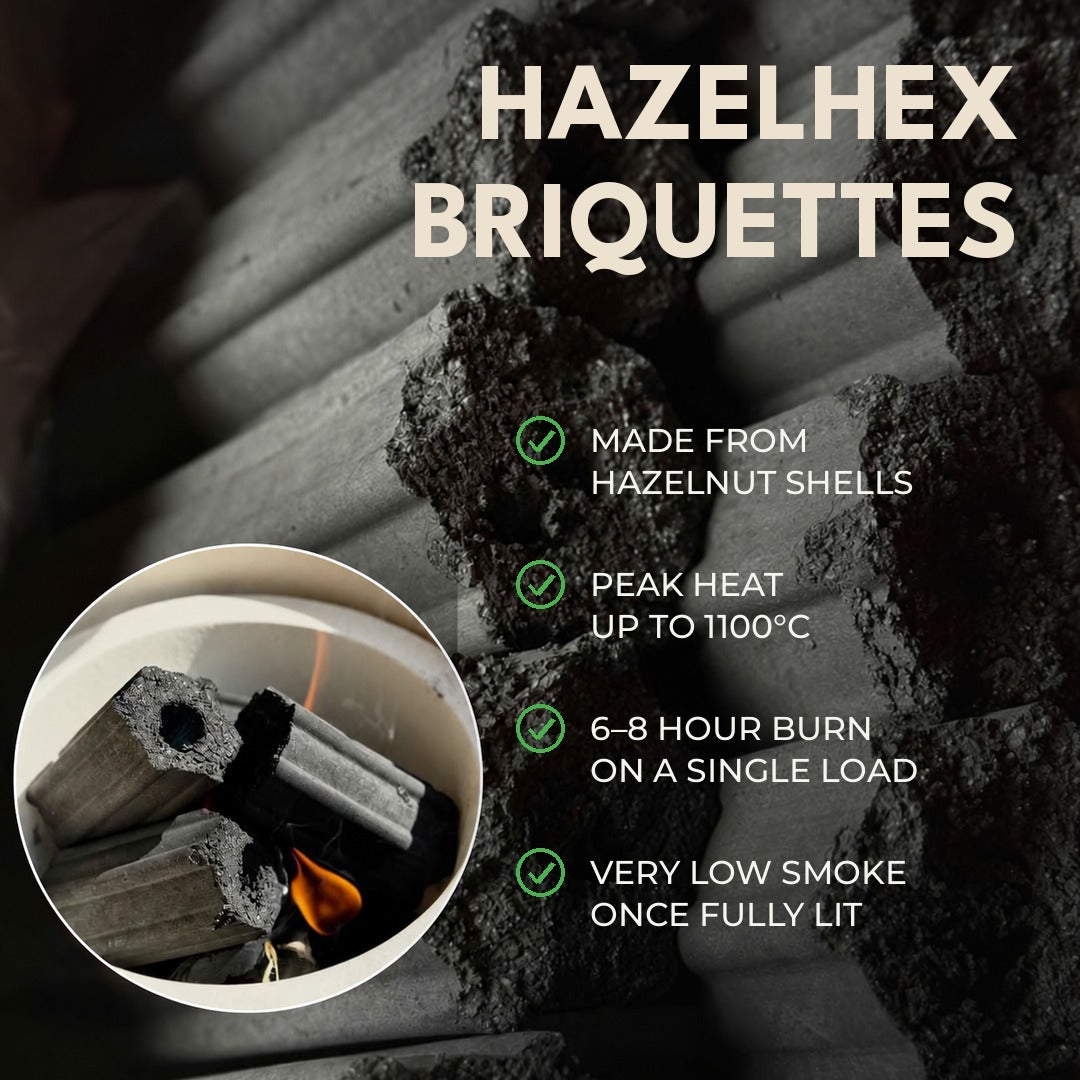
| HazelHex briquettes | 40–60 min, lit with charcoal | — | 6–8 hours | up to 1100°C |
A dash means we don't quote a figure for that setup.
Why the answer depends on your grill
Charcoal burns as fast as it gets air. That's why the same bag can give you three hours or eight.
- Open grill, direct heat. Plenty of air, high heat, short burn. This is where lumpwood's fast start and high early heat shine, and where it burns down quickest.
- Closed kettle or kamado. You control the air with the vents. Close them down for a low-and-slow cook and even lumpwood can stretch to around 8 hours. Dense briquettes hold a steady temperature for longer at normal cooking heat, with less fiddling.
So "which burns longer" really has two answers. For a steady fire at cooking temperature, briquettes. For a long cook in a kamado with the vents nearly shut, lumpwood can match them.
Lumpwood: when it wins
- Weeknight cooking. Ready in 10–15 minutes. Steaks, burgers, chicken thighs, veg.
- Searing. High heat from the start.
- Flavour. Lumpwood is carbonised whole wood, so you get a cleaner wood character. Oak is a little deeper than birch, and holm oak sweeter again.
- Kamado cooks. Large chunks leave gaps for air, so the fire responds quickly when you open or close the vents.
Briquettes: when they win
- Long cooks at a steady temperature. Pulled pork, brisket, ribs, a whole afternoon in the garden.
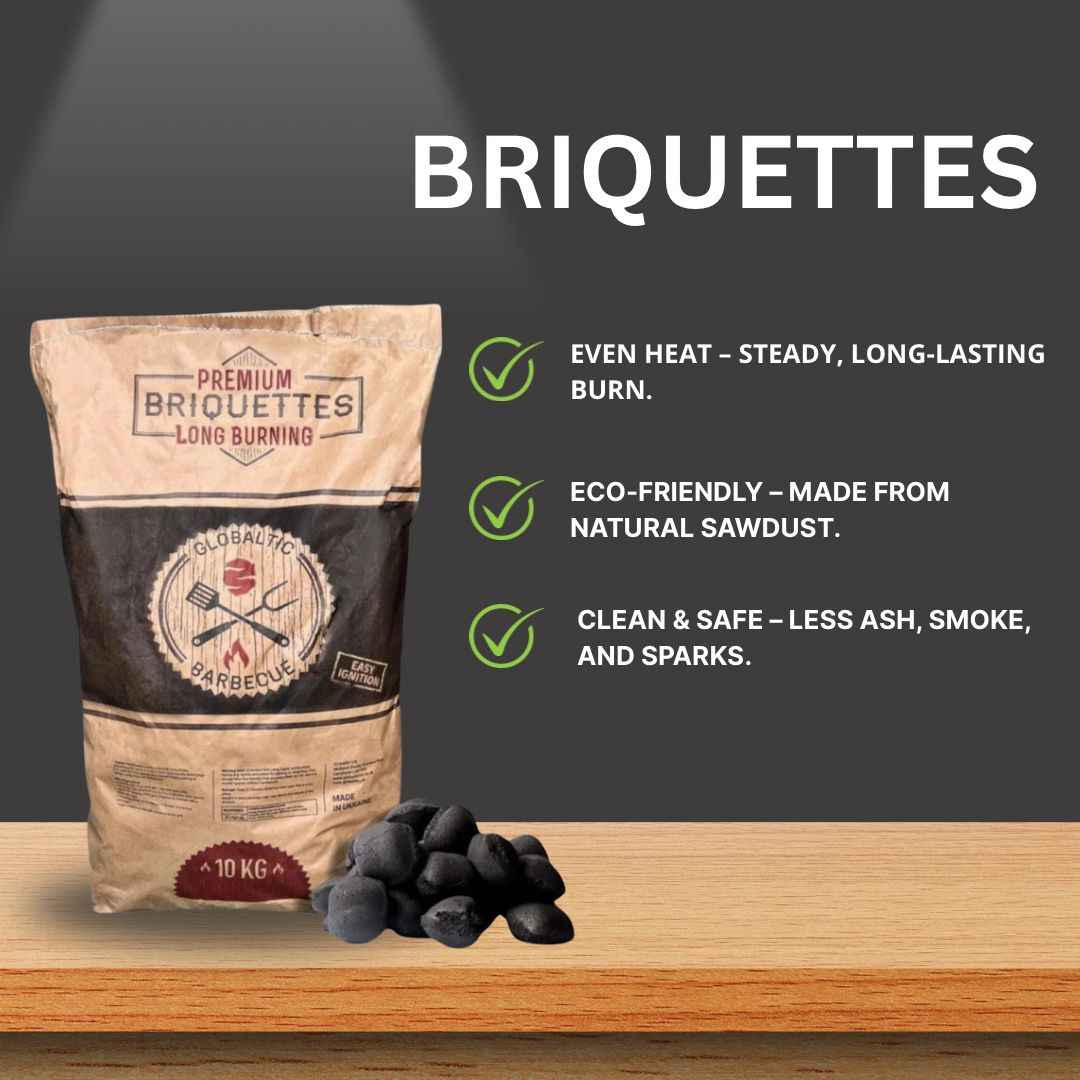
- Even heat. Every piece is the same size, so the fire behaves the same from one cook to the next.
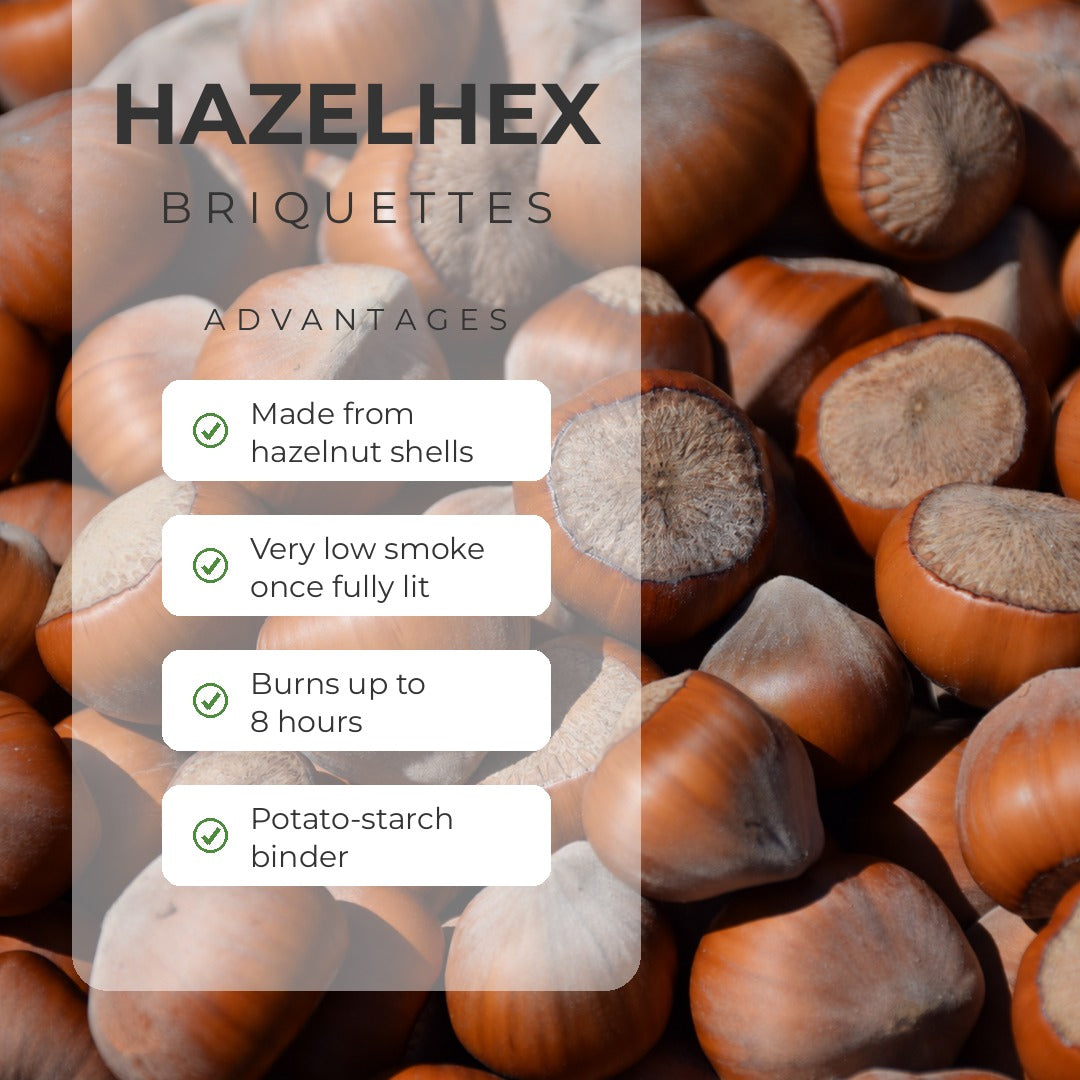
- Fewer top-ups. Dense briquettes go further per bag. HazelHex lasts 6–8 hours on a single load.
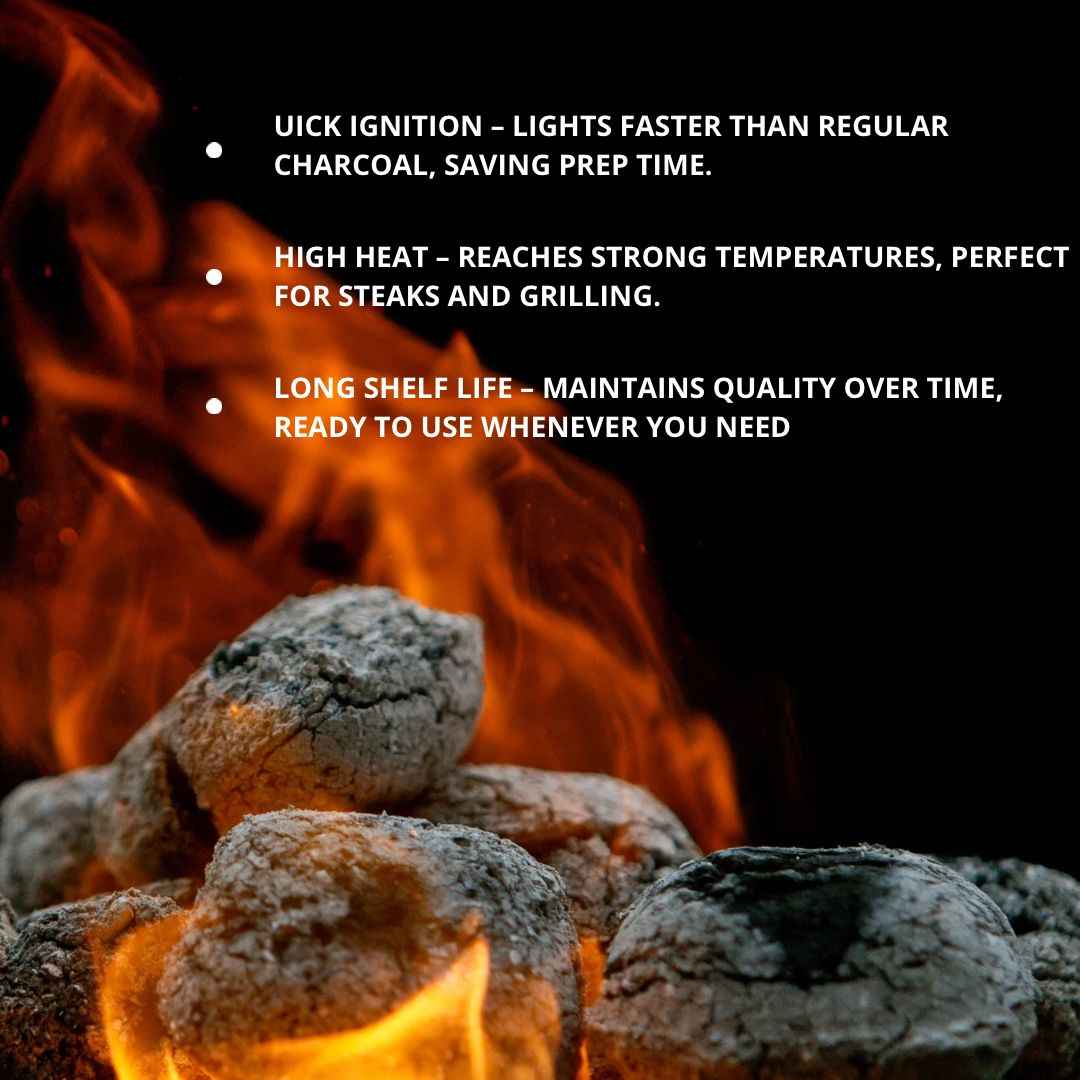
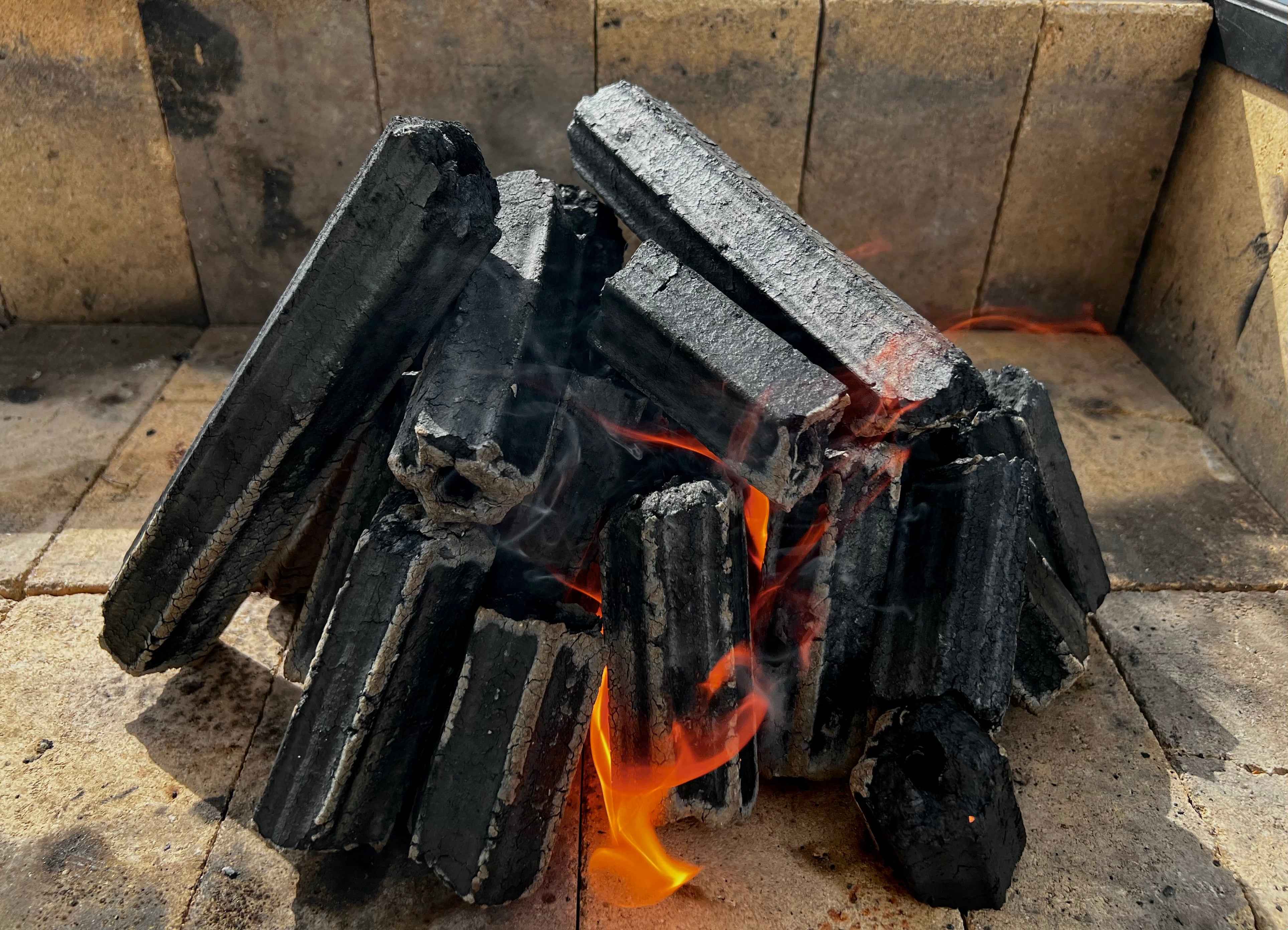
The trade-off is lighting time. Hexagonal briquettes are dense, so allow 40–60 minutes to reach full heat.
The best of both: light them together
You don't have to choose. Light briquettes and a few handfuls of lumpwood together, in a chimney starter or straight in the grill with a natural firelighter:
- The lumpwood gets you cooking sooner and adds flavour.
- The briquettes come up to full heat over 40–60 minutes and keep the fire going for hours.
- Top up with a little lumpwood if you want a final burst of heat to sear.
This is how we cook at home for anything longer than a quick grill.

Getting the most out of either in the UK
- Keep it dry. Charcoal picks up moisture from the air and from damp floors. Damp charcoal lights slower and burns cooler. Store bags off the ground in a dry shed or garage, and fold the top over between cooks.
- Shelter from the wind. Wind feeds the fire like an open vent and shortens the burn. Put the grill where it's sheltered, with the lid on when you can.
- Skip the lighter fluid. Use a chimney starter and natural firelighters. Fluid adds nothing to the food you'd want there.
- Kill the fire when you're done. On a kettle or kamado, close all the vents. Leftover coals can be relit next time.
Frequently asked questions
Which burns longer, lumpwood or briquettes?
On a single load at normal cooking heat, briquettes burn longer. Our HazelHex briquettes last 6–8 hours and Hex 5–6 hours, against 3–4 hours for birch lumpwood on an open grill. In a closed kamado on a low-and-slow cook, good lumpwood can last up to 8 hours.
Which lights faster?
Lumpwood. Silver birch is ready in 10–15 minutes with a chimney starter. Dense hexagonal briquettes need 40–60 minutes to reach full heat when lit with charcoal.
Which gets hotter?
Dense briquettes reach higher peak temperatures in a forced-draught setup: up to 1100°C for HazelHex. Lumpwood gets hot faster, which is why it's good for searing straight away.
Can I mix lumpwood and briquettes?
Yes, and for long cooks it's the best option. Light them together: the lumpwood gives you heat early and adds flavour, and the briquettes keep the fire going for hours.
Is lumpwood or briquette better for a kamado?
Both work. Large-chunk lumpwood is the classic choice because it responds quickly to the vents. Dense briquettes made from natural materials, such as HazelHex, add length for very long cooks. See our kamado charcoal guide.
Which one to buy
- Quick weeknight grilling: silver birch lumpwood
- Harder sears and longer open-grill cooks: oak lumpwood
- Long kamado cooks and big gatherings: HazelHex briquettes, lit together with lumpwood
- Steady heat at a lower price: birch briquettes
Related: best charcoal for a kamado · what restaurant-grade charcoal means


Share:
Hospitality needs 10% VAT. Here’s the case, including the hard part